

IndyCar in Barcelona - Why It Matters for IndyCar and F1

Image credit: Penske Entertainment
IndyCar has raced at a multitude of different venues outside of the United States of America in its history, going as far back as 1967. It is a fascinating subject matter in itself that has seen the series race in Canada, Brazil, Japan and even Australia. But back in the present day, IndyCar is now about to embark properly on a new frontier for the first time in decades - Europe.
Ahead of the Formula 1 United States Grand Prix in Austin, Texas, the news broke that IndyCar would be racing in Barcelona, Spain in 2027 as the series leaves North America for the first time since 2013. What’s more, the series would be competing at the Circuit de Barcelona-Catalunya - that until this year was the home of the Formula 1 Spanish Grand Prix. The deal with IndyCar isn’t just a one-off either with a multi year contract having been struck between the circuit and the American Series.
“This is a monumental day for our sport…We are pleased to be able to take our ultra-competitive brand of wheel-to-wheel racing to Europe and are thrilled that we can showcase INDYCAR in Álex Palou’s hometown.”
The multi-year agreement marks the first time that the series will have raced outside of North America since James Hinchcliffe won on the streets of São Paulo, Brazil in 2013. Moreover, it will be IndyCar’s first time back in Europe in two decades with the series last competing on the continent at the TT Circuit Assen in the Netherlands in 2007.

Image credit: Penske Entertainment
As well as being the scene of IndyCar’s return to Europe, the inaugural IndyCar Grand Prix of Barcelona will bring the open-wheel racing series to Spain for the very first time. Scheduled for Sunday, July 18th, it will fill the weekend gap between the Austrian and Belgian Grand Prix in Formula 1 and thus enable the American Series to double down on the number of fans that it will be able to attract to this debut event. It’s just the first in a number of ways that IndyCar is taking advantage of Formula 1’s separation from the circuit that served them loyally for over three decades.
The choice of venue and the scheduling makes IndyCar’s return to Europe all the more fascinating. Besides it being a homecoming for Álex Palou, the Circuit de Barcelona-Catalunya is also the circuit that Formula 1 put onto a rotation moving forwards, opting instead to move the Spanish Grand Prix to a brand new, purpose built hybrid circuit in Madrid which made its debut earlier this year.
The Circuit de Barcelona-Catalunya remains in the world of Formula 1 but only once every two years with it scheduled to appear three times over the next six years until 2032 when the current contract expires. The next Grand Prix will be held there in 2028.
While the IndyCar deal could have been struck with Formula 1 remaining there full time, the timing feels significant.
“We cannot wait to see the NTT INDYCAR SERIES compete at one of the world’s most recognizable motorsports venues set against the backdrop of a very historic and breathtaking international destination like Barcelona.”
Formula 1 opted to leave Barcelona in favour of the Grand Prix in Madrid and upon its debut, that race weekend had a somewhat mixed reception at best with its levels of success really dependent on how one goes about measuring success. But Formula 1 has committed to a future in Madrid for at least the next decade - leaving Barcelona stuck with its rotation deal and having to investigate other avenues to generate business in Formula One’s place.
Enter IndyCar.

Image credit: Penske Entertainment
Over the last couple of years, IndyCar has been in the process of something of a rebirth. Fox Sports took over one third of the ownership rights to the series as well as broadcasting duties in the United States. It boasted three new venues on its calendar this year with the two of Arlington and Markham returning for 2027. While D.C won’t return, it was never meant to - sold instead as a one-off race to mark America’s 250th anniversary. With the success of both Arlington and Markham, there was much speculation as to whether any other new venues would be added to the 2027 schedule too.
When only the first phase of the 2027 calendar was released, it poured more fuel onto the fire as to what IndyCar might have in store for the rest of 2027. But with the remainder of the 2027 calendar released shortly after the news about the addition of Barcelona, we are now starting to see what some of those ambitions look like in reality. Spain is the sole new addition to the calendar with Nashville absent next year for the first time since 2021.
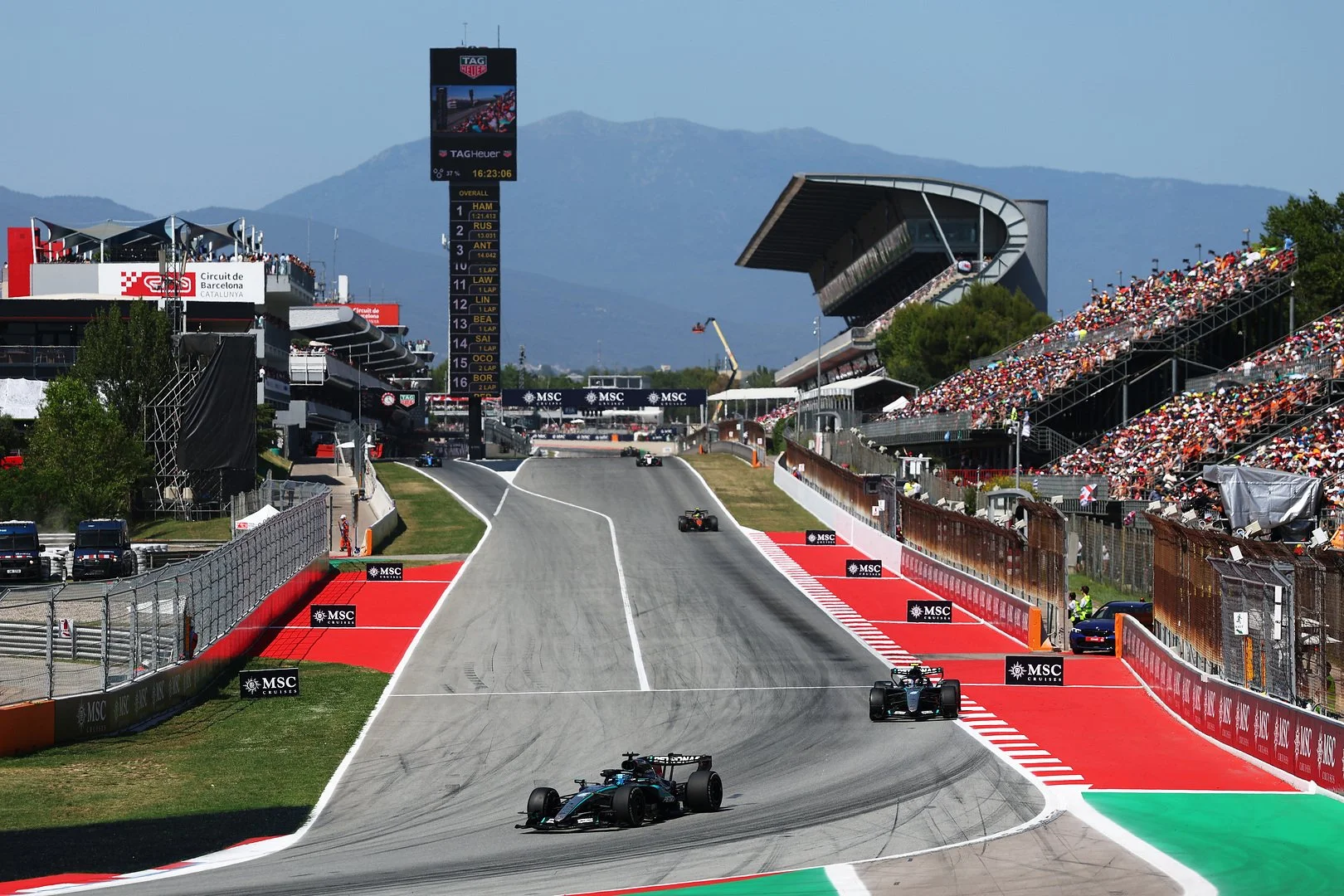
Image credit: Mercedes Media Centre
If the Circuit de Barcelona-Catalunya was a jaded individual in the process of being broken up with by its long term partner (or simply mimicking Ross and Rachel from Friends) then it has bounced back incredibly quickly with the kind of partner that should have Formula 1 worried. Just look at the language used by Mark Miles (President and CEO, Penske Entertainment Corp) in the announcement to get an idea as to the intent that IndyCar has for the circuit moving into the future together.
Furthermore, in a world too where stewarding decisions seem to cause more controversy with every passing season in Formula 1, along with a set of new regulations that aren’t getting everyone talking in the way that Formula 1 and Liberty Media will have hoped, as well as a series of misfires on and off the track, dedicated Formula 1 fans - as well as more general ones - have begun to explore other motorsport options. One of those has been IndyCar and that’s been reflected in both the viewing figures and the online and social media engagement for the series. That’s partly why scooping up the Circuit de Barcelona-Catalunya is such a great win for IndyCar. It’s meeting Formula 1 fans at a venue at which they’re already familiar and simply presenting them with an alternative racing series to enjoy.
After over thirty years together, Formula 1 decided to stamp on the brakes - much to the bewilderment of many of the fans, especially when its replacement of Madrid was announced. IndyCar pounced and committed to the future - a future where both they and Barcelona prosper.
Following the soft power move that was debuting the docuseries All In this year as an alternative to Drive to Survive, IndyCar has now deployed a hard power tool by taking from Formula 1 what it no longer seemed to desire. Formula 1 may have Madrid but IndyCar has Barcelona - and not just some of the time, but every year for a while to come.

Image credit: Penske Entertainment
IndyCar and the Circuit de Barcelona-Catalunya can also offer fans, particularly Spanish ones, something that they’ve not had in thirteen years too - the realistic prospect of a Spaniard winning on home soil in a top level of single seater racing. Álex Palou is a five-time IndyCar Champion and doesn’t look set to stop anytime soon.
“It is an amazing opportunity, and it means so much to me to have a race at home in Barcelona, it’s hard to put into words.”
Even if he doesn’t win the title next year, it’d be far-fetched to wager that he wouldn’t win races. Since 2013, there have only been three Spanish drivers in Formula 1 - Roberto Merhi, Carlos Sainz Jr. and Fernando Alonso. The latter of those won his last Grand Prix in 2013 at the Circuit de Barcelona-Catalunya but neither he, nor Sainz have been able to do so since. The closest either of them has come is when Sainz finished in fourth place for Ferrari back in 2022. Not only does Palou have a more than reasonable shot at taking the win on home turf but failing that, you’d imagine a driver of his calibre at this stage of his career would at least be on the podium. Even if Sainz or Alonso manage to win in Madrid next year, it’ll still come two months after the IndyCar race and so the American Series will have already achieved what Formula 1 hasn’t been able to.
It doesn’t end there though. Formula 1 has also suffered from a mixed level of fantastic racing action in Barcelona for a number of years. While this year’s Grand Prix was incredible thanks to it being the venue at which Lewis Hamilton won his first Grand Prix for Ferrari - it was more a race of strategic brilliance than outright racing action. In contrast, IndyCar provides fans with almost constant close racing action throughout its races - in partnership with the strategies at play rather than instead of it.

Image credit: Penske Entertainment
IndyCar is in an era of expansion. For years, it has taken in drivers that either were forced out of Formula 1 one way or another as well as those that never made it, and has fashioned them into elite athletes in their own right. Sébastien Bourdais, Felix Rosenqvist and Christian Lundgaard are just three examples of this. Now IndyCar is taking things a step further and in the same way that Formula 1 finally cracked into America and now races in Miami, Texas and Las Vegas, IndyCar is looking to return the favour, starting in Spain. It’s seeing gaps in the market, listening to the fans and then giving them what they want. Like any race series, IndyCar may not be perfect, but it’s definitely pushing the needle in the right direction.
Where else in Europe or beyond might IndyCar race in future? Who knows. But one thing is certain - it’s a brilliant time to be an IndyCar fan.