

What Madrid’s History & the Madring tell us about the future of the Spanish Grand Prix and Formula 1
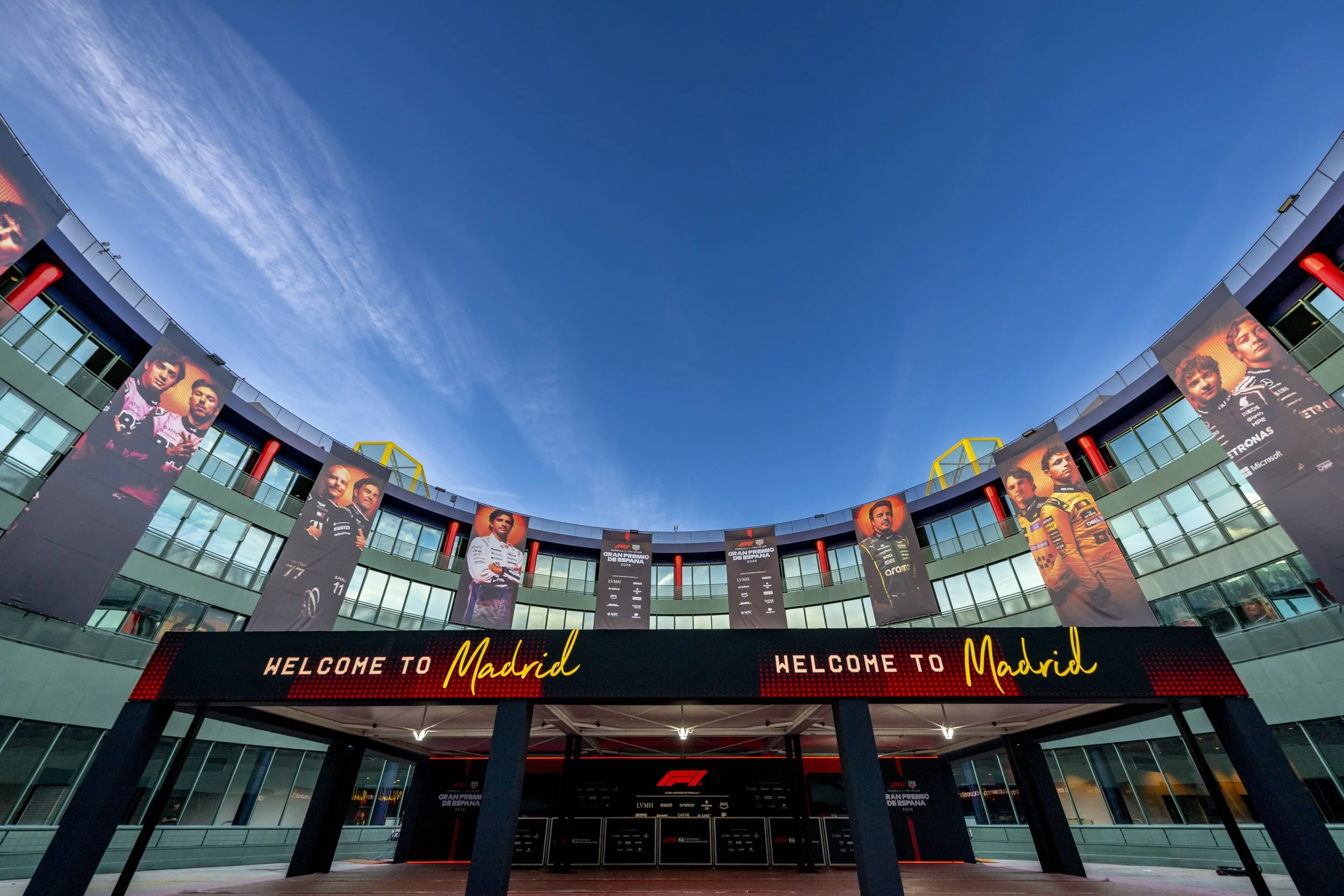
Image credit: Courtesy of MADRING, via NKrush
Formula 1 has a long history with Spain that dates all the way back to almost the inception of the sport itself.
The Pedralbes Street Circuit in Barcelona was the venue for the first two Grand Prix to be held in the country, in 1951 and 1954. It was in the former that the first Spanish Formula 1 driver appeared on the scene too, in the guise of Juan Jover. Fourteen further drivers from Spain have followed in his footsteps since then, including the country’s latest offerings in the form of Fernando Alonso and Carlos Sainz.
While not always at the forefront of Formula 1, the country and the drivers it has produced have been a consistent, dependable and reassuring part of the sport.
That relationship has now entered its most precarious position in over three decades as Formula 1 moves away from Barcelona to settle in its new Spanish residency in Madrid - a move that looks set to stay for at least the next ten years, if not more.
To understand the significance of this for the future, we must first return to the past.
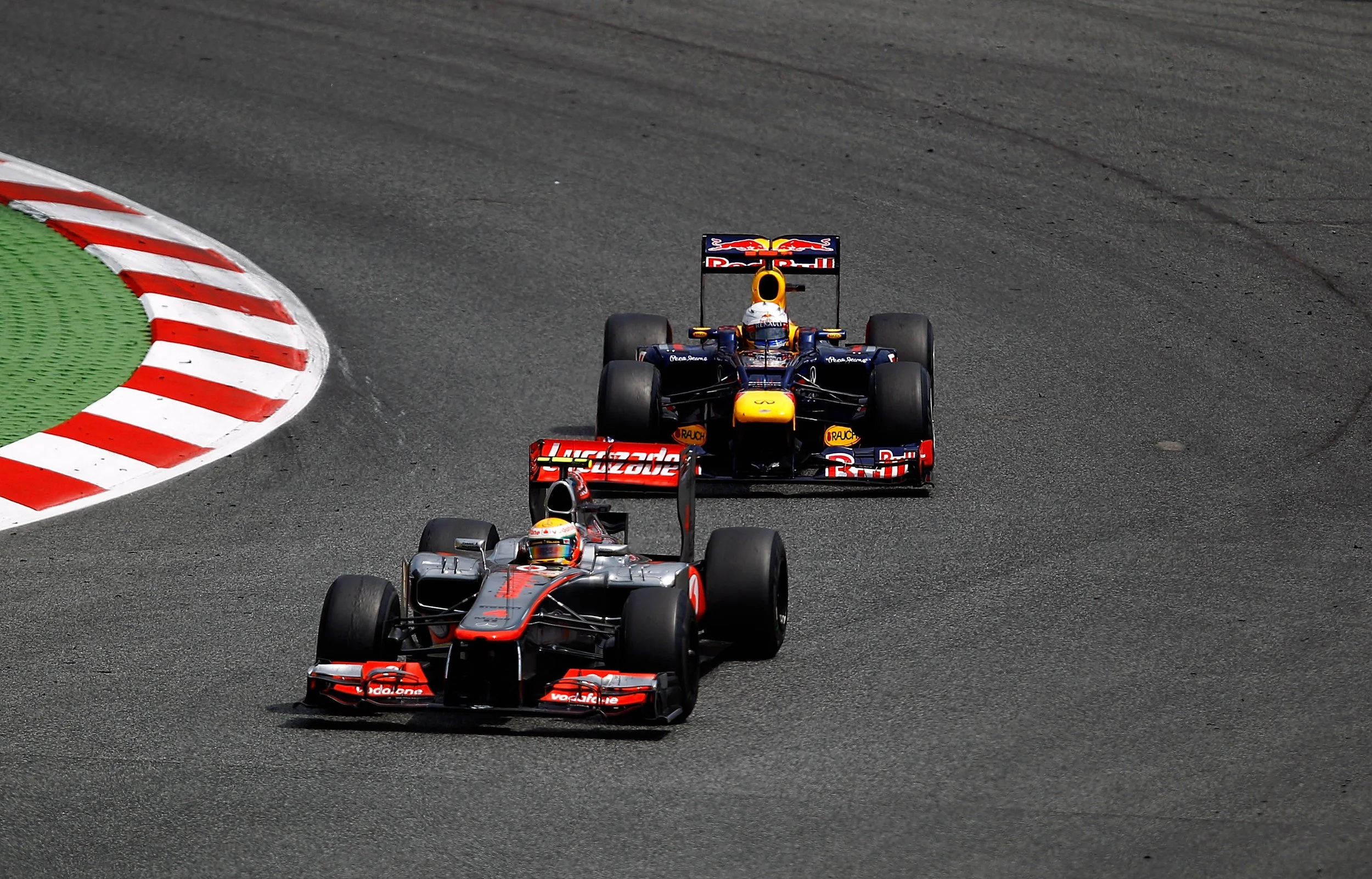
Image credit: Red Bull Content Pool
After its initial forays into Formula 1 that concluded in 1954, it would be fourteen years after that before Formula 1 returned to the country, this time at Jarama, where it remained until 1981. Jarama is key here because geographically, it’s roughly a forty minute drive from the city of Madrid and still exists today, utilised by series such as Formula E and the Spanish Formula 4 Championship. Drivers such as Graham Hill, Jackie Stewart, James Hunt and Mario Andretti competed there with Gilles Villeneuve winning the last Grand Prix held there in 1981 when he raced for Ferrari. When considerations to return to Madrid began, there must have been a conversation about what coming back to a circuit so steeped in relevance and history would look like and why a brand new, purpose built hybrid circuit would be a better option instead.
During this period, four other races were hosted at the Montjuic Park Circuit and after both of these venues fell away, a further five Grand Prix took place at Jerez with the last of these in 1990.
Then came the circuit that most fans associate with the Spanish Grand Prix today - the Circuit de Barcelona Catalunya. From 1991 until this year, it was not only the home of the Spanish Grand Prix but a track where both the Feeder Series raced and Formula 1 often went for its pre-season testing. Valencia also hosted five Grand Prix from 2008 until 2012 but was under the title of the European Grand Prix - similar to how this year’s Grand Prix in Barcelona wasn’t officially the Spanish Grand Prix - but instead, the Barcelona-Catalunya Grand Prix.
But it was Barcelona that Formula 1 called home. This was the track where Fernando Alonso won his last race to date, back in 2013, where Williams also claimed their most recent win thanks to Pastor Maldonado in 2012 and this year, it was the scene of Lewis Hamilton’s first Grand Prix victory for Ferrari.
Not every Grand Prix venue can deliver a classic race every single time, not even the greats. But the history, the familiarity and the potential that something great can happen because it did before are all part of what makes returning to a venue year after year, decade after decade, that much more exciting. Barcelona always had that. It was tried and tested. Some would argue that is what led to its departure from the calendar, despite its presence on a rotational basis once every two years from 2028 to 2032. But as the adjustment to the circuit at turns thirteen and fourteen showed (removing the final chicane and opting instead for two fast sweeping corners leading onto the start/finish straight), changes can be made in an effort to keep things fresh. You wouldn’t leave a marriage just because your partner got old - or rather, that’s not what you’re meant to do.
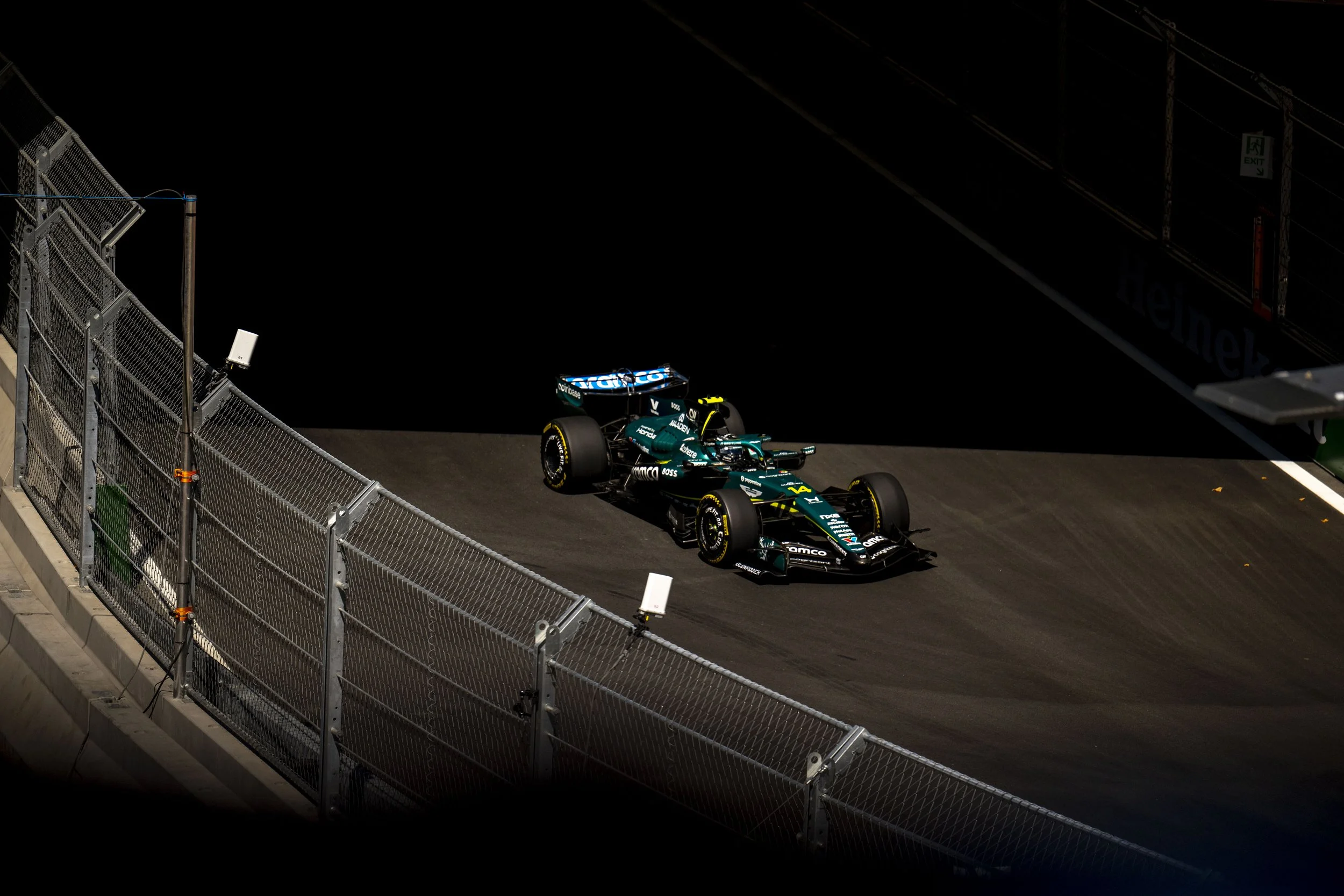
Image credit: Courtesy of MADRING, via NKrush
The same is true when we see a driver like Fernando Alonso still in the sport but down on his luck. Sure, nobody is expecting much this year with the state of Aston Martin but given his history, his ruthlessness and his raw, seemingly never-ending ability to extract the maximum from whatever car he’s in, if anyone could deliver something truly unexpected under the right circumstances, it would be him. There’s a reason Aston Martin aren’t looking to replace him but are instead, doing everything they can to keep him.
All of this brings us to today where over thirty years of history forged in Barcelona has now been swept aside in favour of Formula 1’s latest venture - their brand new hybrid circuit - the Madring. Like Las Vegas before it, it combines permanent elements of a race track with temporary street circuit elements in an attempt to give both fans and drivers the best of both worlds when it comes to racing. In theory, it works. But theory only takes us so far. That’s where reality steps in - and when it came to the Madring, reality came out swinging.
The circuit is made up of twenty-two corners, most of which are finicky and technical, designed to test and catch out the drivers. It features the longest banked corner on the calendar (not difficult to achieve given Zandvoort is the only real circuit with banked corners) and has been purposefully built with spectacle in mind. But as anyone who’s designed and built anything knows, just because you create something with a specific goal in mind, doesn’t mean that’s what’s going to happen.
While qualifying may have seen a tight scrap at the sharp end of the field between McLaren, Mercedes, Red Bull and Ferrari, that’s where the excitement for the weekend in terms of on track action ended. The Grand Prix featured just four overtakes - for comparison, Monaco gave us ten this year at a venue that can’t change its layout versus a venue that was purposefully built for Formula 1. Formula 2 and Formula 3 too struggled to provide engaging racing action for the most part, even with an additional race in the latter to round out its 2026 season.
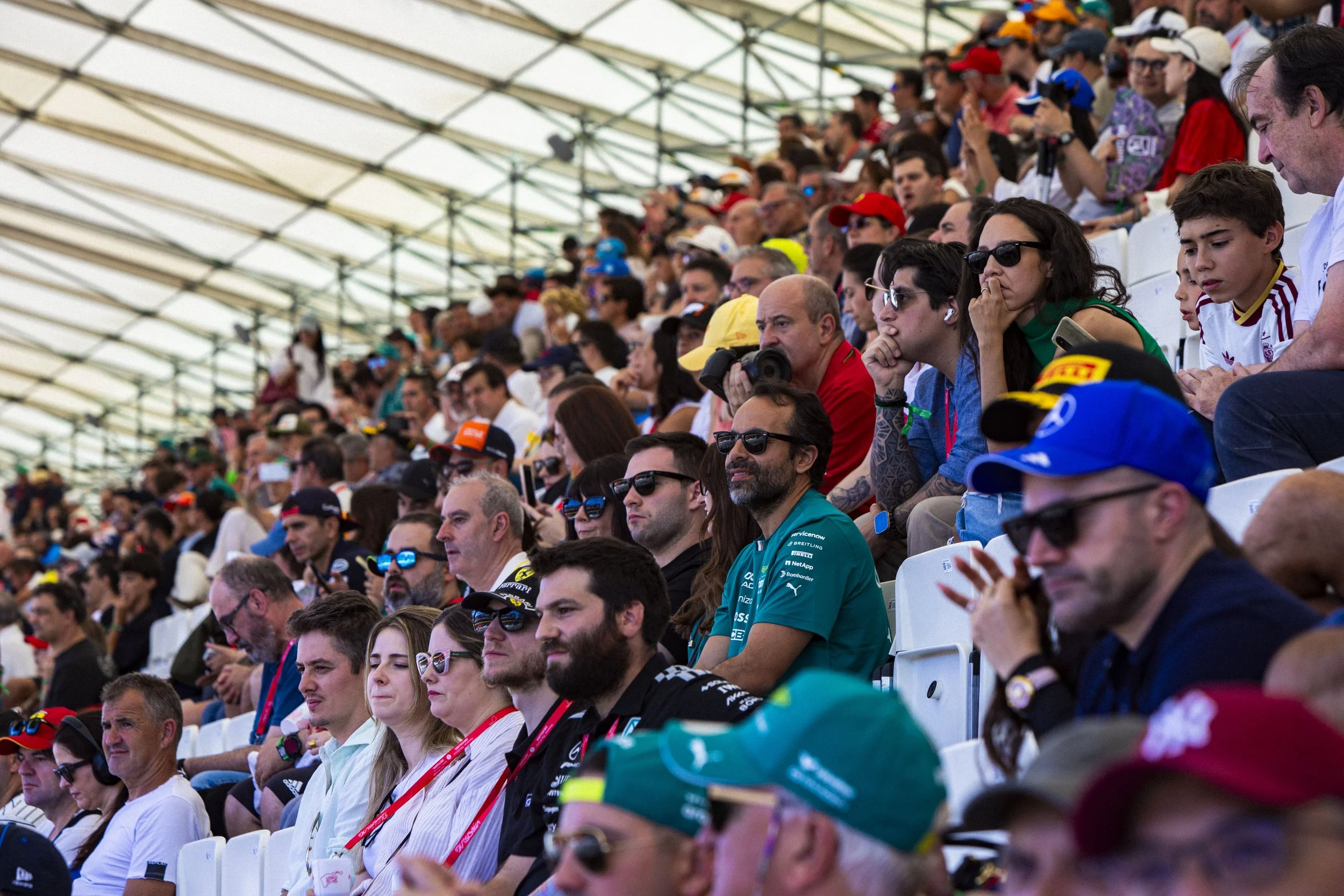
Image credit: Courtesy of MADRING, via NKrush
While its on track action may have been lackluster to say the least, success in Formula 1 in 2026 can be defined in other ways by those in charge. According to PwC, Madrid’s economy saw a boost of roughly €467 million with approximately 353,000 people flocking to the venue across the Grand Prix weekend. These financial figures combined with the weekend attendance, the presence of celebrities and influencers and the social media hype created before, during and (somehow) after the weekend meant that the new Spanish Grand Prix can also be argued to have been an instant success, while also having room to grow and improve over the next decade.
So while the Circuit in Barcelona will continue to be used once every two years from 2028 onwards, the Madring has nine more consecutive years on its contract before its future is re-evaluated. That’s a decades worth of financial opportunity for both the sport and the region. Race organizers have said that minor tweaks will be made to the circuit in an effort to improve the racing but for the more seasoned fan, that aspiration comes across as small potatoes.
The sport has been here before with Miami - a Grand Prix venue where the on track action has been, and continues to be, lacking in terms of what diehard and casual fans alike want. Yet it remains, virtually unchanged, on the calendar until at least 2041 and it’s a locale we’re already used to seeing as a regular fixture on the calendar, despite 2026 being only its fifth year in existence - equalling Valencia in terms of appearances.
In its first year, it was reported that the Miami Grand Prix boosted the local region by almost $350 million with the projections for 2026 being over $500 million. In just five Grand Prix, Miami looks set to have generated over $1.3 billion for South Florida with an average visitor spend of approximately just under $2,000. This is the model that Madrid is now attempting to emulate with the on track action (or lack thereof), seemingly an acceptable cost.
This brings us back to another of Madrid’s (and Spain’s) tools in its arsenal to justify its presence for at least ten years in Formula 1 - its drivers.
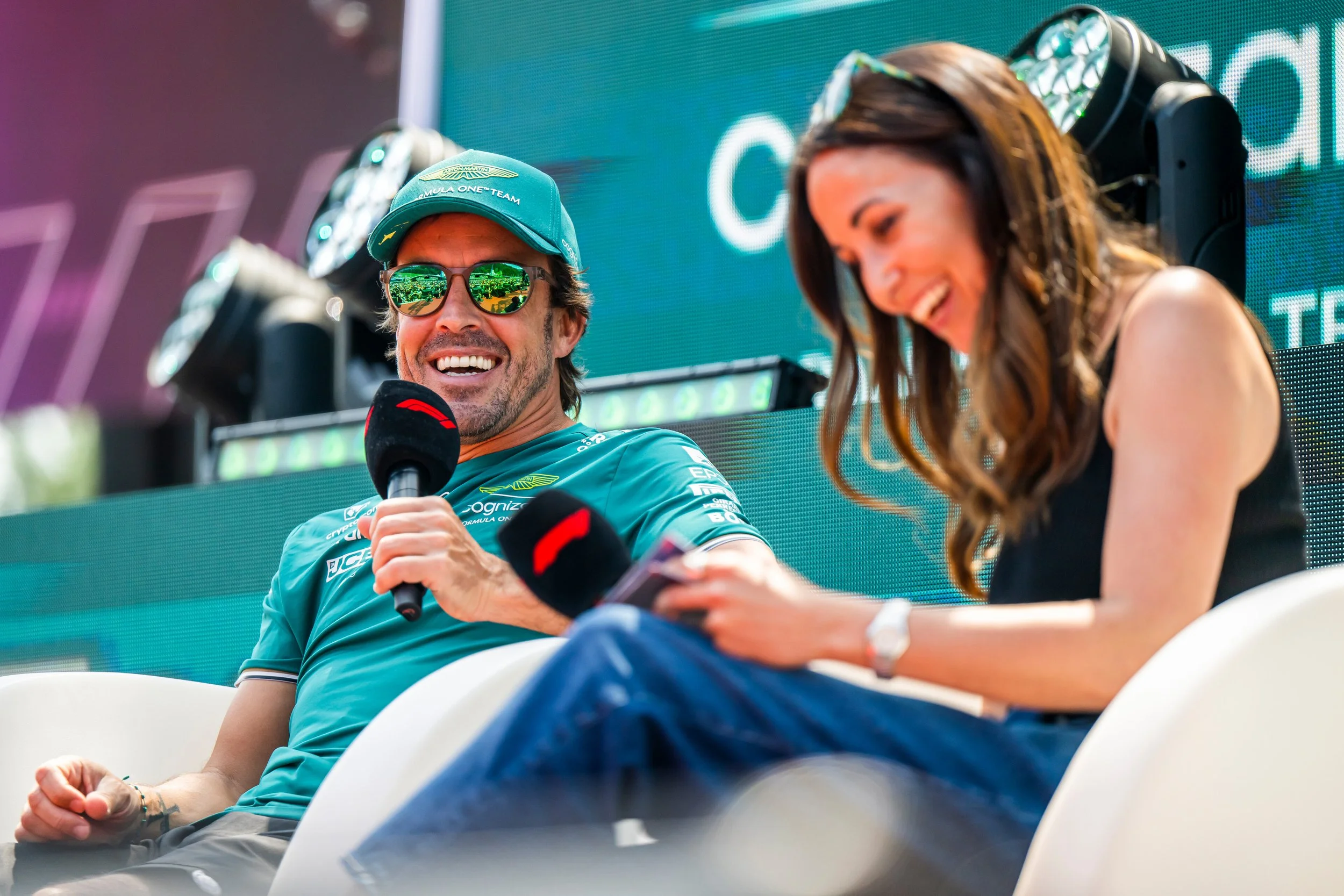
Image credit: Red Bull Content Pool
Having made his Formula 1 debut with the European Minardi F1 Team back in 2001 at the Australian Grand Prix, Fernando Alonso has gone on to compete in a current total of twenty-three seasons of the sport, competing for seven different teams (six if you count Renault and Alpine as essentially the same team) with thirty-two wins and one hundred and six podiums to his name. But his most recent of those came back in 2023 at the Brazilian Grand Prix where he finished in third place after a brilliant last lap overtake on Red Bull’s Sergio Perez, during the one high point of Aston Martin’s time in Formula 1 so far.
Carlos Sainz meanwhile is currently in his eleventh season of the sport, having driven for five different teams across this period with four wins and twenty-nine podiums to his name - the most recent of which came last year in Qatar.
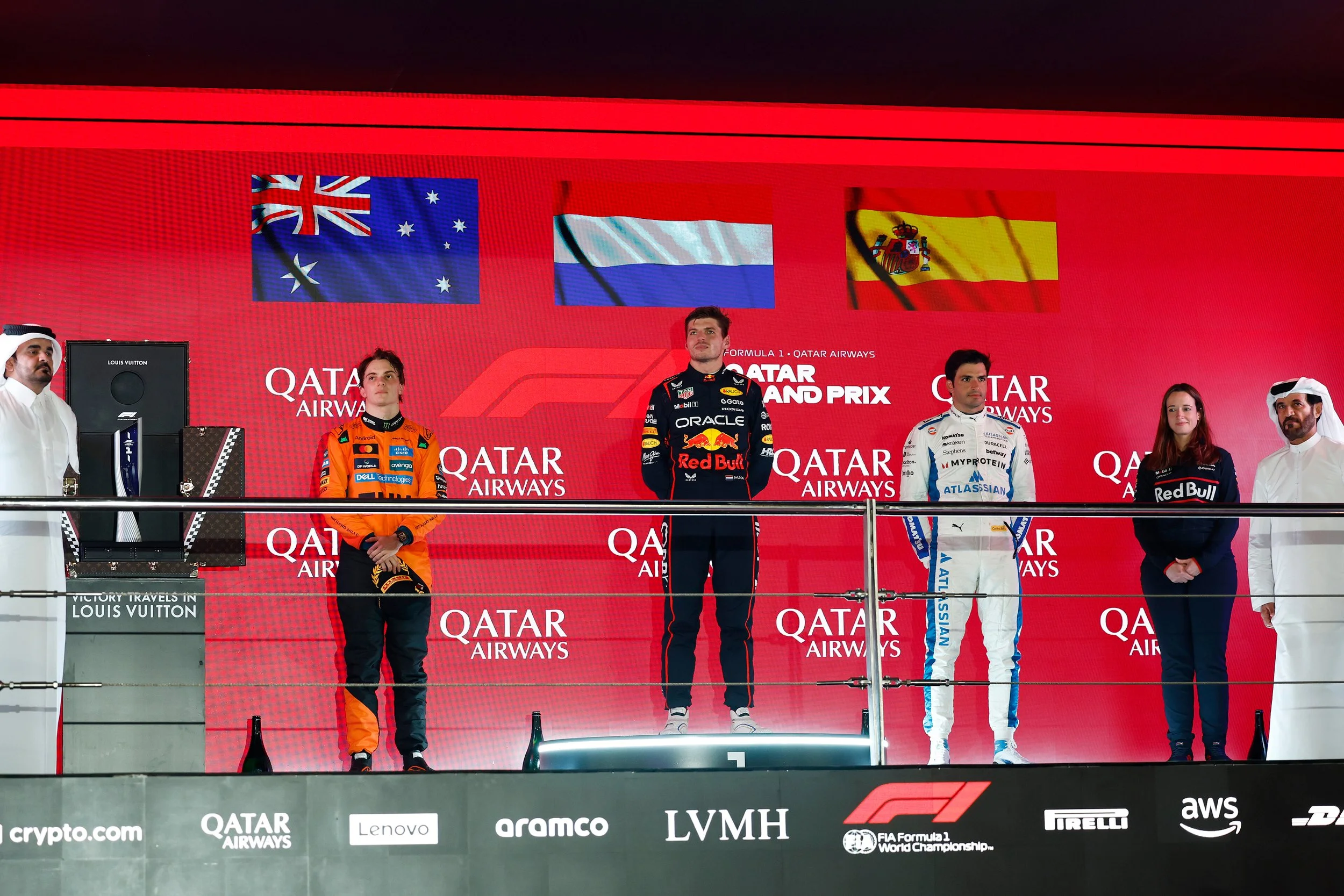
Image credit: Red Bull Content Pool
Neither Williams nor Aston Martin are in good positions this season and given the mountains that both look set to have to climb simply to draw level with some of their competitors at the rear and in the mid of the Formula 1 field, it will take something monumental for them to get back near the top of the Formula 1 pecking order anytime soon. But both drivers’ profiles, impact and popularity play a part here as their mere presence in the sport alone, regardless of how they actually do during a race, increases the value of the product that Formula 1 is selling, particularly in Spain.
So while Aston Martin are doing all they can to convince Alonso to stay with them in 2027, there is someone else in the sport however who has, it would seem, another idea about how to keep Fernando Alonso in Formula 1. Ahead of the Grand Prix in Madrid, FIA President Mohammed Ben Sulayem (MBS) gave a rather revealing quote about what could be done to keep Alonso around for a bit longer.
“There is no way we can allow Fernando to leave - Alonso, a great champion - to leave just because of the circumstances. That’s not the way to leave the stage. He has to be successful and then he leaves whenever he wants, not because he was forced to leave because of the performance….We did something earlier, in May, legally for the team towards the engine to go and improve, and then I said to him: ‘I am not going to tell you what we are going to do. Please tell me what you want because you are the driver and come and tell me what do you want us to do to improve these results.”
While an FIA Spokesperson was soon dispatched to say that MBS “is passionate about the drivers, having been one himself,” and that “I really would not read too much into this.”, it’s difficult to read those comments from MBS and not be a little curious as to their exact meaning and implication. The timing didn’t help how the comments were interpreted by many, particularly after the weekend and the absence of on track entertainment.
It’s worth noting too that there are only three Spanish drivers competing across the Feeder Series this year in Mari Boya, Bruno del Pino and Natalia Granada. But none of these three are close realistically to entering Formula 1 anytime soon, if ever. That leaves Spain’s hopes pinned on Sainz and Alonso who are more than capable but who are stuck floundering in positions where little is currently realistically possible. Their financial value to the sport, in an era where Formula 1 teams themselves are being valued at $1 billion or more, is paramount. In the cold, harsh light of day, the truth of the matter is that Fernando Alonso hasn’t won a Grand Prix in thirteen years and Kimi Antonelli has won double the number of Grand Prix this season alone than Carlos Sainz in his entire tenure in the sport to date. So even though both drivers have that same potential that the Circuit de Barcelona-Catalunya had, it makes more sense to keep them in the sport than to let them leave. Combine their value with the already proven positive financial impact of the Madring and the writing feels a little bit on the wall.
Yet, for the next nine years, we’ll have a further nine Grand Prix in Madrid with an extra three every second year because of Barcelona’s rotating position on the calendar. While a country naturally doesn’t need a driver in the Championship to justify its place on the calendar, (the U.S for example, has three races but hasn’t seen a U.S driver on the grid since 2015) it certainly helps and the impact of figures such as Sainz and Alonso is evident here. Formula 1 is determined to double down and gamble a stake of its future in Spain.
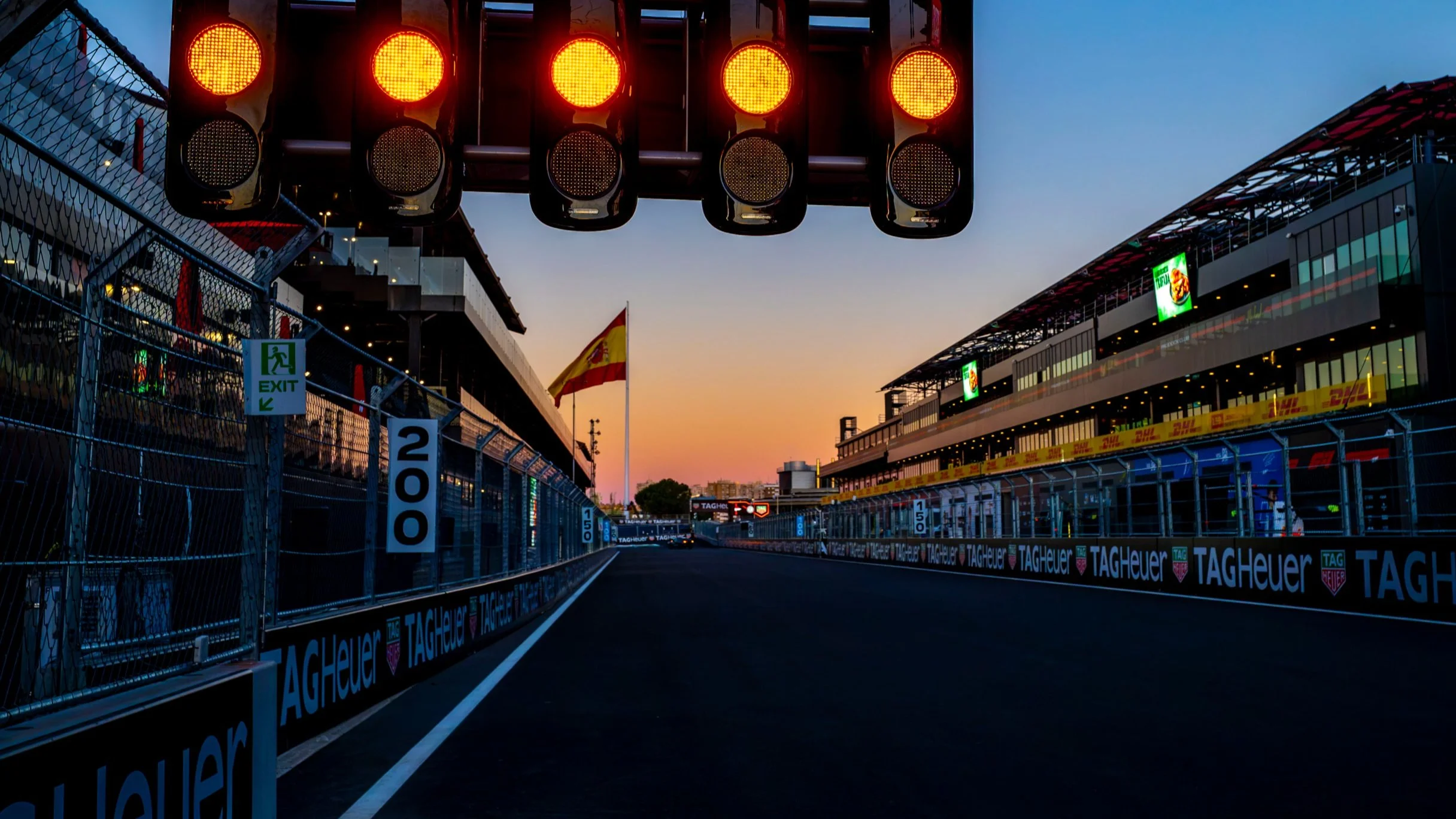
Image credit: Courtesy of MADRING, via NKrush
Madrid was all about spectacle and style over substance. While never perfect, the traditional circuit in Barcelona did give us many memorable moments across the decades. Hamilton and Rosberg’s opening lap collision in 2016 that paved the way for Max Verstappen’s first Grand Prix win. Jenson Button’s victory for Brawn in 2009. Verstappen and Russell’s battle for victory in 2022. While not impossible for Madrid to deliver moments like this in the future - it’s not started off on the right foot. It faces off against a strong history and after its debut, has made its presence harder to justify in pure sporting terms.
Much like Alonso and Sainz, Madrid needs something really special to happen to it if its fortunes are to change for the better and become successful anytime soon. In the end though, that also entirely depends on how success is defined and, more pertinently, by whom.