

All In - IndyCar’s Brand New Docuseries puts Drive to Survive in its Place
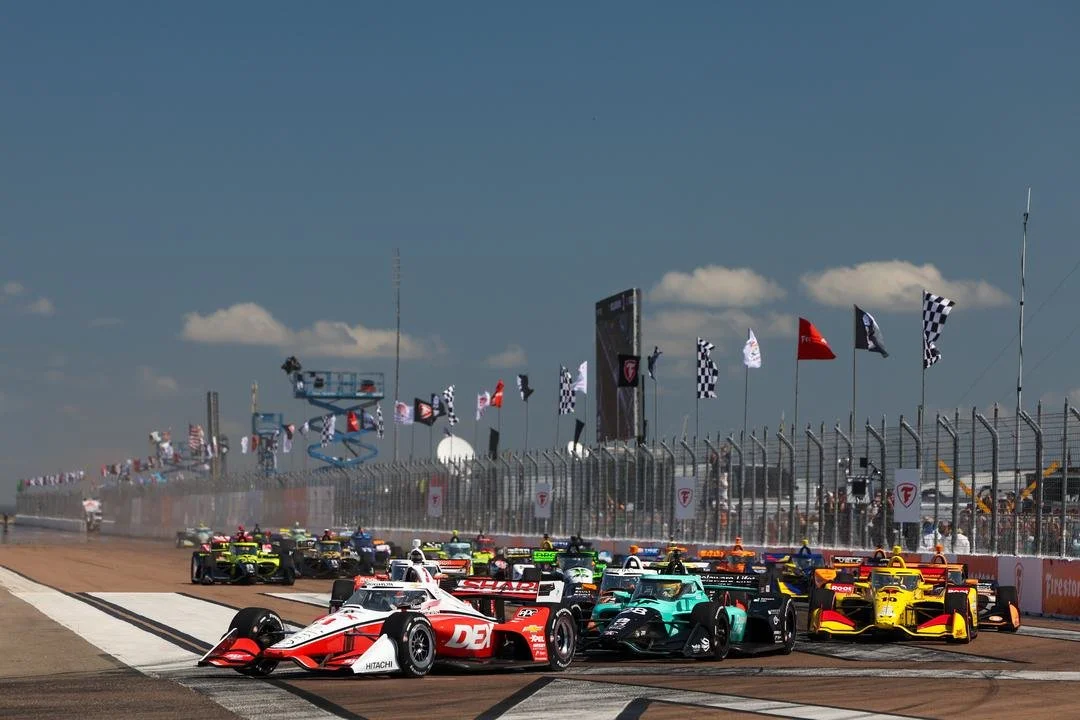
Image credit: Penske Entertainment
Formula One is a sport that has spanned the best part of the last century. Naturally, what has drawn fans to the sport has changed over time and will continue to do so long into the future. But not since 2019 has there been something off track that has had such an impact on bringing fresh fans into the series and that still continues to do so today. It was a year where Lewis Hamilton won his sixth World Championship, Charles Leclerc won his first Grand Prix and Carlos Sainz got onto the podium for the first time. But 2019 was also the year that the first season of Drive to Survive aired on Netflix. Love it or hate it, few could have predicted quite the impression that it would have not just on Formula 1 but on the entire motorsport world.
Fast forward to 2026 and it appears that over in the United States of America, IndyCar now has a response in its own brand new docuseries - All In.

Image credit: Penske Entertainment
Produced by IndyCar itself in collaboration with FOX Sports and Tom Brady’s Shadow Lion, the inaugural season consisted of twelve episodes in total with the first episode airing back in March and the final episode in September. Unlike Drive to Survive, where each instalment is filmed over the course of a racing year before the entire series is dropped in one go around a month prior to the start of the next racing season, All In is a real fly on the wall series as it’s written, shot, directed, edited and broadcast in real time, reacting to the ever changing narratives and dynamics of the current IndyCar season, focusing both on what’s most relevant at any given point in time, while also throwing a spotlight onto some of the storylines and drivers that aren’t getting the airtime that many would have hoped or expected.
While Drive to Survive feels very fantastical, glamorous and out of reach, something that has increased over recent seasons, All In instead feels more grounded and intimate as it takes you behind the scenes both across a race weekend and into the personal lives of the drivers. It’s reminiscent of Porsche’s successful docuseries “Road to Le Mans” that detailed actor Michael Fassbender’s racing career as he competed in the European Le Mans Series with an eye on ultimately competing in the 24 Hours of Le Mans.
The same is true in the style in which All In is filmed. The shots of the cars, the teams and the drivers are cinematic, grandiose and deliberate, forcing the viewer to stop whatever else they’re doing and take notice of it. It’s not flash and attention grabbing in the way Drive to Survive can be - instead, it’s more artistic, pulling you in with a stunning image or the sounds of a racetrack that makes it feel more subtle, but no less powerful. Even if the rest of the series was a mess, it would still be beautiful to look at. The decision making behind the music and the wider soundtrack is sublime too, adding an extra layer to each episode that elevates whichever scene or sequence is in motion at any one time and enrichens the overall product.

Image credit: Penske Entertainment
Naturally, there are some elements of the series that feel staged. As much as we all wish to catch drivers and other team members in raw, unfiltered moments, it’s something that rarely happens, especially in a docuseries. Take Christian Lundgaard talking with his girlfriend outside of a cafe in episode ten of the series. The conversation between them is believable enough but still feels fabricated. Yet these set ups don’t feel as forced as those that we’ve seen across the years in Drive to Survive. They’re more natural in their creation and aren’t forcing us to swallow anything too manufactured - take as the counter to this, the scene from Drive to Survive’s fourth season where Toto Wolff tells George Russell he’ll be joining Mercedes in 2022 and making the step across from Williams. As much as we may have wanted to believe that’s how it happened, we know that it’s not. Moments like that though are balanced out with spotlights such as Mick Schumacher joining other drivers for dinner at the racetrack or Scott McLaughlin at home with his family. While the setup will have been part of the plan, the interactions that take place are genuine.
Moreover, every single one of the drivers on the IndyCar grid features at some point over the course of the twelve episodes. The focus does land on some more than others but none of the drivers feel off limits or excluded from proceedings, even if little is seen of some drivers, such as Caio Collet and Sting Ray Robb. Drivers that had character building seasons this year, such as Santino Ferrucci and Christian Rasmussen, get entire episodes dedicated to them while the heavy hitters of the year like Álex Palou and Kyle Kirkwood feature throughout.
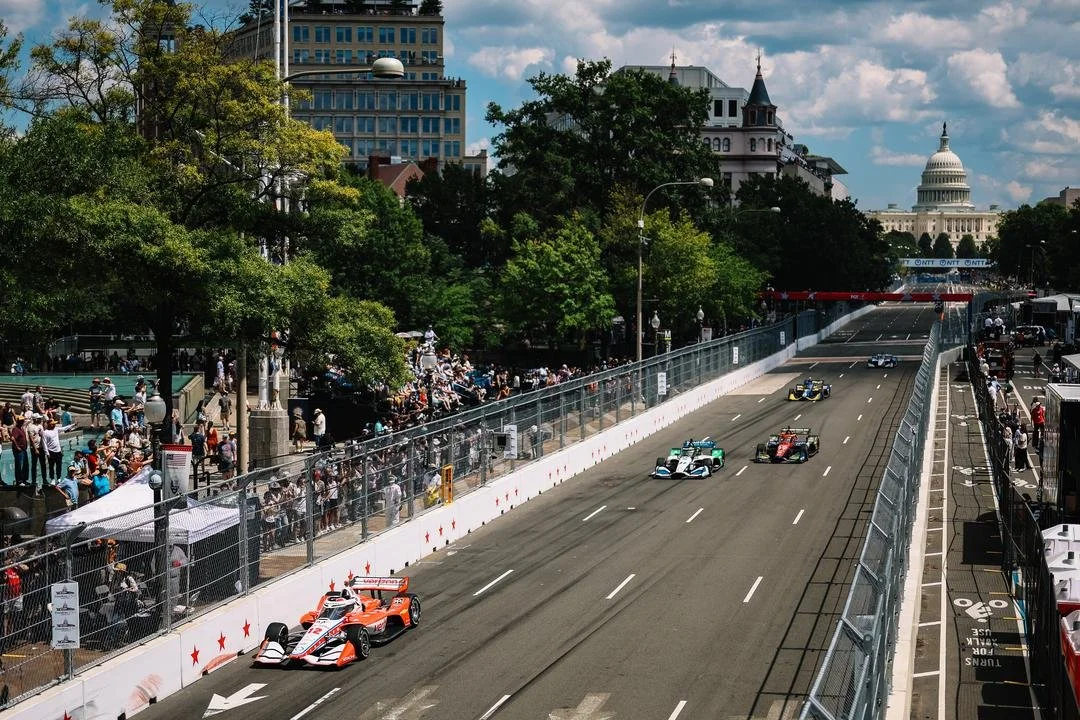
Image credit: Penske Entertainment
There’s also a risk with how All In is conceived and shot that Drive to Survive doesn’t suffer from. While the latter has months to determine where its focus will be as the next series is pieced together ready for release, the former opts instead to dial into what’s happening in the present and the potential of what could come next. The penultimate episode of the series is a great example of this. It focuses broadly on the race around the streets of Washington D.C. but with an eye on Team Penske’s David Malukas and how there couldn’t be a more fitting venue at which for the American to take his maiden win in the series. Instead, Malukas crashes out and fellow American Kirkwood drives to victory instead. What would have been a fairytale narrative and fan favourite moment doesn’t happen and the series is forced to pivot. But crucially, it manages to do so in a way that still works. The intention for the episode is clear but the creators don't let reality get in the way of that and nor do they feel it necessary to twist that reality into fitting into their original intentions.
Much like the series from the racing side, All In benefits from a blend of trusted and familiar faces offering their analysis and insight while also introducing new voices to the conversation and giving them a platform from which to contribute as well as becoming recognizable to the audience. For example, for every appearance you get from the likes of Will Buxton and James Hinchcliffe, you get a moment with someone such as Sports Illustrated’s Kaitlin Tucci who a general audience may be less familiar with. It’s a move done with an eye on both the future of the series and the future of the sport. Like many things in recent times in IndyCar, it’s done to solidify a foundation from which to build on for the future and from which to yield results - results that are already showing.

Image credit: Penske Entertainment
All In didn’t just broadcast on Fox in the United States for example. In the United Kingdom, it played on Sky Sports F1, as well as being globally available on YouTube. IndyCar’s YouTube channel saw significant growth across the 2026 season with a 58% increase in watch time, a 41% increase in view duration and a whopping nearly 70% growth in livestream views. All In itself built on this too, reaching a new and younger audience (in a similar way to Drive to Survive) and garnering more than 6 million views on YouTube alone, averaging almost 500,000 views per episode. At the time of writing, the most watched episode on YouTube is the series’ fourth episode focused on Arrow McLaren with 938K views with the lowest viewed episode being on Mick Schumacher’s move to IndyCar, currently sitting on 150K views. But even 150K isn’t bad going.
“This is an incredible new era for the NTT INDYCAR SERIES, defined by growth, energy and momentum.”
These numbers are just one part of a brilliant year for IndyCar. The series reached an average audience of 1.68 million viewers on FOX across an 18-race schedule, representing the largest average viewership in almost two decades. Nine races saw an average audience of more than 1 million viewers with the race in D.C. attracting a peak audience of 3.5 million people making it the highest tune-in for a non-Indy 500 race since 1995. Race weekend attendance also increased by approximately 20%, the IndyCar App had its highest-ever average race day users across the season, there was a nearly 20% increase in screen views compared to 2025 and official merchandise saw a nearly 40% increase in race weekend sales.
“It’s not just flashes of brilliance, it’s persistent perfection. ”
The above quotation may have been about Álex Palou but it also doesn’t feel inappropriate to use it to describe All In and its trajectory for the future. Even though there hasn’t yet been confirmation of a second season, it’s hard to fathom why one wouldn’t be commissioned. IndyCar and the powers behind the series have had years to watch how Formula 1, Liberty and Netflix have gone about scaling up not just their own series but the sport too and how one can feed into the other. They’ve seen what works, what doesn’t and most importantly, what the fans want with the intention of keeping them front and centre of their thought process throughout. In a space that is gradually becoming busier and busier with motorsport focused series and films, both fictional and non-fictional, creating a product that stands out from the crowd with its own distinct identity has become more and more valuable. NASCAR has attempted to replicate Drive to Survive’s success with its own series, Full Speed, which received mixed reviews, while F1 Academy’s attempt at the same got quietly cancelled at Netflix after just a single season.

Image credit: Penske Entertainment
IndyCar and Fox Sports have clearly been able to already learn from this and not make the same mistakes as others. As well as being broadcast on YouTube and Fox Sports, All In is also available on Prime - but unlike the shows mentioned above, it’s not dependent on its performance there alone to continue in the future. Fox Sports acquired one third of the ownership stake of IndyCar itself in July 2025 and as a result, can work closely with the series to make the investment work for all involved. It’s the equivalent of Netflix buying a large stake of ownership in Formula 1. Suddenly the dynamics change and priorities become clearer. IndyCar and Fox Sports so far seem to be a match made in heaven and the path they’re on now looks set to continue to be a fruitful one not only in 2027 but into 2028 and beyond when the series introduces a new era of car to the sport too.
At a time where questions are being raised about the future of Formula 1, how long it can maintain its levels of growth for, its controversial new regulation set and at times, a splintering fanbase, IndyCar looks poised to be in a perfect position to take advantage of all of that. Maybe that takeover has already begun with All In. At the very least, it’s definitely worth a watch.