

From Desert Stages to the Grid: The People Who Built Motorsport in the Gulf
FIA President Mohammed Ben Sulayem says the UAE now ranks among the world's leading motorsport destinations. The story of how it got there begins on rally stages outside Dubai, decades before the first Grand Prix came to the Gulf.
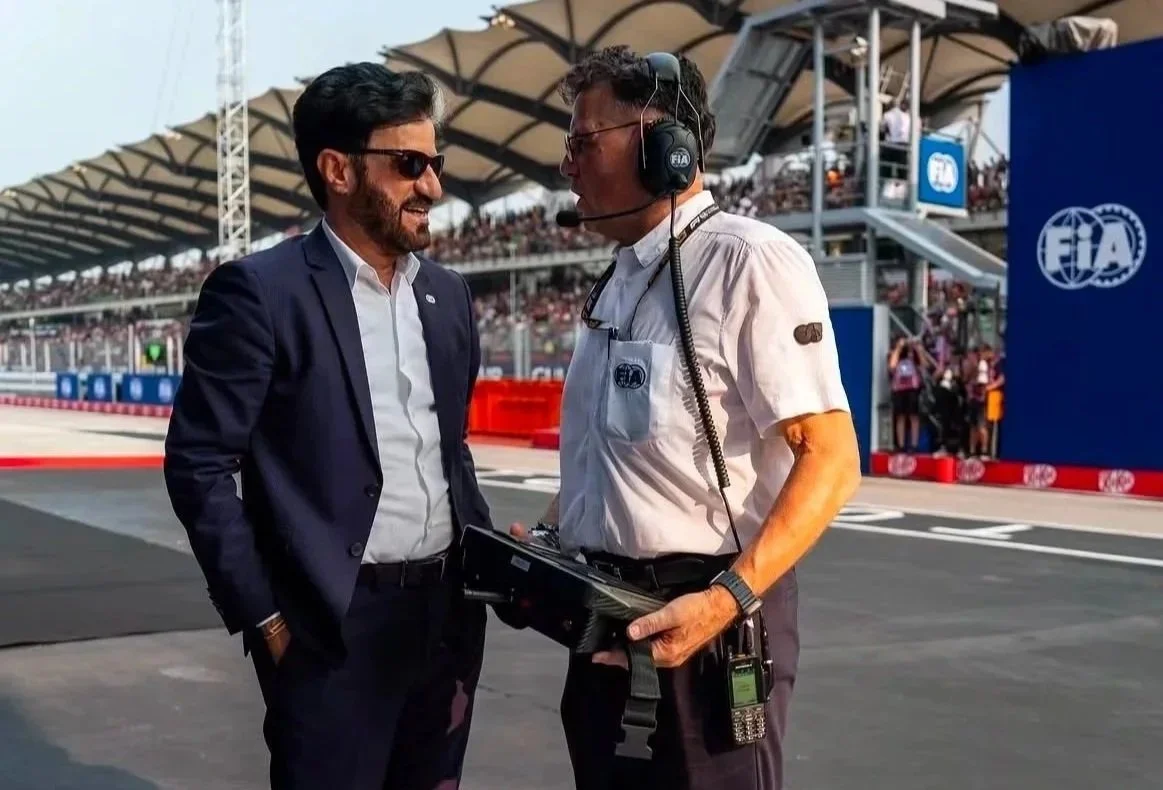
Image credit: FIA
In December 2002, Mohammed Ben Sulayem took his Ford Focus World Rally Car to the finish of the Dubai International Rally almost four minutes ahead of the next crew, with British co-driver John Spiller beside him and his 14th FIA Middle East Rally Championship title already secured in Jordan that September. It was his 15th victory on home roads and his 60th win in the regional championship, and it marked the end of his regular international rally career, although he would return to national competition in 2015.
Twenty-four years later, the same driver leads the FIA, and in an interview with the Emirates News Agency (WAM) published on 9 October 2026 he described the UAE as one of the world's leading destinations for motorsport. He credited the Grands Prix in Abu Dhabi, Bahrain, Saudi Arabia and Qatar with bringing the sport to new audiences, young people and women in particular, and he told young people across the Arab world that motorsport now offers them careers far beyond the driver's seat. Between that last rally in Dubai and that interview lies the story of how a regional sport built almost entirely around rallying became an industry, and of the people who carried it there.
When Rallying Was Everything
The Dubai International Rally, the oldest motorsport event in the UAE, has been running since the late 1970s, and when Ben Sulayem began winning it in the mid-1980s the country itself was barely in its teens. His rivals came from the same small regional scene, and in the 1990s Sheikh Suhail Bin Khalifa Al-Maktoum was one of the few drivers who could occasionally match his pace, winning the event in 1990 and fighting back through a string of early punctures to chase him hard in the 1995 edition.
Ben Sulayem’s career also took him beyond the Gulf, to Morocco, where he raced in the FIA African Rally Championship in 1987 and 1988 and, as he has recalled, finished second in 1987, an experience he still associates with the passion of North African rally fans.
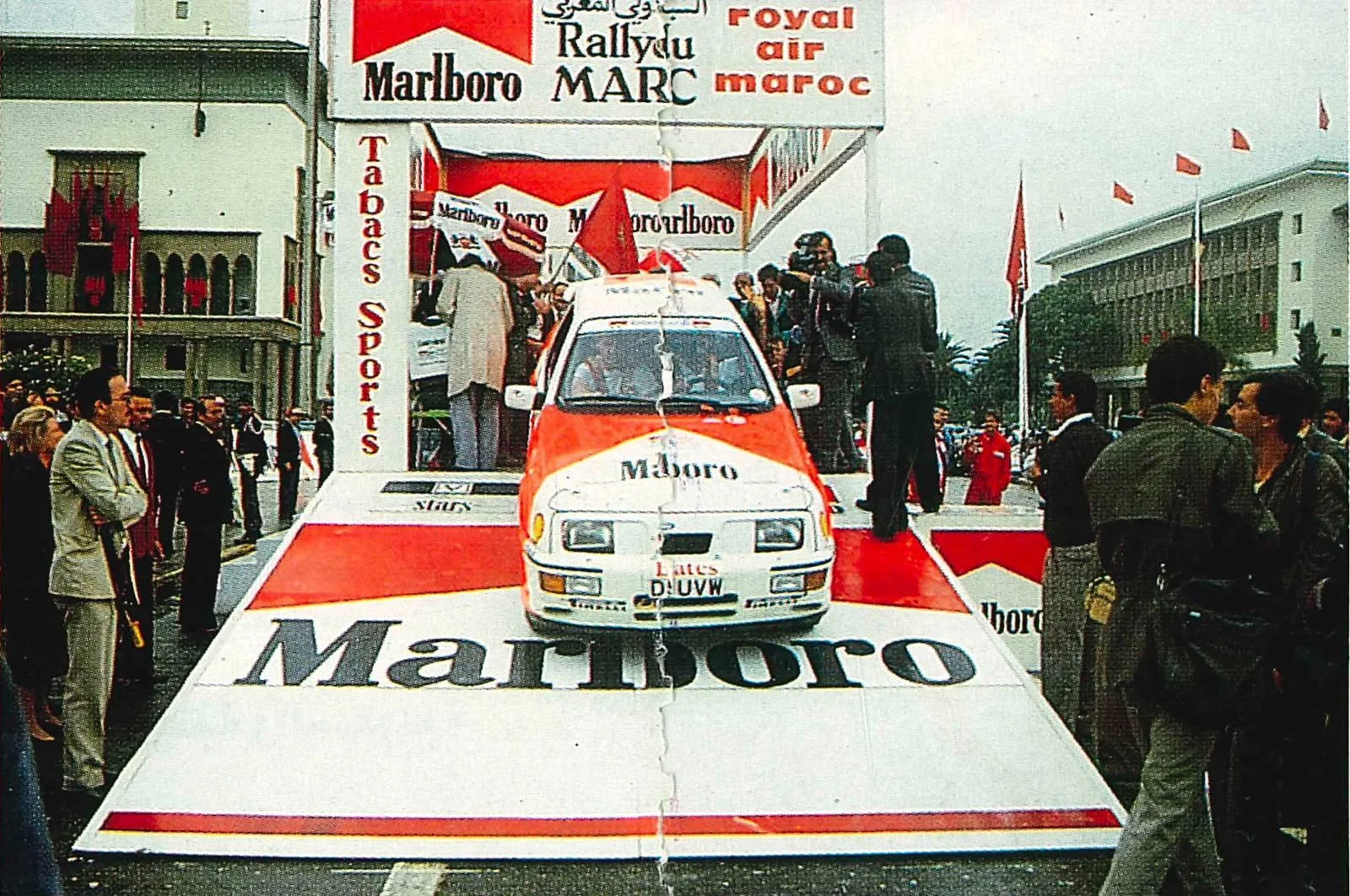
Image credit: FIA
Mohammed Ben Sulayem at the Rallye du Maroc, which he contested in the FIA African Rally Championship in 1987 and 1988.
The championship they contested, the FIA Middle East Rally Championship, began in 1984 with the Qatar International Rally and has been fought ever since across desert, gravel and asphalt in heat that the FIA counts among its permanent challenges. Ben Sulayem's 14 titles stood as the series record until Qatar's Nasser Al-Attiyah, who joined the championship in 2003, went on to collect 20, the latest of them in 2025. In 1991 Ben Sulayem also launched the UAE Desert Challenge, which joined the FIA World Cup for Cross Country Rallies in 1993, became the Abu Dhabi Desert Challenge in 2009 and returns from 22 to 27 November for its 35th edition as the closing round of the World Rally-Raid Championship.
Video courtesy of the FIA
On the eve of the 2008 Dubai rally, by then an FIA vice-president, he told The National how narrow the sport in his country had been only a decade earlier:
“Ten years ago motorsport in the UAE was limited to rallying.”
By the time he said it, the UAE already had two circuits and Qatar and Bahrain had their own, and the region was preparing to host world championship racing on a scale far beyond anything its rally events had ever offered.
From the Driver's Seat to the Club Office
When Ben Sulayem traded the cockpit for administration and took charge of the Automobile and Touring Club of the UAE (ATCUAE) in 2006, the country had around 90 licensed competitors, most of them rally drivers, and fewer than 20 official events a year, and by November 2008 the club was reporting more than 1,200 licensed competitors and a calendar of around 140 events. Efforts to broaden participation continued in the following years, and for 2013 the club waived competition license fees for every Emirati driver and rider, with Ben Sulayem arguing that the future of the sport in the UAE depended on Emiratis taking part as officials and volunteers as much as competitors.
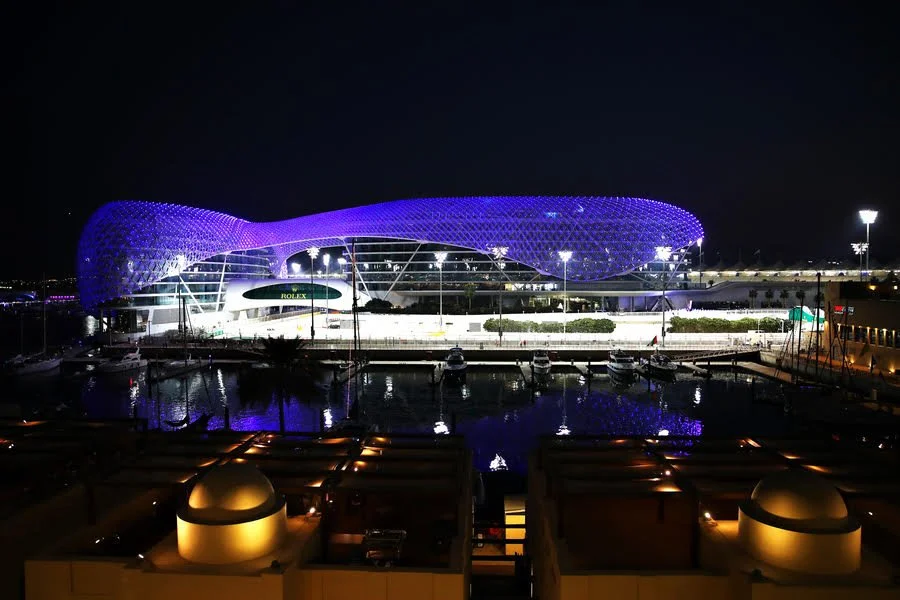
Image credit: KICK Sauber F1 Team, 2025
Formula 1, meanwhile, brought demand on an entirely different scale, as Bahrain hosted the first World Championship Grand Prix in the Middle East on 4 April 2004, won by Michael Schumacher for Ferrari, and Abu Dhabi closed the 2009 season at the new Yas Marina Circuit with the championship's first day-night race, won by Sebastian Vettel for Red Bull. Qatar and Saudi Arabia followed with their inaugural Grands Prix in November and December 2021, giving Formula 1 four host countries in the Gulf within seventeen years of its first visit.
What the television pictures from Yas Marina rarely showed was the workforce behind them. The ATCUAE acted as sporting organiser of the Abu Dhabi race from its first edition, and by 2015 around 650 volunteers from the UAE Motorsport Marshals Club were marshalling the event, a corps that Ben Sulayem has called the sport's unsung heroes. Their work also earned international recognition, with UAE motorsport volunteers receiving multiple FIA awards over the years.
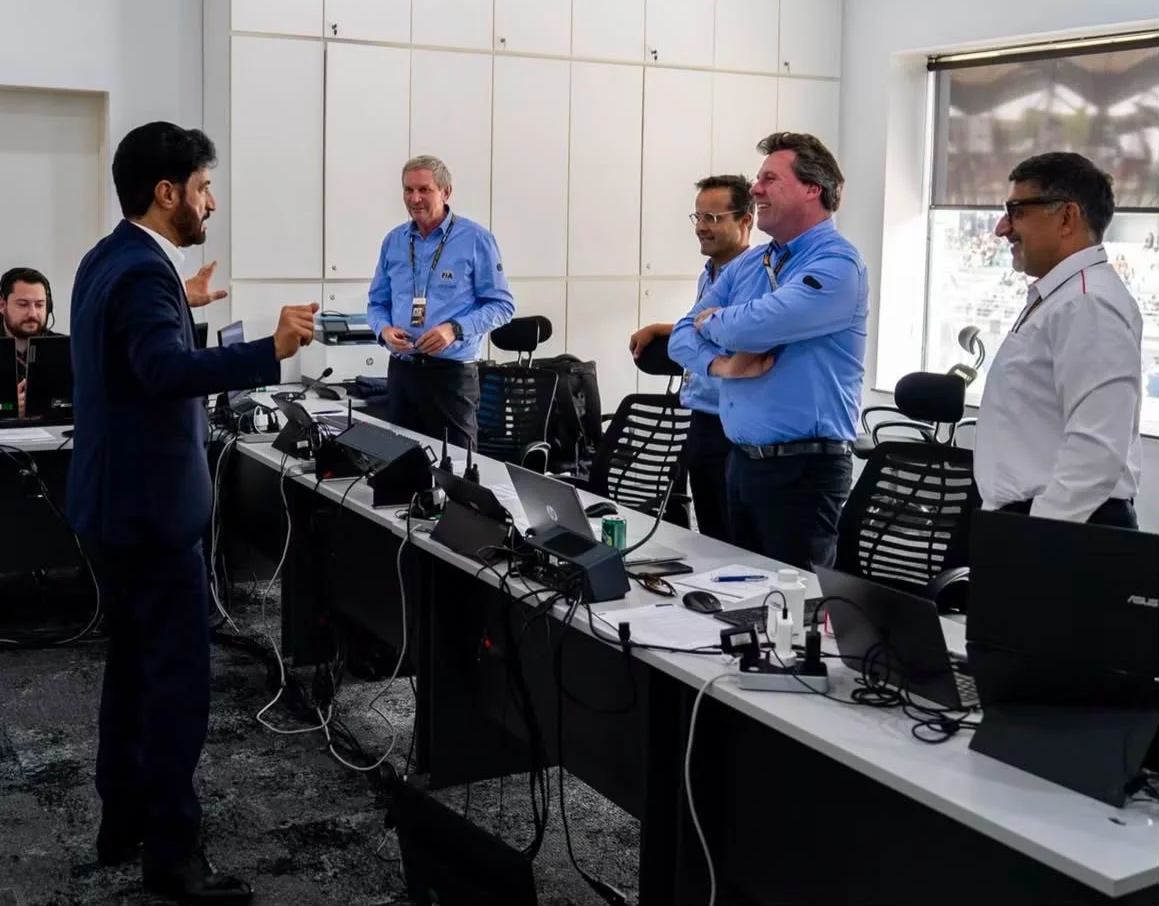
Image credit: FIA
The Generation That Grew Up With the Grand Prix
Amna and Hamda Al Qubaisi were small children when Yas Marina staged its first Grand Prix, and they grew up in a house where racing ran in the family. Their father, Khaled Al Qubaisi, was the first Emirati to race at the 24 Hours of Le Mans and won the Dubai 24 Hours three times, and both daughters came through Yas Heat Academy, Abu Dhabi's racing development programme. Amna became the first Emirati woman to race in the F4 UAE championship and on 30 November 2019 won the F4 UAE Trophy race at Yas Marina from pole on the Abu Dhabi Grand Prix weekend, the first victory by an Arab woman in an FIA single-seater race, while Hamda won four races on her way to third in the inaugural F1 Academy season in 2023 and was signed by Red Bull Racing for its first F1 Academy campaign a year later.
When the sisters returned to Yas Marina for the 2024 F1 Academy finale, as a support race to the Formula 1 season finale, Hamda explained what it meant to race there:
“Racing at Yas Marina Circuit is both nostalgic and empowering for us as Emirati women.”
In 2025 the sisters switched to sportscars, sharing a Team Virage Ligier JS P4 in the Ligier European Series and finishing fourth in the standings, and this season Amna has become the first woman to race in the Pro class of the Porsche Carrera Cup Asia, with Team Jebsen, which shows how many directions a career can take once the door into professional racing is open. Saudi Arabia had its own version of that moment on 24 June 2018, when Aseel Al Hamad, the first female member of the Saudi Arabian motorsport federation and a member of the FIA Women in Motorsport Commission, drove a 2012 Lotus Renault E20 around Paul Ricard before the French Grand Prix, on the same day that women in the kingdom were first allowed to drive on public roads. She described it that day as the birth of women's motorsport in Saudi Arabia, and three and a half years later Jeddah hosted its first Formula 1 race.
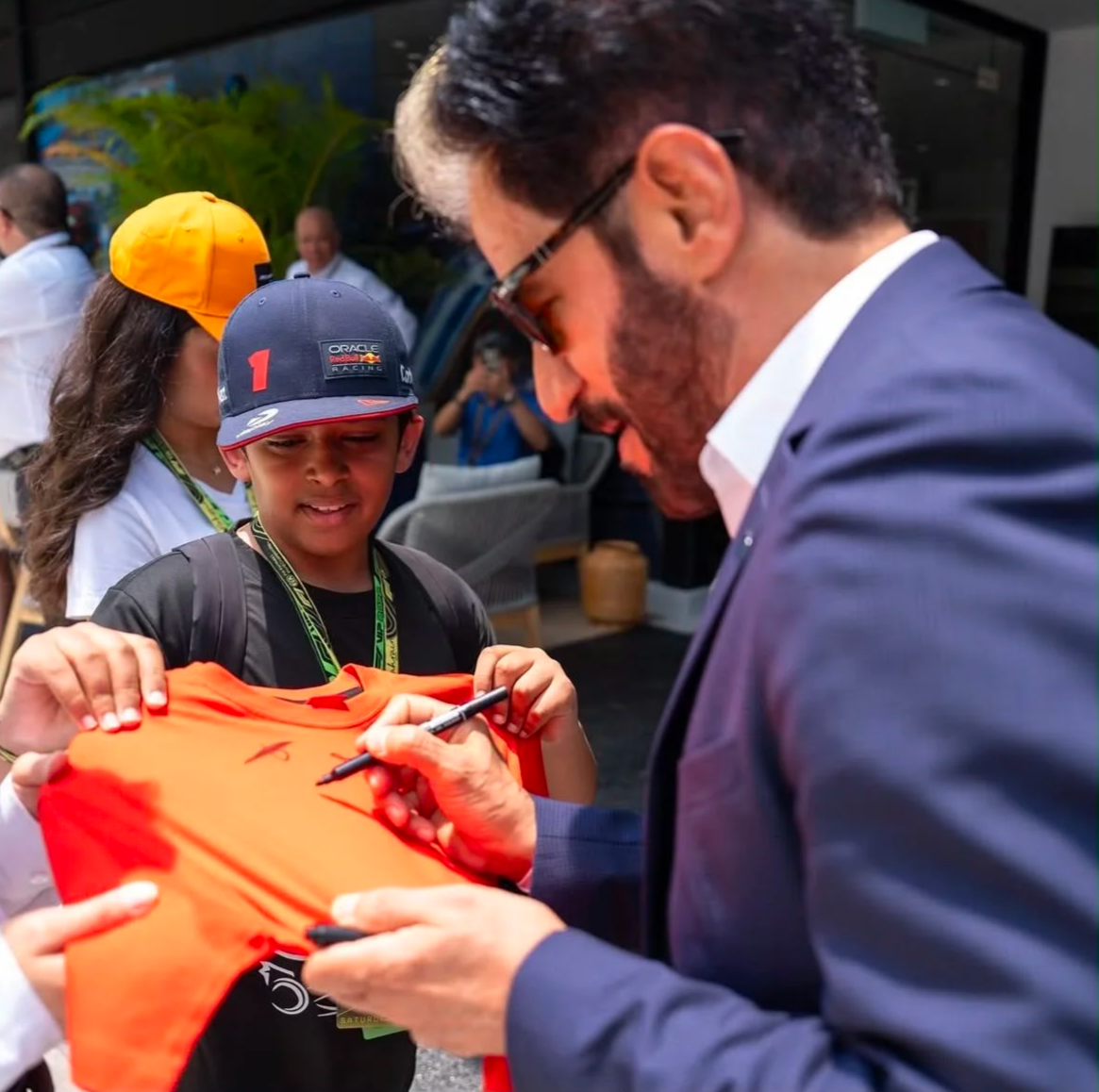
Image credit: FIA
Careers Beyond the Cockpit
Ben Sulayem's point in the WAM interview was that the next generation does not need to reach the grid to build a life in the sport, and he named engineers, technicians, event organisers and specialists in technology and data as the people motorsport now needs. The FIA's figures from the World Endurance Championship point to a broader trend in international motorsport: 44 per cent of trackside attendees in 2026 were aged 34 or younger, while 40 per cent were attending for the first time.
The FIA's programme for turning that kind of interest into careers started in Bahrain on 31 October 2024, during the WEC season finale, where CareerShift brought up to 50 students aged 16 to 22 into the parts of a race weekend that broadcasts seldom show, where they met the Clerk of the Course, the Race Director and the stewards in Race Control, walked the pit lane and visited the team garages, tried the marshals' flag signals and sat in on a media workshop led by the FIA Media Delegate.
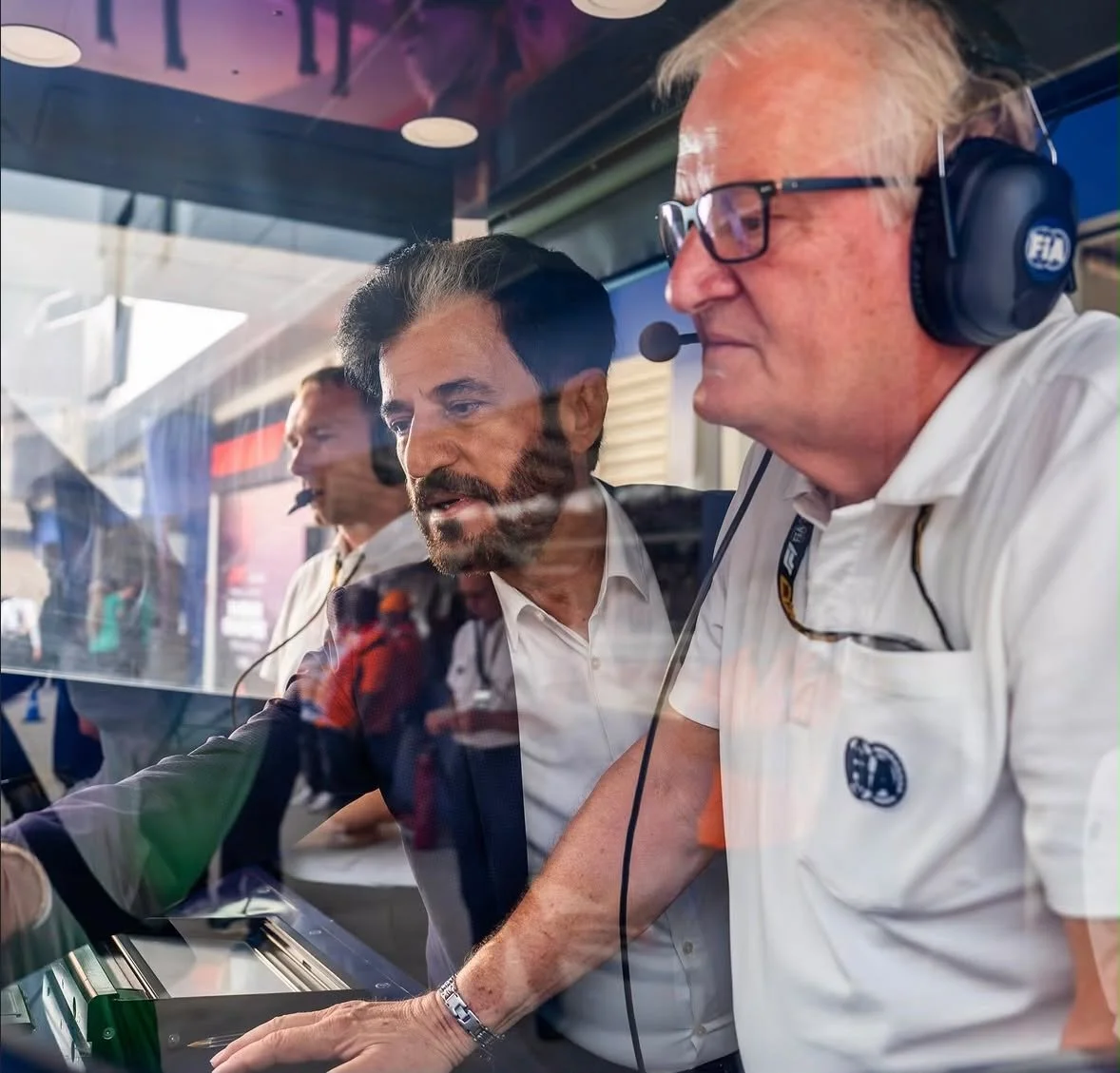
Image credit: FIA
Since 2025 the programme has travelled to the WRC, Formula E, the TCR World Tour and Formula SAE as well as the WEC, now for ages 16 to 24. FIA Girls on Track, which is aimed at girls aged 8 to 18, recorded more than 2,500 participants across 27 events held with Formula E in 2024. Both initiatives still report participants rather than careers, which is natural for programmes this young, but it means the real measure of Ben Sulayem's message lies several seasons ahead, in how many of those students later appear on a paddock pass.
A Fragile Calendar and a Stable Framework
The optimism of the interview sits alongside a difficult year for racing in the region. On 15 March 2026, Formula 1 and the FIA cancelled the April Grands Prix in Bahrain and Saudi Arabia because of the conflict in the Middle East, and Ben Sulayem said at the time that the FIA would always put the safety and wellbeing of its community first. The Saudi race stayed off the calendar, but in late July Formula 1 and the FIA confirmed that the Bahrain Grand Prix would be staged at Malaysia's Sepang International Circuit, and from 2 to 4 October the Gulf Air Bahrain Grand Prix in Malaysia took place there, bringing the season to 23 rounds.
Bahrain's ambassador to Malaysia, Waleed Khalifa Al Manea, said that more than 500 Bahrainis had flown in to help run circuit and race operations alongside Malaysian organisers, less than ten weeks after the move was confirmed. The Bahraini contingent included marshals, circuit managers and operations staff, and their presence at Sepang showed how much a race that appears on the calendar under one country's name depends on trained people who can be gathered quickly and moved thousands of kilometres from home.
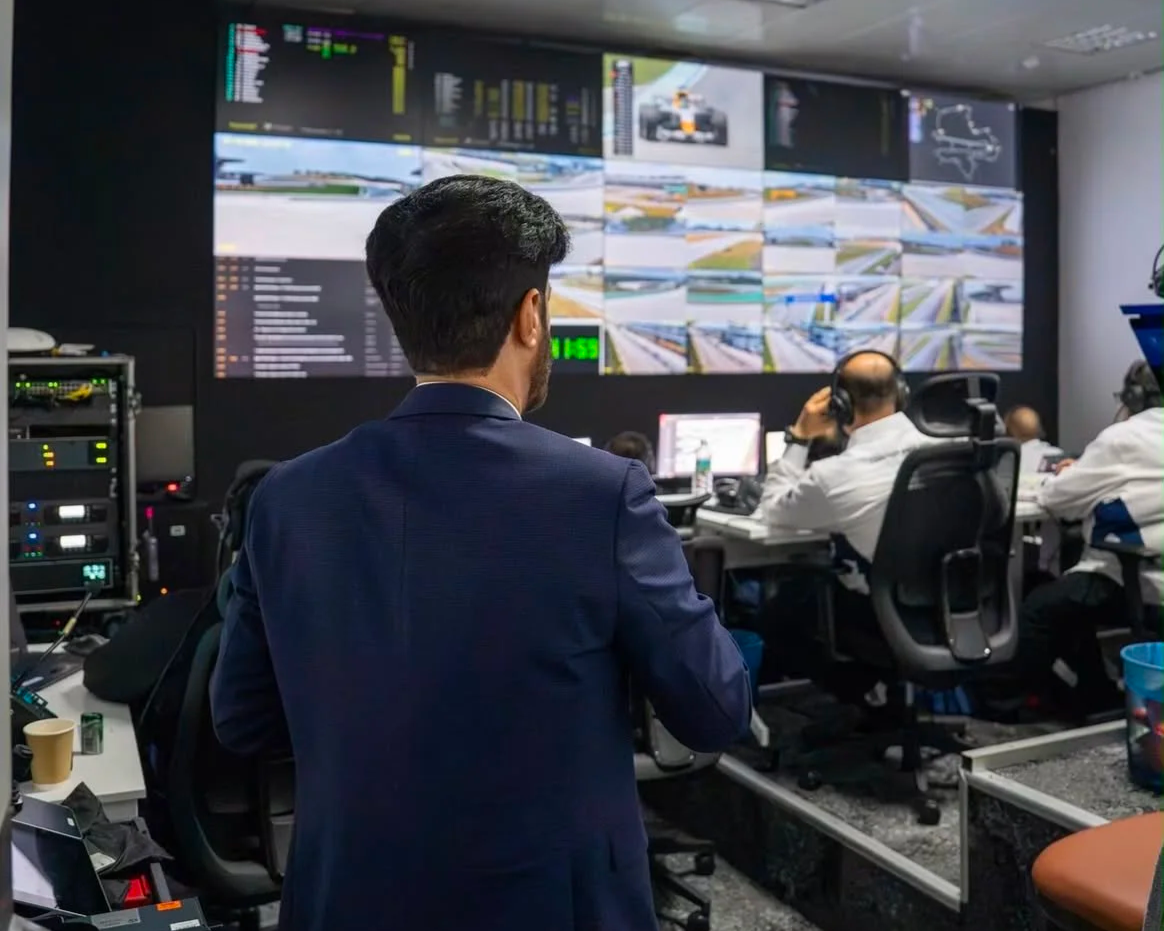
Image credit: FIA
Away from the calendar, the federation has spent the past eighteen months tying its championships to long contracts. The Concorde Governance Agreement signed with Formula 1 and all 11 teams in December 2025 runs to 2030, the Formula E agreement was extended by ten years in July 2025, a new commercial deal for the WRC and ERC was completed in July 2026, and the endurance partnership with the ACO now runs to 2037.
The FIA reported an operating profit of €6.7 million for 2025 against a €24 million loss in 2021. Separately, the federation introduced its Officials Department in September 2024, with the department becoming operational for the 2025 season, which brings the story back to the volunteers and officials who carried the sport in the Gulf long before the contracts arrived.
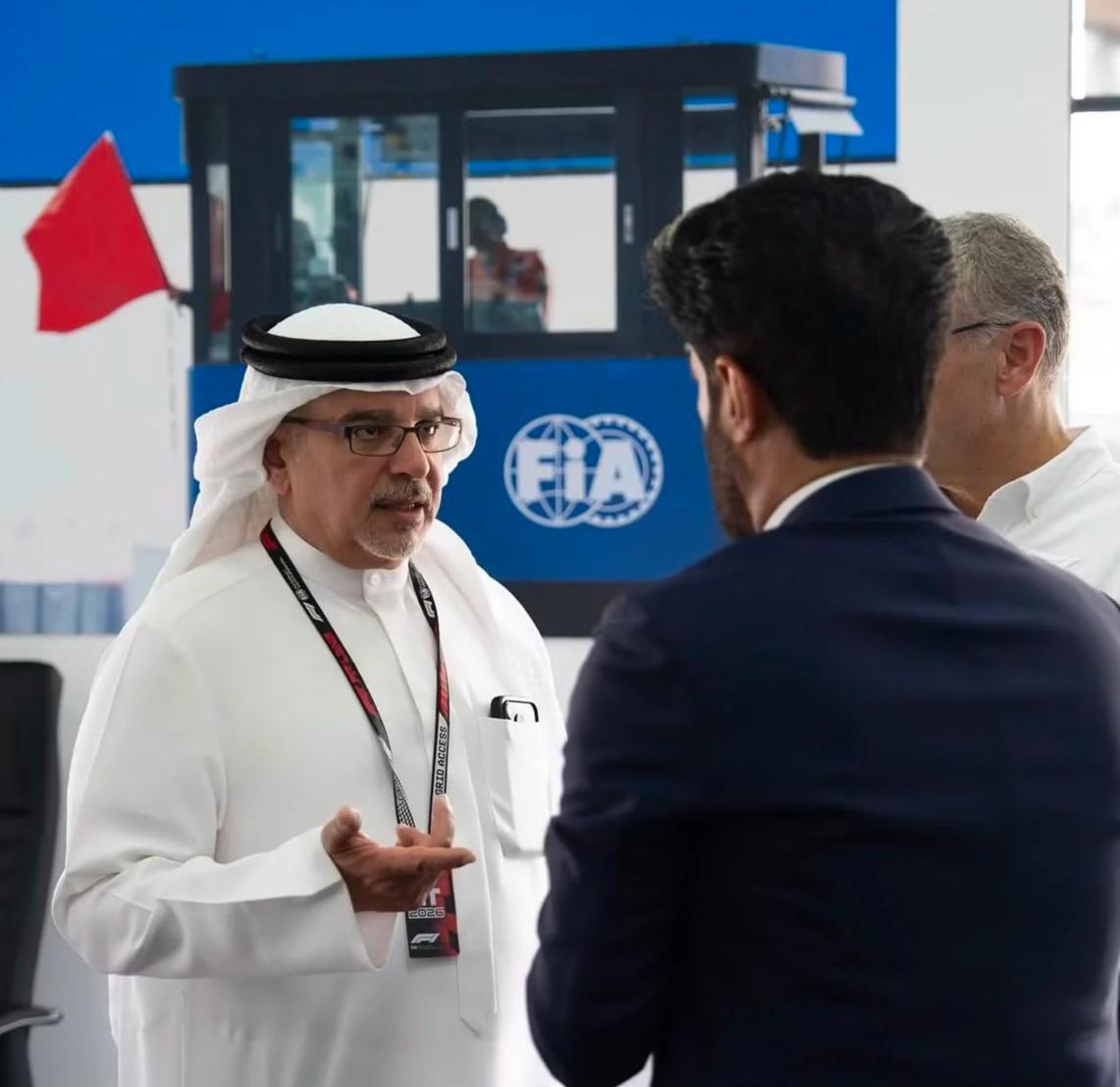
Image credit: FIA
Who Runs the Next Race
The Gulf no longer has to prove that it can host world championship motorsport, with four Grand Prix venues and a Desert Challenge heading into its 35th edition. The harder question behind Ben Sulayem's interview is whether the region can produce the people who race in those events and run them, and the answer will be found in entry lists and in race control rather than in hosting contracts. The driver who ended his regular international rally career in 2002 went on to lead a national motorsport club before becoming FIA President, and the next chapter depends on whether programmes like CareerShift and academies like Yas Heat can make that kind of path ordinary for the generation that follows.
Reporting based on the interview with FIA President Mohammed Ben Sulayem published by the Emirates News Agency (WAM) on 9 October 2026, historical records and official FIA publications.