

From Benetton to Gucci: Fashion Returns to Enstone
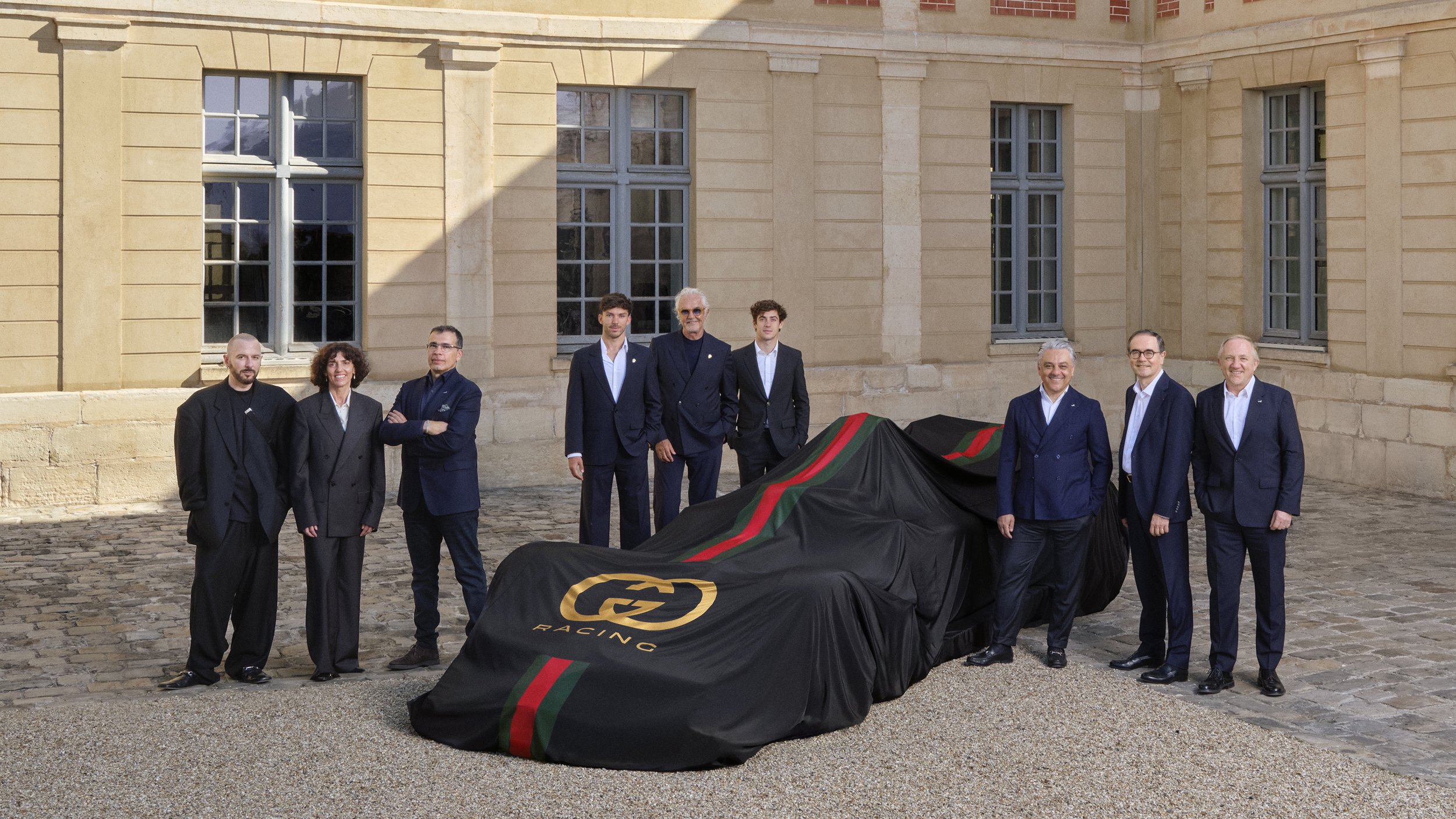
Image credit: Alpine Media Centre
Fashion houses have lent their names to Formula 1 before, usually in the form of a logo on a driver’s collar or a hospitality suite with better champagne than the one next door. What Alpine and Gucci confirmed this week is a different order of thing. From 2027, Alpine will race under a new banner as the Gucci Racing Alpine Formula One Team, the house’s name not stitched onto a sleeve but built into the identity of the car itself.
Gucci has framed the venture as part of something wider than a sponsorship deal, and in this case the corporate vocabulary is more revealing than usual. Francesca Bellettini, Gucci’s President and CEO, described Formula 1 as a “unique convergence of performance, culture, and global reach.” That is exactly the territory this deal occupies. Most sponsors attach themselves to a team whose identity has already hardened. Gucci is arriving early enough to help shape what that identity becomes.
The instinct is to read this as a luxury brand chasing a fashionable audience, and that instinct is not wrong, but it misses how deep the roots go. The team Gucci is joining works out of Enstone, an operation that has belonged, at various points, to some of the sport’s more romantic failures and one of its strangest success stories. In the nineties it was Benetton, the Italian clothing company that bought its way into Formula 1 and then won two world championships with a young Michael Schumacher. Benetton remains the closest Formula 1 has come to a fashion-branded world champion.
Briatore knows that history better than anyone. In announcing the partnership, he noted that the Enstone team had already shown that “fashion can finish first in Formula 1.” The line works because it is not just a slogan. The man who ran Benetton then is back at the centre of Alpine now, which means the person welcoming Gucci to the grid is the same person who proved, thirty years ago, that this kind of crossover could actually work.
For more on Alpine’s wider resurgence and Briatore’s return, read our analysis of the team’s current flashpoint moment.
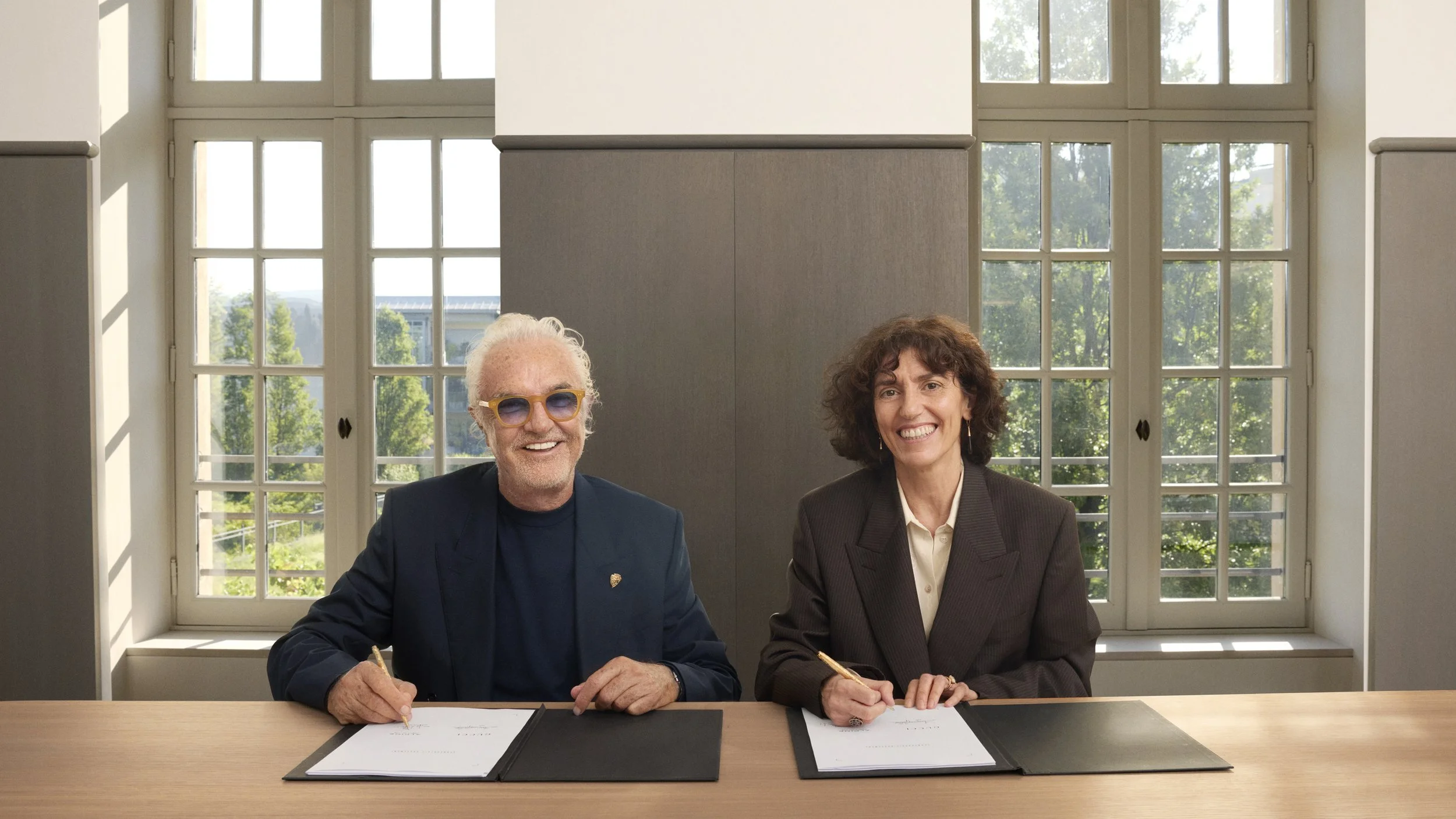
Image credit: Alpine Media Centre
There is a second thread connecting these two worlds, and it is the more telling one. Before taking charge of Kering, Gucci’s parent company, Luca de Meo ran Renault, and during those years he helped turn Alpine from a revived badge into a genuine racing project. It is rare for the same person to have shaped both halves of a deal like this from opposite sides of it. That does not make the partnership inevitable, but it does make it feel less like an opportunistic flirtation than something that could only happen once the right people were in the right chairs.
What makes the timing interesting is that fashion has been edging toward this sport for a while, sensing that the audience had changed. Formula 1 is no longer simply a place for luxury brands to advertise. It has become a world they want to enter. The crowd watching the sport now is younger, more international and increasingly comfortable moving between a Grand Prix weekend, a runway show, a streaming documentary and a product drop. That overlap is precisely the territory a house like Gucci wants to own, especially one in the middle of reintroducing itself under new creative direction. The sport stopped being a niche for engineering obsessives some time ago. It became a stage, and the luxury world noticed.
The most interesting question is what happens to the car. A title partnership gives the brand the entire surface to work with, so the livery, the suits, the garage and the whole choreography of a race weekend become an expression of the house, beamed into living rooms around the world more than twenty times a year. Alpine’s current blue and pink will give way to Gucci’s colours, and a brand with a century of monogram, webbing stripe and a particular instinct for gold and green does not tend to do quiet. The first time that car rolls out of the garage, it will be one of the most closely watched pieces of design in the sport.
It would be foolish to pretend any of this settles what happens on the track. A livery has never overtaken anyone, and taste is no substitute for a competitive car. After a bruising recent period, Alpine has begun 2026 in a stronger position than its recent past might have suggested, which makes Gucci’s arrival feel less like a rescue mission than a bet on timing. But the racing will still be decided by the things racing is always decided by: the car, the power unit, the drivers, the structure behind them and the team’s ability to make all of it work under pressure.
What the deal changes immediately is the conversation around the team, and the kind of attention it now commands. For most of its history, Formula 1 sold speed, then engineering, then the backstage drama that turned it into appointment television for people who had never cared about cars. What it is selling now, increasingly, is belonging to a certain world. Gucci Racing is the boldest statement yet of where that world and this sport intend to meet.
The car is one season away. The idea has already arrived.