

The Greatest Spectacle in Racing - the 110th Indianapolis 500

Image credit: IndyCar Media Centre
Throughout motorsport history, there are moments where everyone will remember where they were when those moments took place. Whether those moments are either some of the most rousing, controversial, celebratory or tragic, they each bind together a global following of individuals the majority of which will never meet one another. That’s the power of motorsport and last weekend, for the 110th running of the Indianapolis 500, another of those rare flashpoints was created, experienced and seared into the memories of all those who witnessed it, both trackside and around the world.
As the sun rose over the Indianapolis Motor Speedway on Sunday May 24th, the conversation naturally turned, as it had done all month, to which driver would triumph by day’s end. After weeks of practice, thousands of laps and an entire day dedicated to qualifying, the grid was set. It was finally time to go racing.

Image credit: IndyCar Media Centre
The dominant force and winner of this fabled race in 2025, Álex Palou, would be starting from Pole. The definitive man to beat, Palou has looked all but untouchable for the last few years. Winning again would be yet another demonstration of his sheer might behind the wheel of an IndyCar.
Alongside him was an injured but determined Alexander Rossi and the incredibly quick David Malukas. If Rossi won, he would do so ten years after his maiden win and less than a week after a heavy crash in practice left him on crutches when he was hurtling around the Speedway at over 210mph. For Malukas, it would be a victory that not only unequivocally confirmed his place at Team Penske for long into the future but would build both on his runner up finish last year and show how far the American has come since being relegated to the sidelines by Arrow McLaren in 2024.
In the end, it would be none of these three that would end up on top. Instead, it would be one of the men lining up just behind them on the second row of the grid. But the story of how Felix Rosenqvist converted his fourth place starting position into his first Indy 500 win (and only the second win of his IndyCar career) was far from straightforward.
From the beginning, there were teases that this running of the Indianapolis 500 would be unlike any that had come before it. The opening laps saw an epic strategic game of cat and mouse unfolding between Palou and Rossi as they stole the race lead from one another time and again in what felt like every two laps or less. As soon as you got used to one being out in front, the other would sweep past and claim the lead for themselves. The consistency and calibre of race craft on display from both was one for the ages.
Behind them, a myriad of other duels were taking place - or in the case of Josef Newgarden, a presentation of pure unrelenting speed as he fought his way forwards from twenty-third on the grid until he was comfortably inside the top ten. Conor Daly too was another driver that stood out from the pack. In a one-off appearance for one-shot team Dreyer and Reinbold, the Indiana driver stormed into the lead at several points throughout the race. It was a powerhouse display of why he deserves a full time seat on the IndyCar grid.
Those are just two examples of the exemplary talent on display throughout the field. Drivers were three or four wide at points and yet everyone somehow emerged from these skirmishes unscathed.
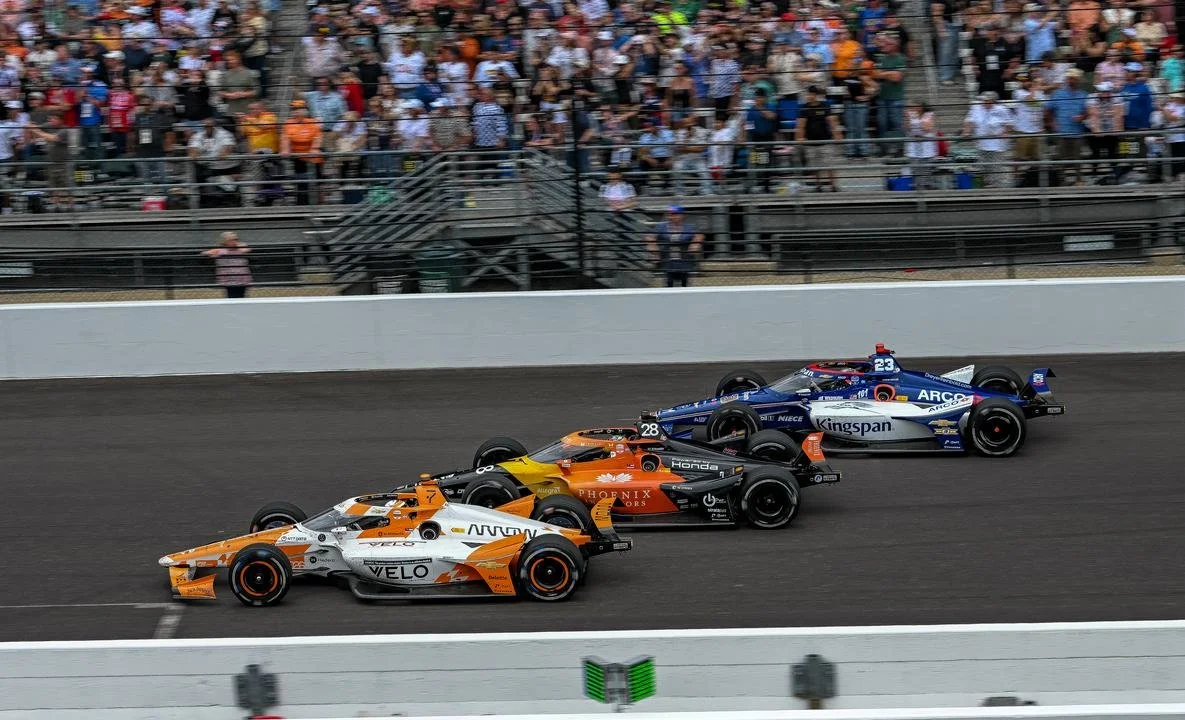
Image credit: IndyCar Media Centre
But the peace wasn’t destined to last and when it ended, chaos reigned.
The first to fall was veteran racer Ryan Hunter-Reay as he crashed out of his nineteenth appearance in the Indy 500. Behind him, Katherine Legge sacrificed her own race to avoid colliding heavily with the American, spinning out of the race as a result. As exits from races go, Legge’s was a particularly selfless and noble one, reminding everyone that while every driver is there to win, that desire shouldn’t come at the cost of putting your fellow competitors in danger.
Ed Carpenter followed soon after as he hit the wall with Will Power and Alex Rossi bowing out from the race with mechanical issues. For Power, it was yet another case of bad luck that continues to plague his season. For Rossi, it was a devastating end to an already Herculean effort to compete for the race win.
Christian Rasmussen and Helio Castroneves would also quietly exit the race with their own internal issues while Josef Newgarden and Caio Collet were less fortunate. The former spun and crashed just as a race restart was underway while the latter made contact with the wall, dismantling the rear of his car in spectacular style and setting the car temporarily alight in the process.

Image credit: IndyCar Media Centre
The weather played its part in the Indy 500 too, with rain red-flagging the race while Scott Dixon led. But it wasn’t to be his day either and when the race resumed, the New Zealander promptly slid down the field. The fight for the lead remained ferocious throughout as everyone desperately scrambled to get out in front. Track conditions stopped the race once more and this time, set up an eight lap shootout for the remaining drivers. Such a mouth watering prospect couldn’t be bettered, could it?
That question was answered with three laps to go when Mick Schumacher brushed the safer barrier at turn two, bringing out a caution. Racing was set to recommence but now the drivers had to prepare themselves for a one lap showdown. It was a twist thought only possible in Hollywood and the result would be nothing less than cinematic.
In the melee up to that final caution, Marcus Armstrong had materialized at the front of the field to take first place and would lead the way into that final lap. Malukas and Rosenqvist were directly behind him. None of the three had ever won the Indy 500 before. If they collided, none of them would and the likes of O’Ward, McLaughlin and Veekay just behind them would instead be the ones to grapple for that honour. The pressure and the stakes for each of them had never been higher. With one lap of the two mile oval to go, the result that would fundamentally change each of their lives forever was at play and within reach. So simple. So straightforward. So difficult.
The green flag waved and Malukas swept past Armstrong into the first turn with Armstrong then having to defend heavily from Rosenqvist. It looked like it would be enough for Malukas to edge ahead as the two teammates duked it out. Coming into the final turn, Rosenqvist was able to launch himself past Armstrong and alongside Malukas in one final hail mary move as they drag raced to the chequered flag. The gap between the two as they went across the finish line was both less than a second and less than a tenth of a second. Just 0.0233 of a second separated the pair - the closest finish in Indy 500 history - with Felix Rosenqvist taking the win.
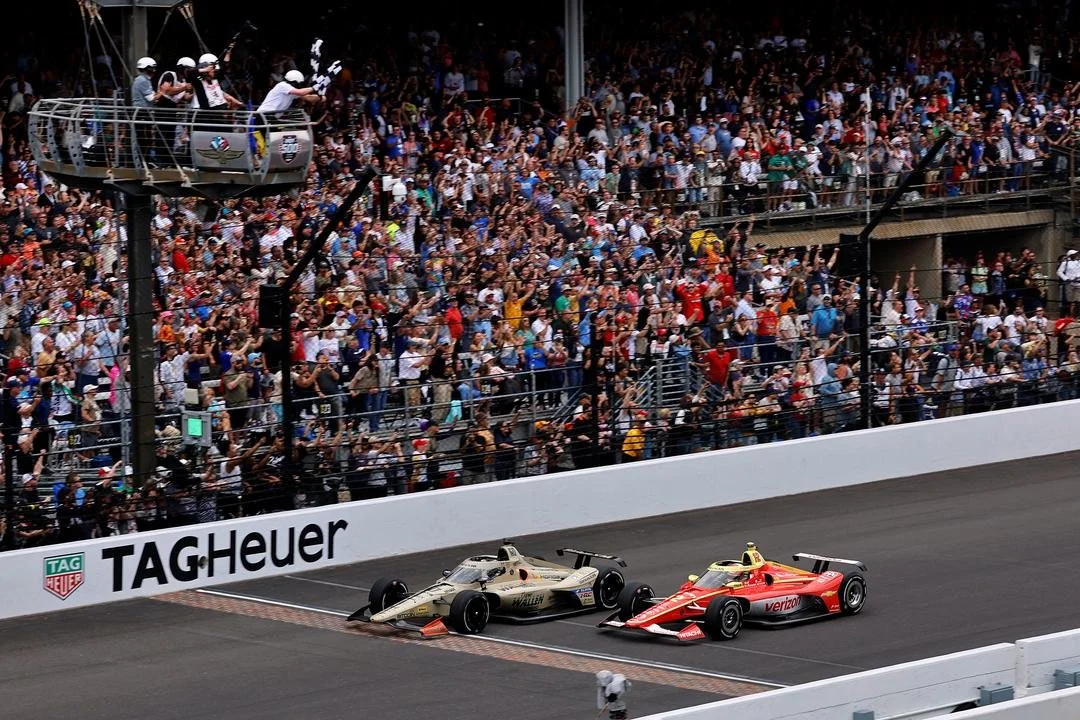
Image credit: IndyCar Media Centre
In less than the blink of an eye, Felix Rosenqvist became the seventy seventh driver in all of history to win the Indy 500 and only the third Swede to accomplish this feat. He was one of fourteen drivers to lead the field during the race, almost half the field, and his change of position at the line gave the race its seventieth lead change - the most lead changes in Indy 500 history. All of that in less than the blink of an eye - something each of you reading this does up to twenty times a minute. That’s all it took to forge a slice of history that will be talked about for decades to come.
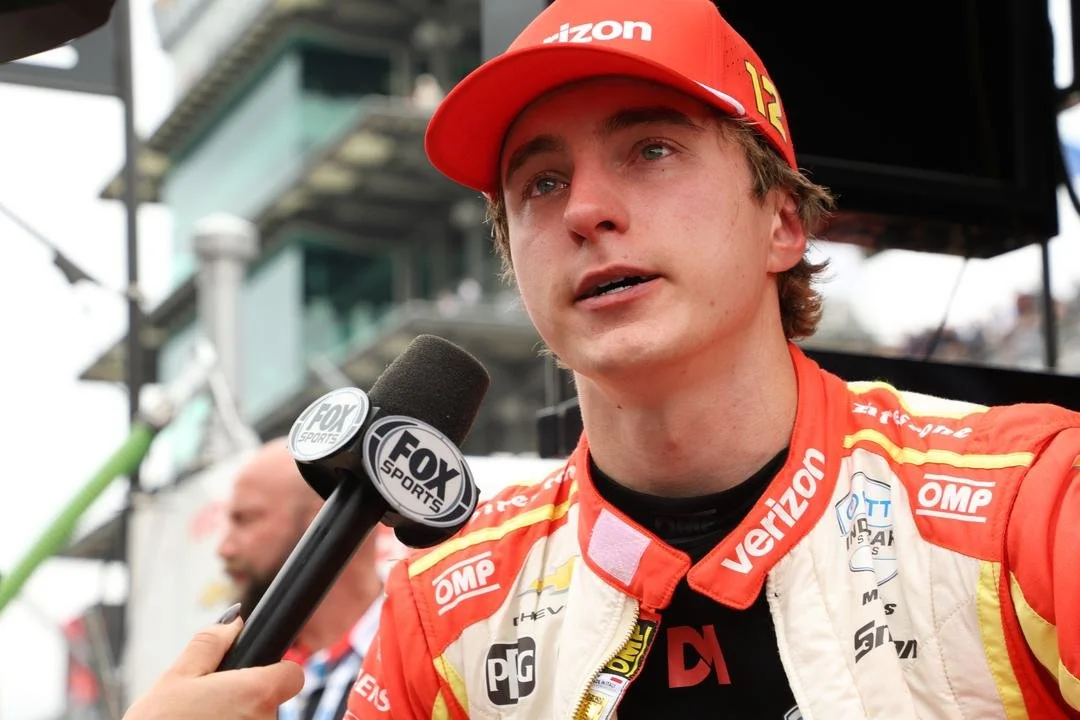
Image credit: IndyCar Media Centre
In 0.0233 of a second, there was eternal glory for Rosenqvist and heartbreak for Malukas.
Behind them, Scott McLaughlin, Pato O’Ward and Marcus Armstrong were separated by 0.0155 of a second as they crossed the line to determine who would finish third, fourth and fifth.
That’s the Indianapolis 500.

Image credit: IndyCar Media Centre
It’s a race that is often described as the greatest spectacle in racing on Earth. From the weeks of build up to the Wienie 500, the heavy emphasis on paying respect to the servicemen and women who put their lives on the line to protect the United States of America to the traditional rendition of ‘Back Home Again in Indiana’ borne out of the end of World War II and the blockbuster five-hundred mile race around the Indianapolis Motor Speedway itself that saw Oscar winning actor Brendan Fraser as the honorary starter, there are more stories within each of those than most of us can fathom. Much like the conversation around the best racing driver in the world, the topic of the greatest spectacle in racing on Earth is one that can be debated endlessly. But one thing is certain - the 110th running of the Indianapolis 500 sure made one hell of a case for why it should be considered.