

Can a Formula 1 Team Succeed with Two Number 1 Drivers?
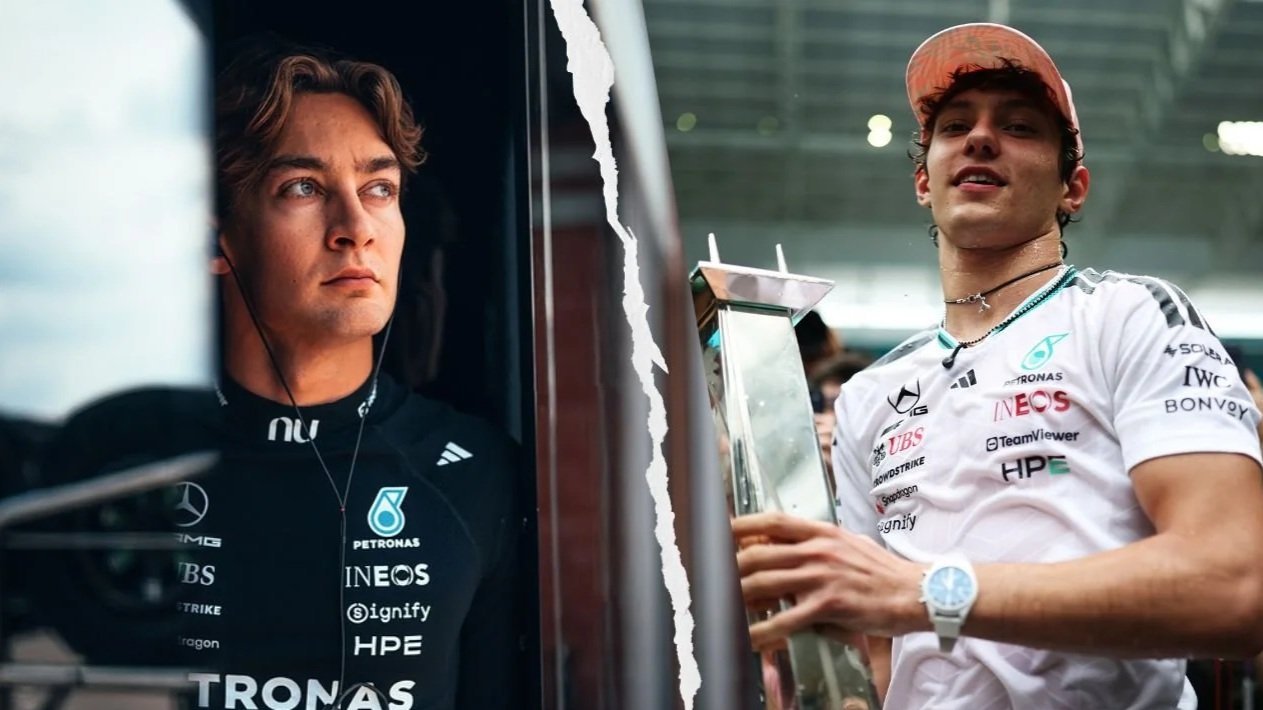
Image credit: Mercedes Media Centre
Formula 1 has seen a number of fierce inter-team rivalries over the decades as drivers take on one another for the ultimate glory and immortality of winning a World Championship. While competition between different teams is exhilarating to watch, take Lewis Hamilton Vs Max Verstappen in 2021 as perhaps the best example of this, when two teammates face off against each other, it adds an extra layer of drama to the proceedings. The intensity of such a circumstance can shatter teams, dissolve relationships on and off the track and has provided us with some of the most iconic moments in the history of the sport.
Kimi Antonelli’s victory at the Italian Grand Prix from nineteenth on the grid, beating his more experienced teammate of George Russell, who started from second place and who led much of the race, solidifies the notion that we are at an inflection point. We may be either at the start of the next chapter of a fierce contest or we are about to witness the taming of an established driver once touted as a future World Champion.
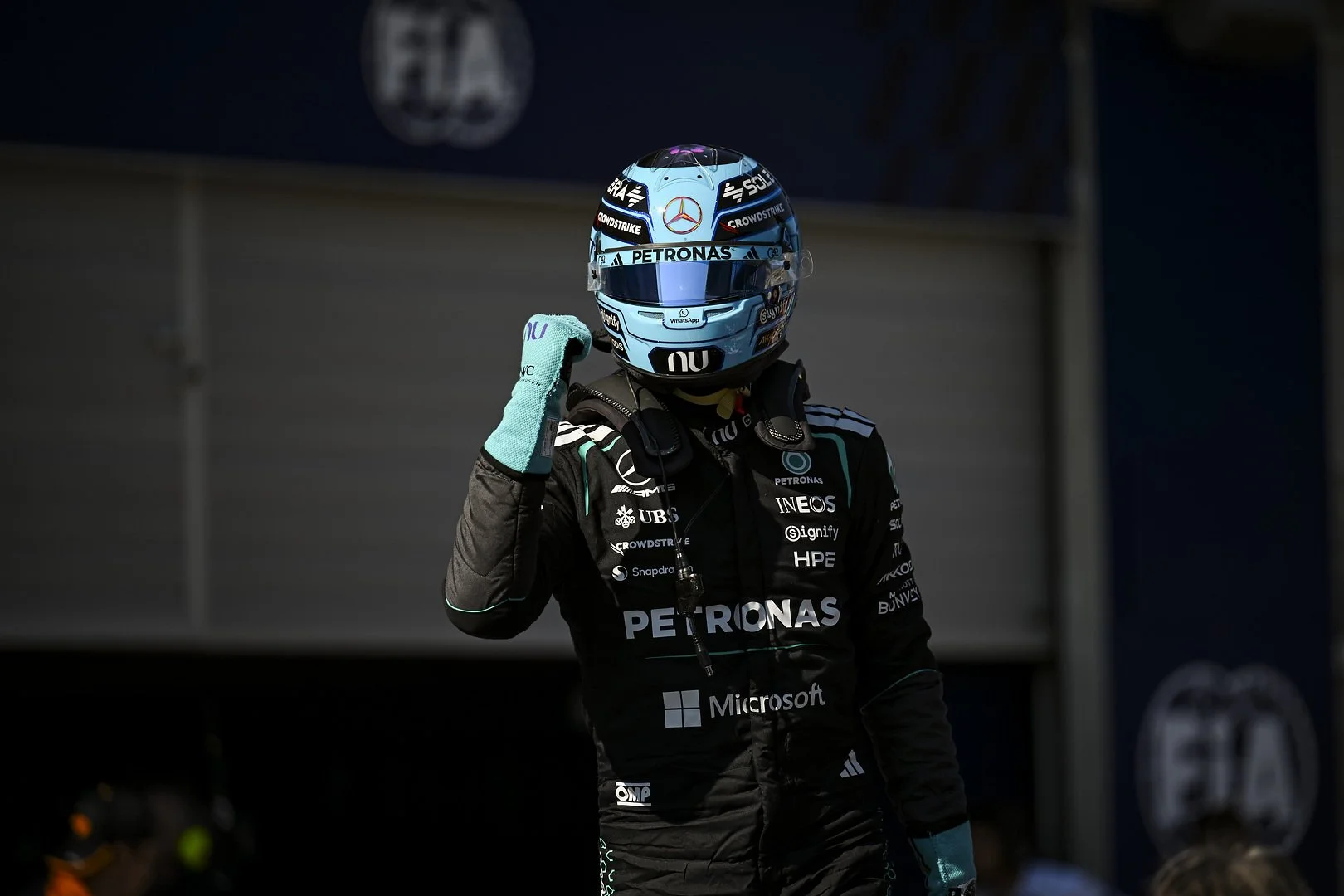
Image credit: Mercedes Media Centre
In his eighth season in Formula 1, George Russell has so far accumulated seven Grand Prix wins alongside a further twenty-four podiums and eleven Pole Positions. He beat then teammate Lewis Hamilton overall in three of the four seasons that they spent together at Mercedes and heading into the start of this year, was the favourite for the title. This was backed up by his dominant win at the opening round of the season in Australia. But since then, Russell has only added one more victory to his name, in Austria.
Kimi Antonelli meanwhile has accrued eight Grand Prix wins over the last thirteen races, in, it should be remembered only his second season of Formula 1, surpassing Russell’s tally for his entire career to date with a further seven podiums to his name from his time in the sport so far. Consequently, Antonelli has an eighty-one-point lead over Russell in the fight for the World Championship with nine confirmed Grand Prix left on the calendar. To put that into perspective, Russell could win the next three races and still have a six point lead. The Championship may not yet be over but it’s going to take something Herculean from Russell if he is to beat his teammate this year.
Instead of seeing a rivalry at Mercedes that reminds us of the Hamilton and Rosberg days from 2014 to 2016, we’re seeing more of a relationship reminiscent of the Hamilton and Bottas days from 2017 to 2021. From a Constructor’s point of view, that suits Mercedes perfectly because at the end of the day, their priority is the Constructor's Championship, not the Driver’s Championship, as that’s where a large portion of the money in the sport lies. If one driver can comfortably beat the other, it makes their job as a team easier as roles within the team become more clearly defined and harder to fight against. But if Russell wants to take back control of the outfit he believed to be his as the natural heir to Hamilton when he departed the team, he needs to make radical changes to how he goes about winning, both on and off track - and fast.
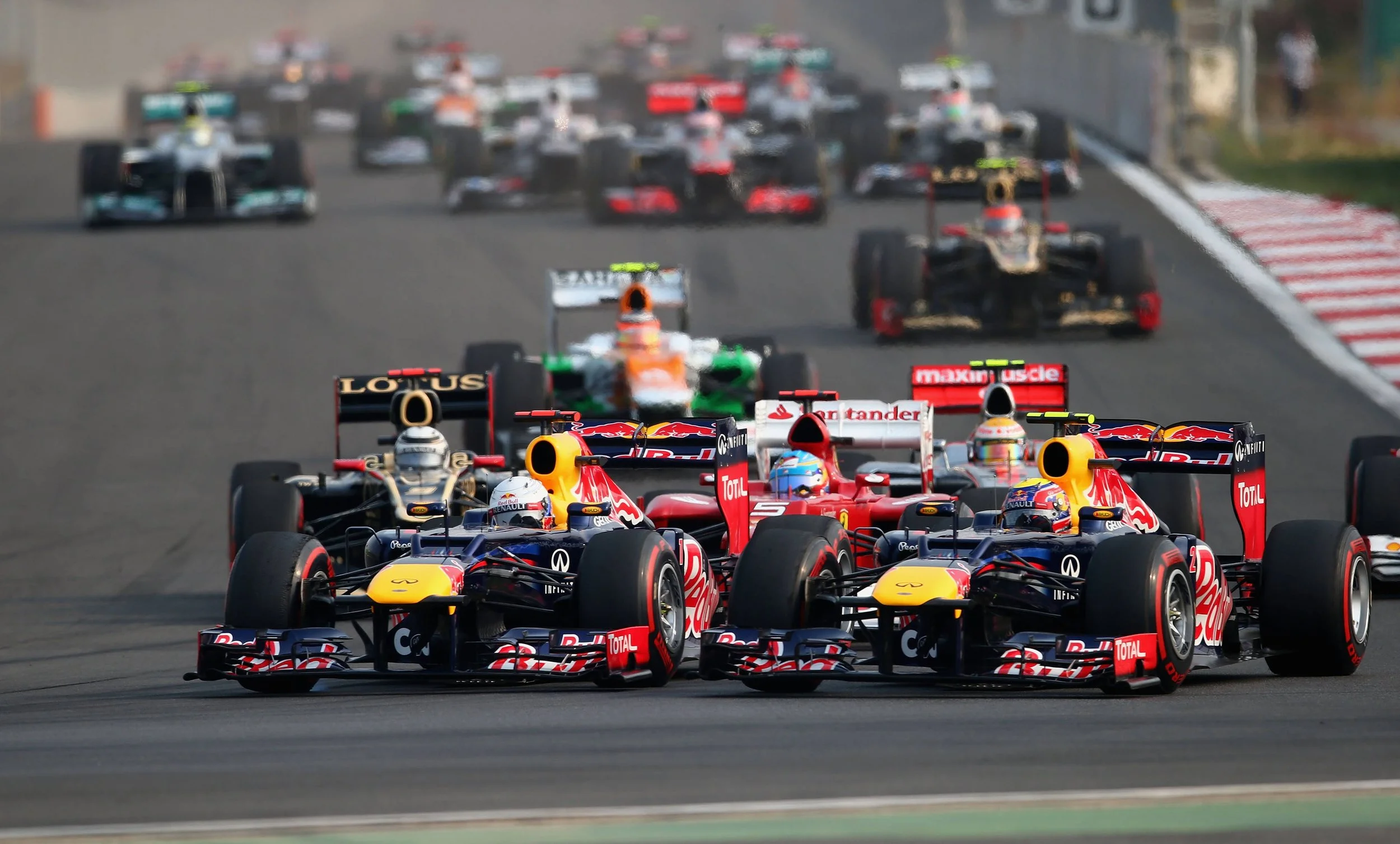
Image credit: Red Bull Content Pool
If Russell goes down that path however, there’s no turning back once he’s started. Rosberg did it in 2016 and after winning the Championship that year, retired from the sport. This didn’t come without drama though, perhaps the most famous example being Hamilton and Rosberg’s first lap crash at the Spanish Grand Prix that paved the way for Max Verstappen’s first victory in Formula 1.
Mark Webber did the same during Red Bull’s first period of domination from 2010 to 2013 when Sebastian Vettel won his four Championships. Webber wasn’t able to succeed in the same way that Rosberg did and also retired from the sport following the conclusion of the 2013 season. Here too, there was drama aplenty, such as the pair’s dramatic crash in the 2010 Turkish Grand Prix or the often quoted Multi 2-1 situation that arose from the 2013 Malaysian Grand Prix.
Senna and Prost are perhaps the most famous of all driver pairings to go against each other when they both raced for McLaren in 1988, 1989 and 1990. All three Championships proved to be controversial for one reason or another, regardless of if it was Senna or Prost coming out on top, and Prost eventually left the team. The Japanese Grand Prix of 1990 and 1991 are infamous for the collisions between the two titans as each settled a Championship and sent reverberations throughout the sporting world.
The alternative though will not be an appealing prospect to a driver like George Russell. He doesn’t want to be a wingman to Kimi Antonelli, and certainly not in a year when he has his best shot yet of winning a title, and not next year either where Mercedes look to continue to be Championship contenders at the very least. Mercedes too haven’t had to deal with a situation akin to Hamilton and Rosberg for a decade now, thanks to Bottas and then their subsequent lack of competitiveness from 2022 until the end of last season. How the team decides (and has already decided) to handle this will be key for Russell’s fate too.
Red Bull too haven’t had to worry about an inter-team rivalry for the last thirteen years. Vettel left as it became apparent that Ricciardo was taking over and in turn, Ricciardo left for pastures new when Verstappen entered the narrative. Since then, Red Bull have struggled to find a driver on the same level as Verstappen. In 2021 when they had Sergio Perez in their employ, his role in the team was clear. He was the second driver who could win races on the rare occasions Verstappen didn’t and could collect a sufficient number of podiums the rest of the time to aid the team in their bid to win the Constructor’s Championship. There was rarely drama on track between the two and Red Bull enjoyed their second era of dominance in relative peace.
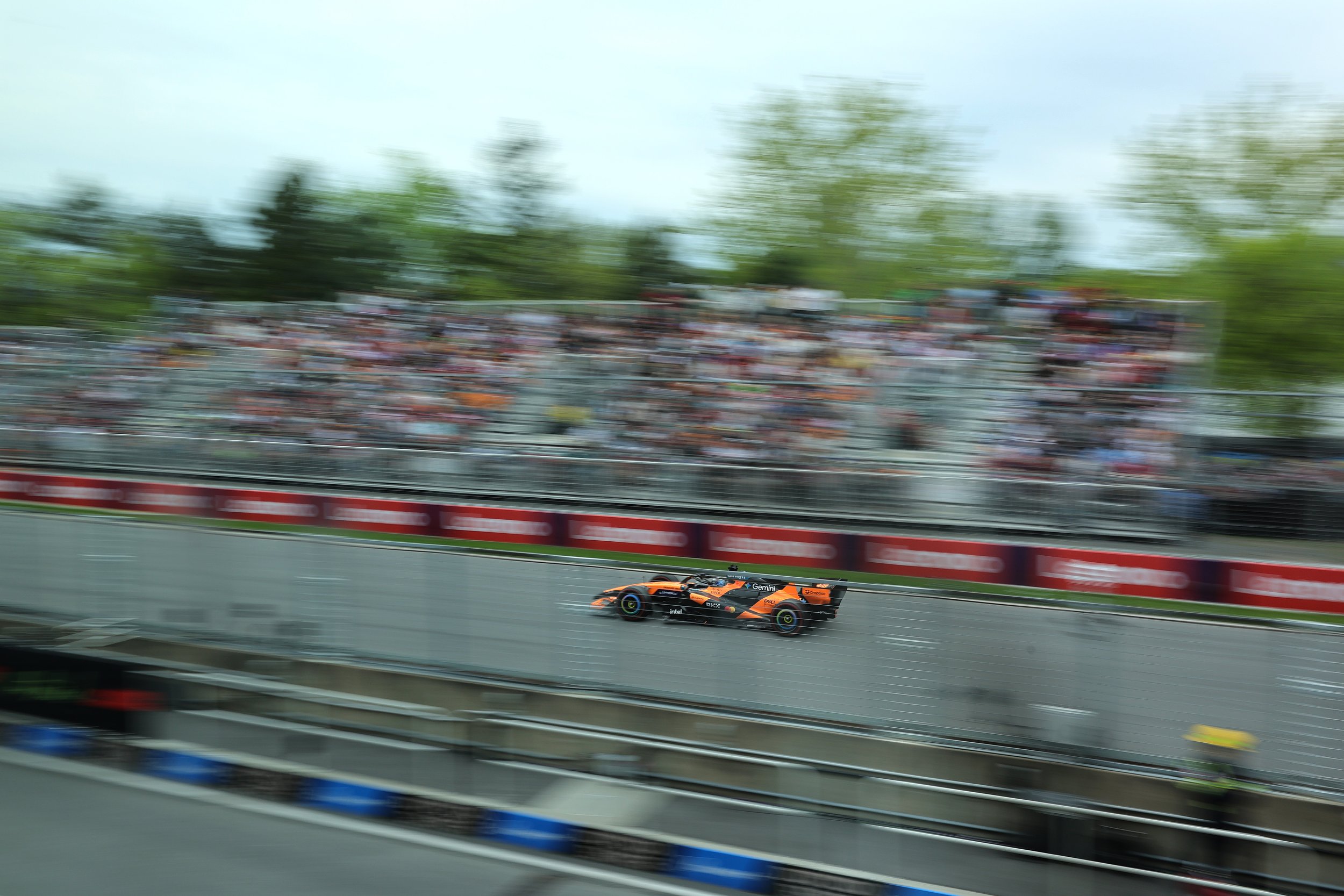
Image credit: McLaren Media Centre
Ferrari haven’t had this concern either since the Schumacher era thanks to the then hierarchy between Schumacher and Barrichello, but that’s mainly because they’ve not been anywhere near winning either Championship since 2008.
McLaren showed an alternative, but equally unattractive, option for Russell to consider last year when Norris and Piastri competed for the title with their infamous Papaya Rules. McLaren’s approach of supposedly having two number one drivers almost cost both drivers the Championship with Verstappen ultimately besting Piastri and finishing the season just two points behind Norris, having made up a deficit of over one hundred points prior to the summer break - a feat Russell may now be hoping to replicate. McLaren’s approach caused tensions within the team, notably at the Hungarian and Canadian Grand Prix, and throughout the Formula 1 and McLaren fanbases. Even non-Verstappen fans rooted for the Dutchman last year as a result and McLaren’s methods left a bitter taste in the mouths of many.
Can a Formula 1 team succeed then with two number one drivers? Yes - if the aim is to win the Constructor’s Championship. What about if the aim is to win the Driver’s Championship?
Ferrari in Schumacher’s time, Red Bull in Vettel’s, Mercedes in Hamilton’s and Red Bull’s in Verstappen’s would all say yes, but none of these teams had any serious competition outside of their own team from others on the grid for the majority of their tenures as top dogs. As difficult a situation as it would have been to handle, at least they didn’t have to worry about their rivals overtaking them in the standings.

Image credit: Mercedes Media Centre
That’s where 2026 differs. Lewis Hamilton looms large behind both Mercedes drivers with a somewhat outside chance of stealing the title away from both and thanks to his two recent victories, Lando Norris also has a remote chance of successfully defending his title if Mercedes implode. It ultimately comes down to how badly George Russell wants to win a World Championship and what he is willing to do to achieve the goal that every driver in the series dreams about.
Almost every driver that’s ever won a World Championship has had an element of ruthlessness to them - be it in their driving style, their overall approach to a race weekend, their training or something else. Certainly none of the drivers that have won multiple Championships did so by being nice and polite. For those that beat those dominant forces to a title, such as Damon Hill, Nico Rosberg and James Hunt, it took everything those drivers had to do it.
Russell has that ability within him too and it was on display at his very first race for Mercedes in Sakhir back in 2020.

Image credit: Mercedes Media Centre
Russell, driving full time for Williams back then, wanted that Mercedes seat so badly that he was willing to do whatever it took to get there. His overtake on Bottas through Turns 5, 6 and 7 on that day was nothing short of an encapsulation of what power looks like when it’s being wielded by someone fully in control. It was sharp, clinical and devastatingly brutal. Mercedes lost that race for Russell on that occasion while Russell’s devastating ability behind the wheel made everyone in the paddock sit up and pay attention. If Russell wants to win a World Championship in his career, that version of him with that level of hunger needs to return and merge with all of the experience that the British driver has gained since then. If he can do that, Kimi Antonelli - and Mercedes - will have a much bigger challenge to reckon with.
To return to the original question, can a Formula 1 team succeed with two number one drivers if its aim is to win a World Championship? Yes - but the balancing act needed to do so has to take not only the present into consideration but the future of the team too. McLaren showed how close you can come to losing it. Red Bull and Ferrari have shown what they’re willing to sacrifice to give one driver what they want. Mercedes have done that too and were just able to walk on the tightrope of letting two drivers at the height of their powers duke it out without falling into the abyss below - but it led to a fundamental shift in how the team operated afterwards and hasn’t been the same in the decade since. Now they are faced with that same prospect again and this time, their rivals on the grid are circling, hungry to knock them back off the top spot. Regardless of what happens between now and the end of the season, we’re about to witness the forging of history before our very eyes.