
The Monster on the Grid: How the TGR Haas F1 Team and Godzilla Built a Fan Engagement Strategy
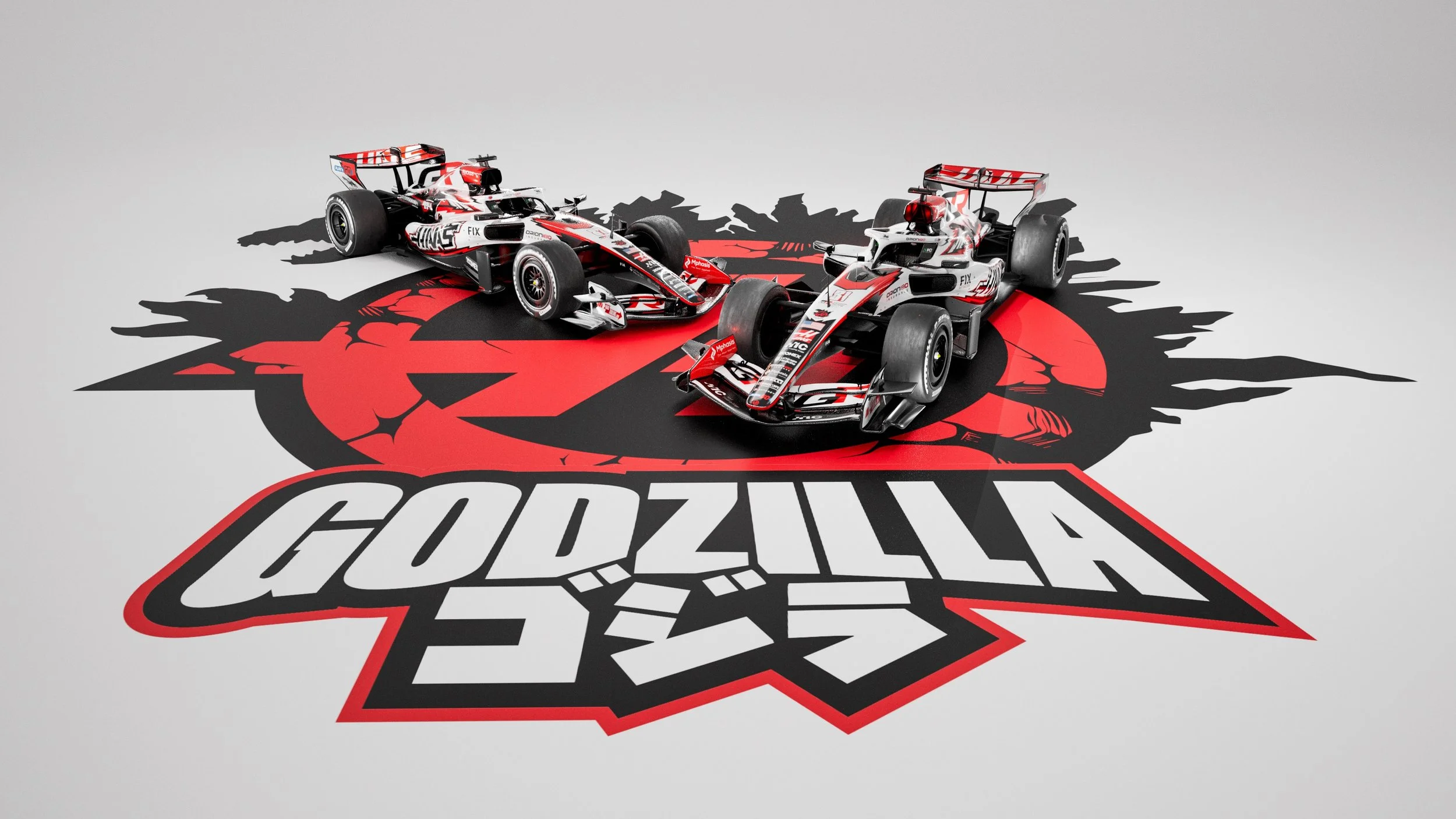
Image credit: TGR Haas F1 Team’s Media Pool
Whenever a racing car becomes a canvas, the real question has nothing to do with aesthetics. It’s about who you’re speaking to and what you want them to feel before even a single lap has been driven.
Ahead of the 2026 Japanese Grand Prix, the TGR Haas F1 Team unveiled a special-edition livery featuring Godzilla, Toho’s 70-year-old cinematic icon, across the engine covers of the VF-26, with the tagline “Godzilla takes the world’s fastest stage” printed beneath the titan’s silhouette.
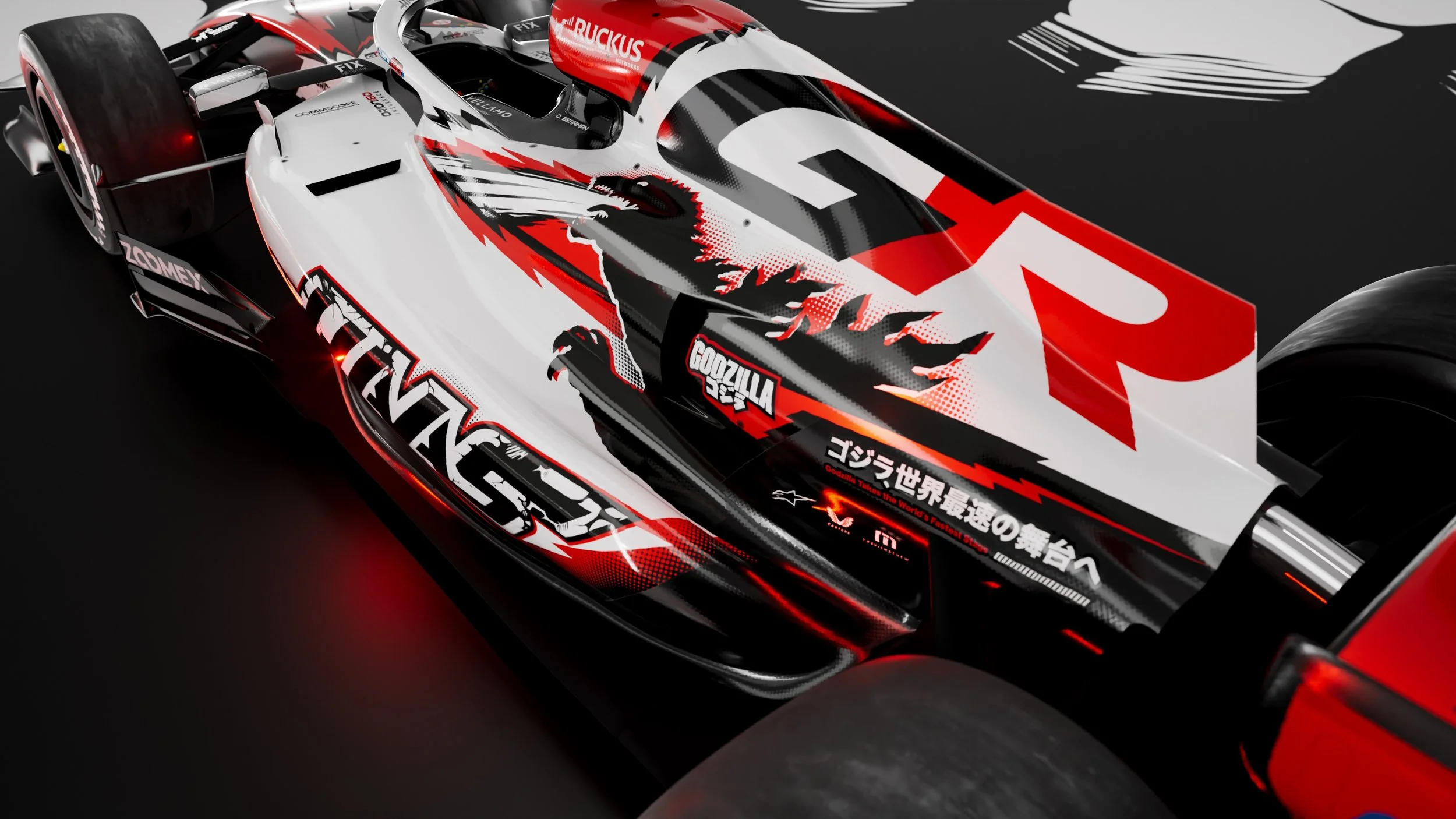
Image credit: TGR Haas F1 Team’s Media Pool
What made the announcement memorable was where the reveal took place: not at the Suzuka circuit, but at a public event in Midtown Hibiya, Tokyo, with drivers Esteban Ocon and Ollie Bearman standing before a menacing Godzilla sculpture in the middle of the city.
That choice of location carries a deeper resonance than any press release could capture: these are the streets of Tokyo that Godzilla has destroyed on screen since 1954, and standing there, the partnership felt less like a sponsorship and more like a homecoming.
To appreciate why this collaboration is built the way it is, you have to step back from Formula 1 for a moment and into the language of consumer psychology.
Beneath the Surface
Contemporary brand theory particularly in its more recent iterations focused on digital-age consumer behavior and has moved well past the idea that brand relationships are primarily transactional. The most durable commercial relationships today are tribal in nature: consumers don’t simply buy products or follow teams, they affiliate with systems of meaning, with communities that reflect something back at them about who they are or who they want to be. A logo on a car stopped being just a visibility placement, now it functions as an invitation to belong to something larger than the race result alone.
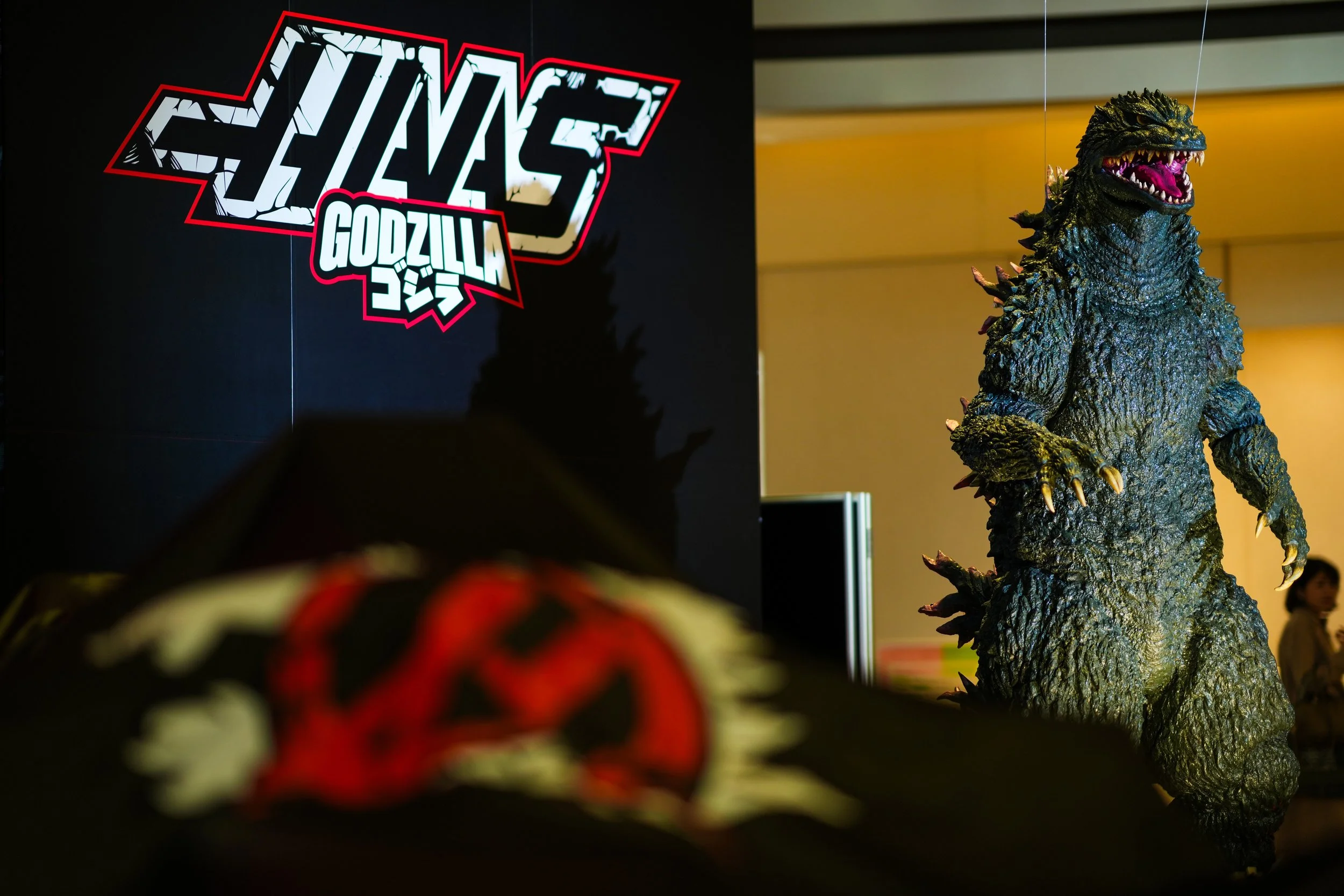
Image credit: TGR Haas F1 Team’s Media Pool
Godzilla is one of the most deeply embedded cultural archetypes in Japanese national identity, a symbol of resilience born from post-war trauma, reimagined across 38 films over seven decades, and still culturally alive. When Toho’s Chief Godzilla Officer Keiji Ota described the character as representing “indomitable power and resilience,” he was pointing to a shared emotional vocabulary that millions of Japanese fans have carried since childhood and one that doesn’t need explanation to activate.
In brand psychology, this is the territory of archetype-based branding, which is the use of symbols so deeply embedded in a culture that they bypass rational evaluation and land directly in emotional memory. Godzilla maps cleanly onto the archetype of the unstoppable, enduring force, and placed on a Formula 1 car that is genuinely competitive in 2026 (TGR Haas sits fourth in the Constructors’ Championship after three rounds), the metaphor feels inevitable.
According to Seth Godin’s “Tribes” model, people organize themselves around shared symbols and ideas, and that the role of a brand is to facilitate rather than impose that organization is vividly illustrated by the Midtown Hibiya event. By bringing the car into the city, Haas reversed the usual dynamic: rather than asking fans to come to the race and encounter the livery there, the team brought the race into the fans’ everyday space first. This creates a qualitatively different emotional experience - one of cultural ownership, of the feeling that the team is operating in “your” world rather than inviting you to visit theirs.
In sports marketing research, this dynamic is captured by the concept of “perceived closeness” - the degree to which a fan feels seen and acknowledged by a team, which is consistently identified as one of the most reliable predictors of long-term loyalty and commercial engagement. The Tokyo reveal was a concrete mechanism for generating that feeling at scale. It communicated, without needing to say it directly, that the team knows where home is and that home matters to them. This was reinforced by the presence of the car and Godzilla at Haneda airport to greet fans from home and abroad.
The timing architecture of the partnership adds another layer to this. The season-long Toho collaboration is structured to build toward a second major activation around the United States Grand Prix in October, just weeks before the theatrical release of “Godzilla Minus Zero” - the 39th entry in the franchise - and eagerly anticipated sequel to 2023’s “Godzilla Minus One” that breathed fresh life into the franchise - in American cinemas on November 6th. This is narrative marketing in its most deliberate form: rather than engineering a single spike of attention around one event, the partnership accumulates emotional momentum over months, arriving at the American market at precisely the moment when cultural awareness of Godzilla is at its peak. The Suzuka activation plants the story, the Austin activation brings it to harvest. Like the film it's promoting, it intends to be a worthy sequel to what came before and provide fans with more of what they want.
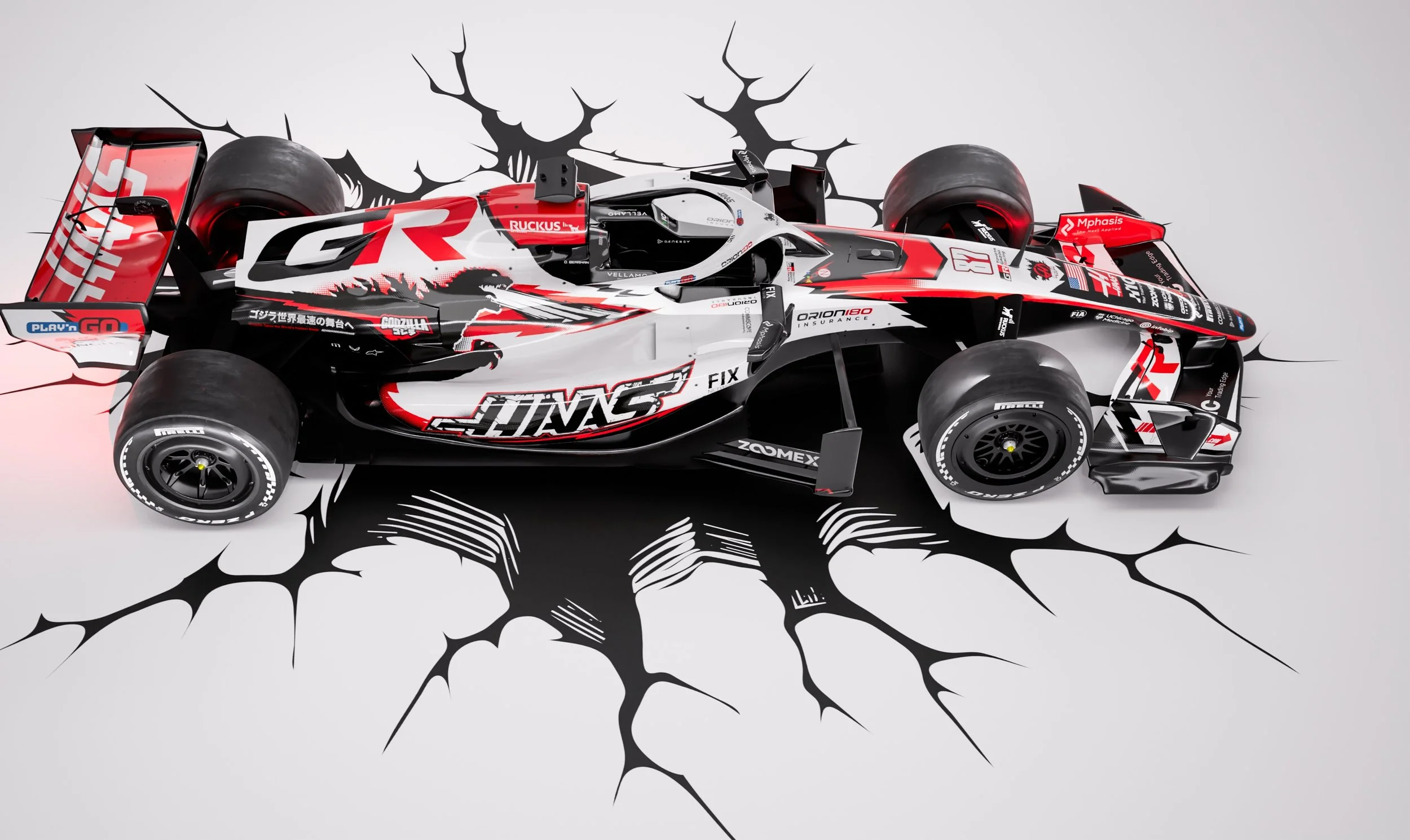
Image credit: TGR Haas F1 Team’s Media Pool
What makes the TGR Haas case structurally different is that the cultural resonance is built on top of genuine institutional commitment rather than borrowed through a license agreement. The team’s relationship with Japan didn’t begin with this livery, or even with the 2025 cherry blossom design at Suzuka, it began taking shape in late 2024 with a technical partnership with Toyota, deepened into a full title partnership under the Toyota Gazoo Racing brand at the start of 2026, and has been expressed progressively through cultural gestures that each build on the last.
Globalization, in its most meaningful form, is about building genuine stakes in a place over time, such that when a cultural collaboration arrives, it reads as a natural expression of an existing relationship rather than an opportunistic one. By anchoring the Godzilla partnership in the deeper structure of the Toyota relationship, Haas has created exactly that context.
There is a dimension to this collaboration that operates well below the level of explicit strategy in the immediate experience of being a fan at Suzuka on race weekend.
Henri Tajfel’s social identity theory holds that fans don’t simply watch teams from an emotional distance, they incorporate team affiliation into their sense of self, that's why when something on the track reflects their own cultural identity back at them, the response tends to be disproportionate to what the stimulus would seem to warrant. Researchers call this “identity resonance”: not the feeling of seeing something you like, but of being recognized by something that knows you.
For a Japanese fan watching the VF-26 carry Godzilla through 130R, the experience draws on a lifetime of accumulated meaning that conventional sponsorship signage cannot touch. This recognition means a lot, and that’s why the collaboration is built as a sustained campaign rather than a single visual moment: the activations, merchandise, and digital content throughout the season are all mechanisms for turning that initial feeling into something that outlasts the weekend.
The Haas x Godzilla project is worth examining because the underlying architecture here is more considered than most: the cultural authenticity, the psychological mechanisms, the commercial timing, and foundation of institutional commitment that gives the gesture weight - the weight of a titan in the ascendancy.
What it ultimately demonstrates is something that holds across industries and well beyond motorsport: the fan engagement strategies that endure aren’t the ones built on spectacle alone, but the ones that speak in a language the audience already knows - one loaded with meaning they brought with them long before they ever heard of the team.
TGR Haas F1 Team has created an engagement on a deeper level with their fans that didn't need translating across the race weekend at Suzuka.
That's because that shared connection and sense of belonging is one that has been at the heart of the team since its inception and that has risen again as the team works to both build on its first decade in the sport and rediscover the team's capability and potential. Where this has been most evident however is at these three opening rounds of the Formula 1 2026 Season.
The Japanese Grand Prix
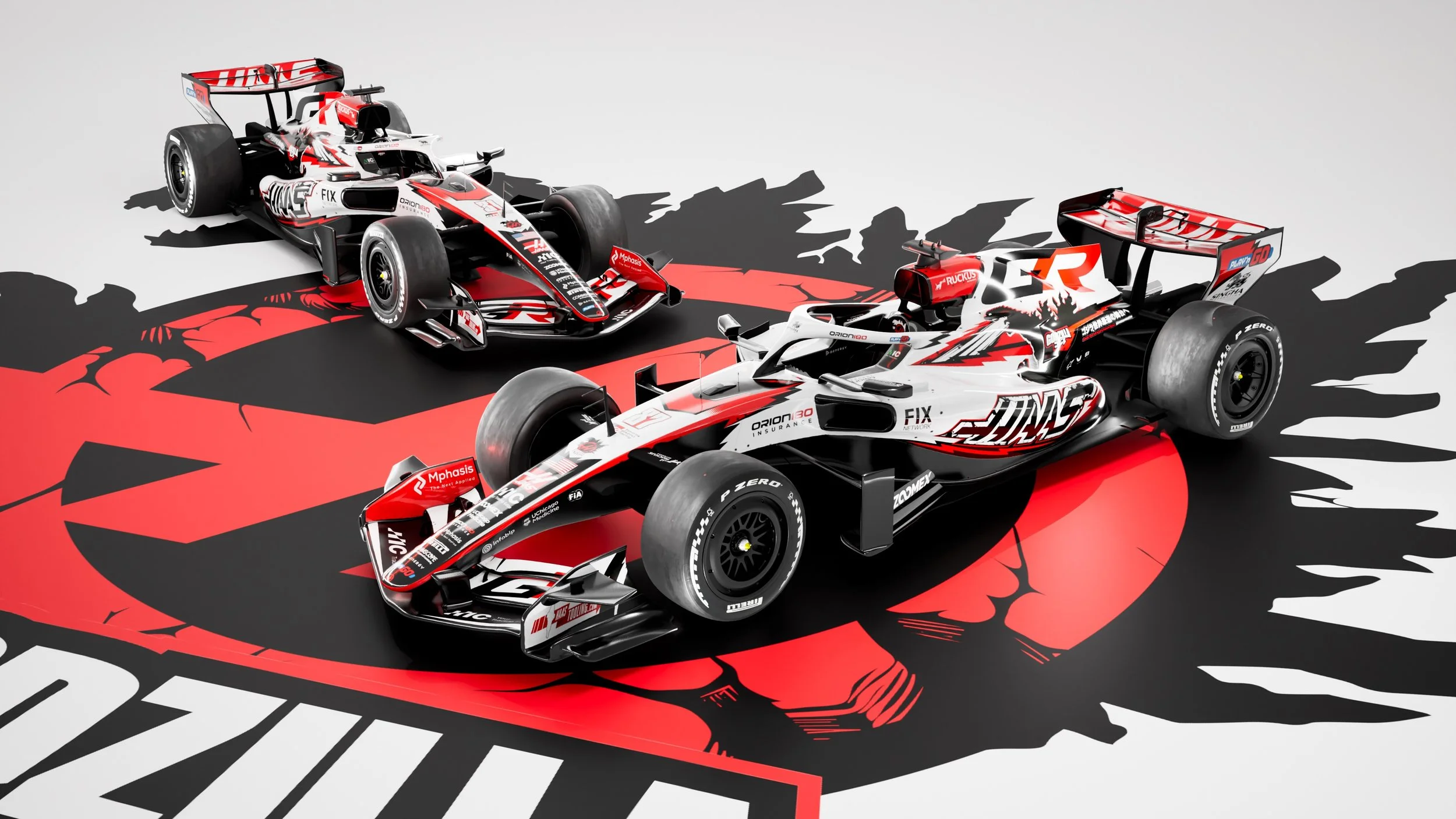
Image credit: TGR Haas F1 Team’s Media Pool
In the opening three rounds of the brand new season, there have been three main narratives at play at TGR Haas.
To begin with, let’s focus on the story so far for the team’s first ever British driver, Ollie Bearman. In Australia, he qualified in twelfth before going on to finish in seventh place. At the second round of the Championship in China, an eighth place result in the Sprint Race was backed up by qualifying in tenth place for the Grand Prix and an end result of fifth come the end of the race on Sunday - propelling him into the same position in the overall Driver’s Championship standings, with just the Mercedes and Ferrari drivers ahead of him.
That momentum came to a sudden and shattering halt at the Japanese Grand Prix. Issues with the car during Qualifying meant that Bearman would start from eighteenth place on Sunday. Having risen up the order on race days on both previous occasions however meant that while it wouldn’t be easy for the Englishman, it was still possible for him to turn things around. All of that changed however on lap twenty-one. Hunting down the Alpine of Franco Colapinto for seventeenth place, Bearman was forced to make an evasive manoeuvre so as to not collide with the Argentinian as they both headed towards Spoon Curve. The combination of the car ahead apparently harvesting energy while drifting across to the left hand side of the track and Bearman’s significantly high closing speed meant that consequently, Bearman went off track and careening into the barriers in what was later measured as a 50G impact. Limping away from the car, Bearman was fortunate to walk away without any serious injuries.
With the likes of Sainz and Lindblad ahead of him, it’s not unrealistic to believe that had he not crashed, Bearman would have been at least on the edge of the points paying positions by the time the checkered flag was waved. Still, Bearman leaves Japan seventh overall with only the McLaren duo having overtaken him in the standings now that the Papaya outfit were able to both successfully start and finish a Grand Prix together for the first time in 2026. But seventh place, ahead of drivers such as Verstappen and Sainz, is hardly a disappointing position to be in. Bearman may be down - but he’s certainly not out of the fight.
The second of the three narratives at play naturally focuses on Haas’ other driver, Esteban Ocon. Now in his tenth full season in Formula 1, the Frenchman has four podiums, including his maiden F1 victory in Budapest back in 2021, to his name. But, in his second season with the team, Ocon has yet to finish on the podium for Haas or finish/replicate his highest result for the team - a fifth place finish at the 2025 Chinese Grand Prix. With both a wide array of fresh, young talent and experienced drivers constantly searching for seats on the grid to exploit for their own gain, Esteban Ocon needs this season to be a good one. Eleventh and fourteenth in the opening two Grand Prix were not the start then that he needed.
But the pendulum may have just begun to swing in the opposite direction. Qualifying in twelfth ahead of the Japanese Grand Prix, Ocon was able to turn that into a tenth place finish on Sunday and give his team something to celebrate against the backdrop of the scary incident that befell Bearman. While only a single point, each one counts and is vital to a midfield team like TGR Haas. It puts him firmly above six other drivers on the grid and now only nine points away from the driver in tenth place overall, Liam Lawson. Heading into Spring Break, it’s the positive momentum and motivation that Ocon needed and will reassure him of his own capabilities when Formula 1 gets underway again in Miami at the start of May.
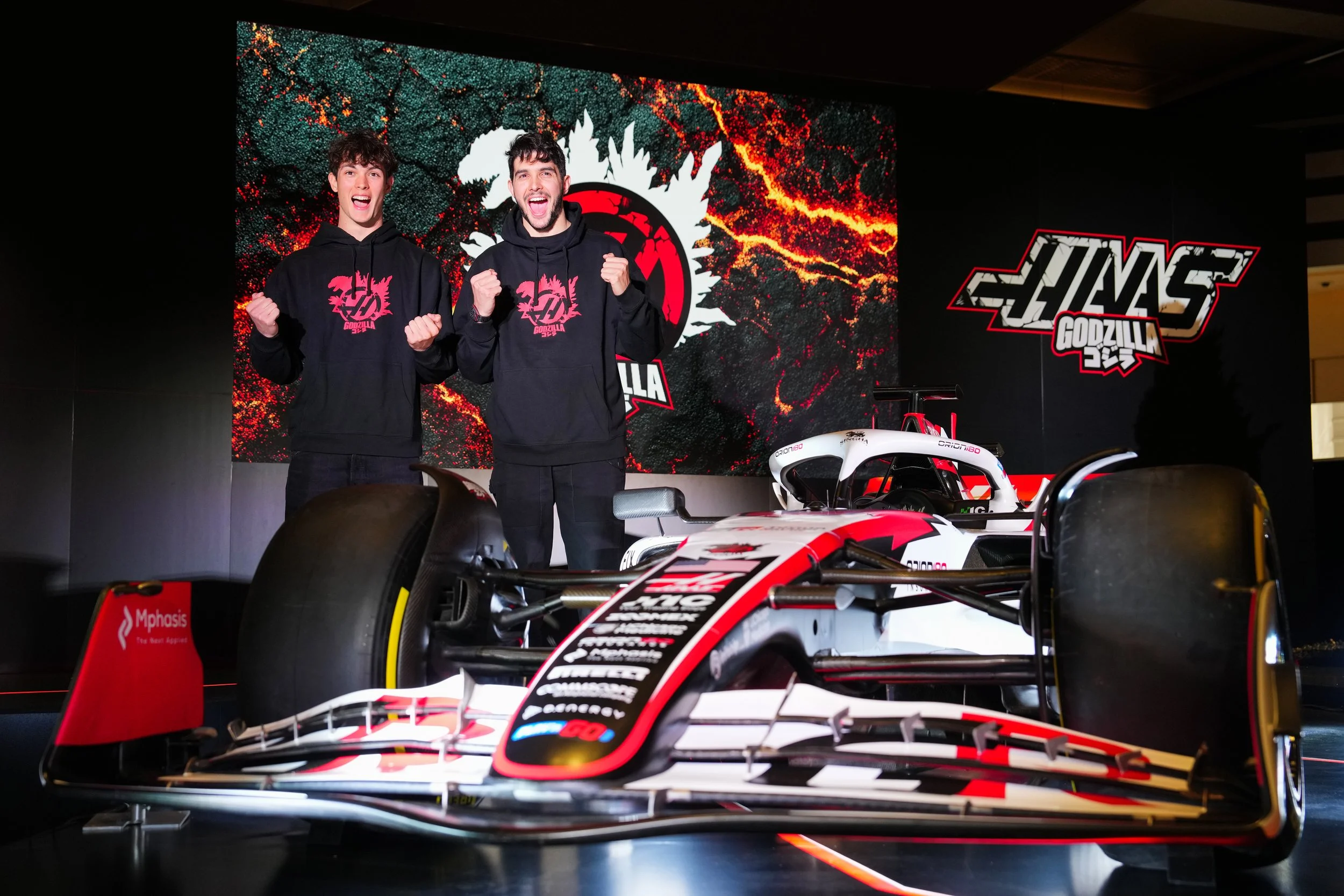
Image credit: TGR Haas F1 Team’s Media Pool
Finally, there’s the narrative of TGR Haas as a whole. Both drivers now have points on the board and a healthy amount of competition between the two. Ocon will want to continue on his upwards trajectory so that he doesn’t get beaten by his younger and less experienced teammate for the second year in a row (just three points separated the veteran and the rookie last year). Meanwhile, Bearman will want to bounce back strong, not only to shake off the shunt from Suzuka but to continue to prove that he’s the driver Haas needs to keep forging their way to the front of the field in order to do battle with the top four teams, but to also show those four teams, particularly Ferrari, both what he’s capable of and what potential there is within him that could only be unlocked by one of them, were they to place him into their employ.
The VF-26 is a well built machine and so far, a more consistent one than those fashioned by the titans of McLaren, Red Bull - and certainly Aston Martin. While victories and podiums are obviously part of the bigger picture, they’re not crucial to Haas’ success in 2026. Consistency feels more key than ever at a time where simply finishing (or even starting) a Grand Prix can almost guarantee you points as a reward. If one or both drivers can keep collecting top ten results, they’ll be able to keep those behind them handily at bay while putting pressure on those just ahead of them - right now that would be McLaren, less than thirty points in front.
But the war that TGR Haas are waging is not just being executed out on track. As the season-long partnership with Toho demonstrates, it’s being fought off track too. This year marks the beginning of their second decade in Formula 1. Back in 2016, they entered the sport under the identity of the original all American F1 Team. Since then, their identity has been one that has been difficult to define at best, to put it politely. The sagas of both Rich Energy and Urakali are dramatic enough themselves to be worthy of standalone novelizations, with neither doing much to paint Haas in a favorable light.
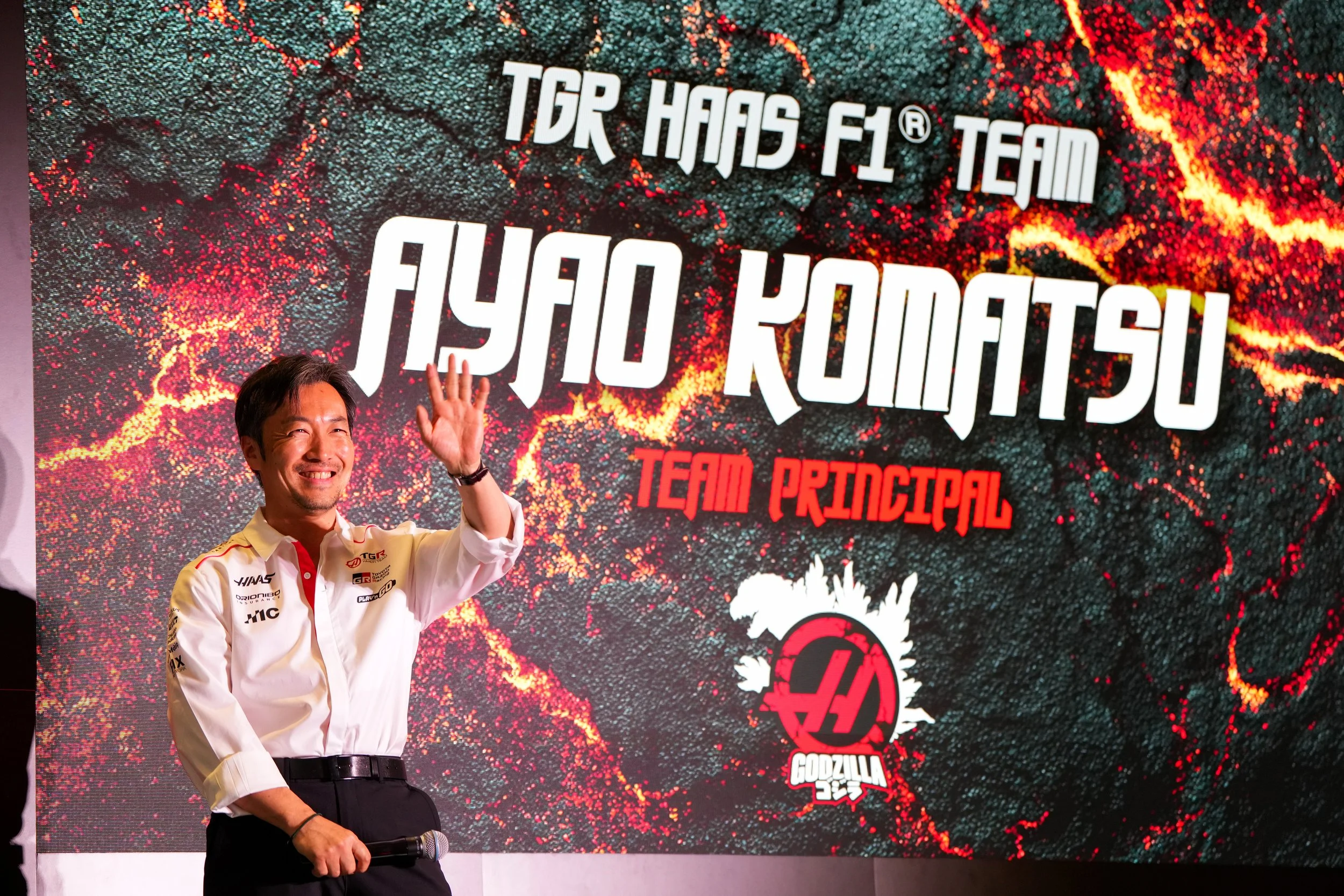
Image credit: TGR Haas F1 Team’s Media Pool
Seven drivers competed for the team in that opening decade before Bearman and Ocon entered the story last season. But they weren’t the only fresh faces at the top of the organization. Ayao Komatsu took over the role of Team Principal following Guenther Steiner’s dismissal by team owner Gene Haas ahead of the 2024 Season, after almost a decade in the role. These fresh appointments, along with the arrival of Toyota placed Haas in a position of rebirth.
That rebirth has so far come with a number of memorable highlights, such as Hulkenberg and Magnussen’s double points finishes in Silverstone and Mexico City, Bearman’s phenomenal fourth place finish at the Mexican Grand Prix a year later and Esteban Ocon’s seventh place result at last year’s season finale in Abu Dhabi. But now, with the dawn of a new regulation set and with familiar faces bedded into the organization, it feels as if Haas might just finally be on the right track.
This rebirth now also comes with a fresh challenge. While ten years ago, Haas established themselves as Formula 1’s American Team, Cadillac have now entered the fray and threaten to steal that limelight away from them. It’s what makes the partnership with Toho that much more fascinating. The company’s 2023 film, “Godzilla Minus One” came out at a time where Legendary Entertainment were almost a decade into building their own Monsterverse featuring the iconic titan of Godzilla - as well as Kong, Mothra and many other quintessential characters from the original franchise. The film was a runaway success - both with fans and critics and the box office too. By offering a grounded, personal and hard hitting work of art, Toho proved that, as is often the conundrum to be solved in the films themselves, both they and Legendary, both mankind and the titans, can coexist peacefully with one another. It needn't be one or the other - we can have and enjoy both. This year’s sequel will be seeking to prove that again, while building on what came before and returning Godzilla to the silver screen just a few months before Legendary returns the titan there themselves for its next installment.
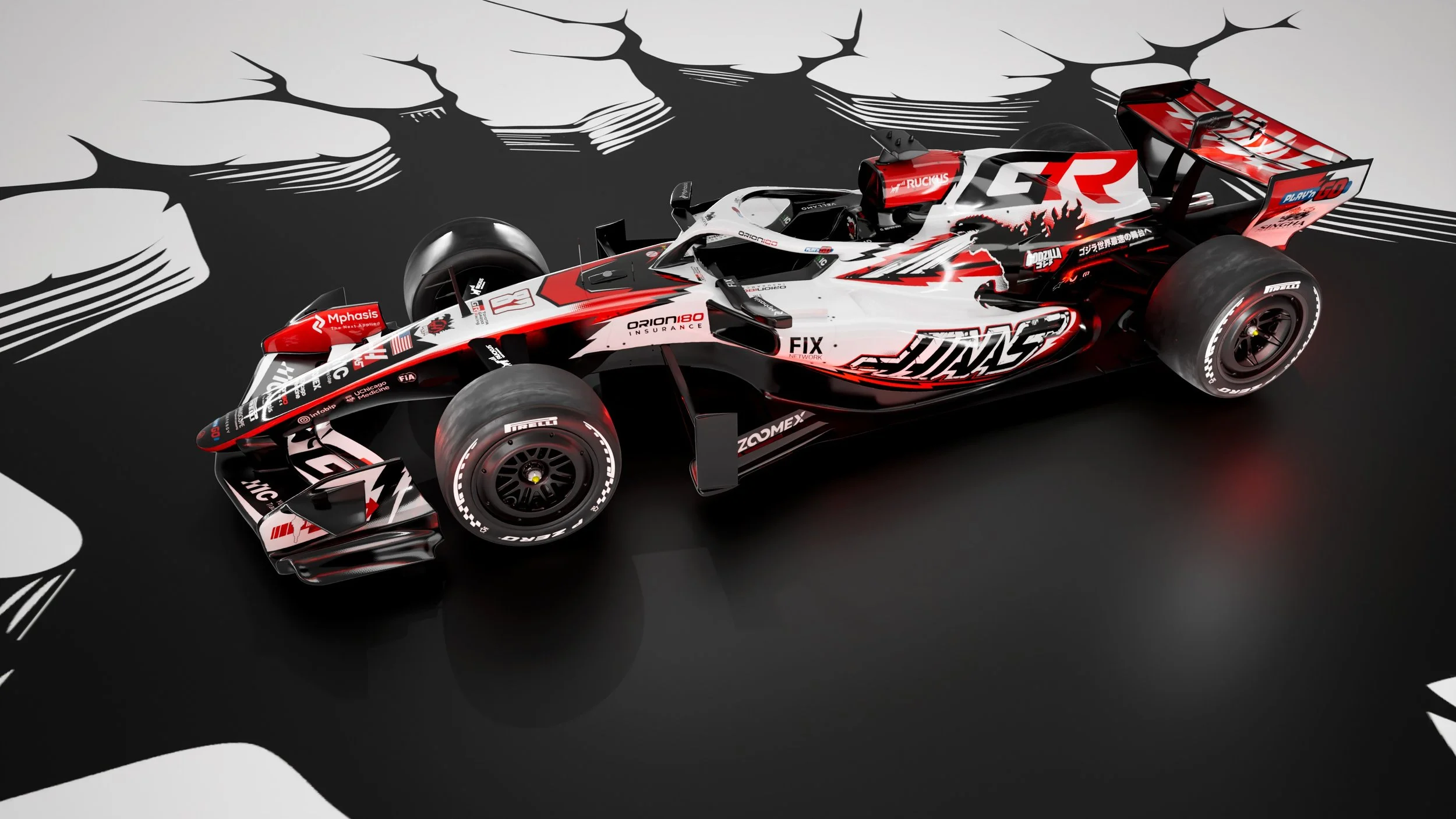
Image credit: TGR Haas F1 Team’s Media Pool
The mirroring of this with the competing narratives and identities of Haas and Cadillac shows that the timing for both to be in Formula 1 in the ways that they are is perfect. Haas bridges the gap between east and west, between Japan and America, while having a firm middle ground with their base of operations in the United Kingdom. Cadillac has already embraced the American spirit in a way that Haas were never really able to. But both work and like the two film franchises, complement one another. Like Toho, Haas are on a path of re-self discovery and are determined to prove, much like their drivers, that they’ve got what it takes to compete at the top. They’ve recognized the importance of bringing their story and their messaging to the people they want to follow them, rather than expecting them to come flocking in their direction. They’ve embraced the Japanese mindset of calm, deliberate action, combining it with their American origins and when they’re in a position to strike and succeed, you can bet you’ll hear the TGR Haas Team roar as loudly as Godzilla, with an army of fans alongside them - themselves a combination of die hard fans and avid newcomers who both love and relate to the underdog story.
With thirteen Grand Prix between now and Formula 1 arriving at the Circuit of the Americas for the next part of this team-up, there’s a feeling of real possibility that Haas could be on track to either match their best ever overall result of fifth in the Constructor’s Standings or surpass it. Whichever way you look at it, it makes the TGR Haas and Godzilla combination one of the most exciting, fascinating and intricate for any team in motorsport, not just in Formula 1, in recent times.