
Suzuka: The Lap Is Written At The Entry
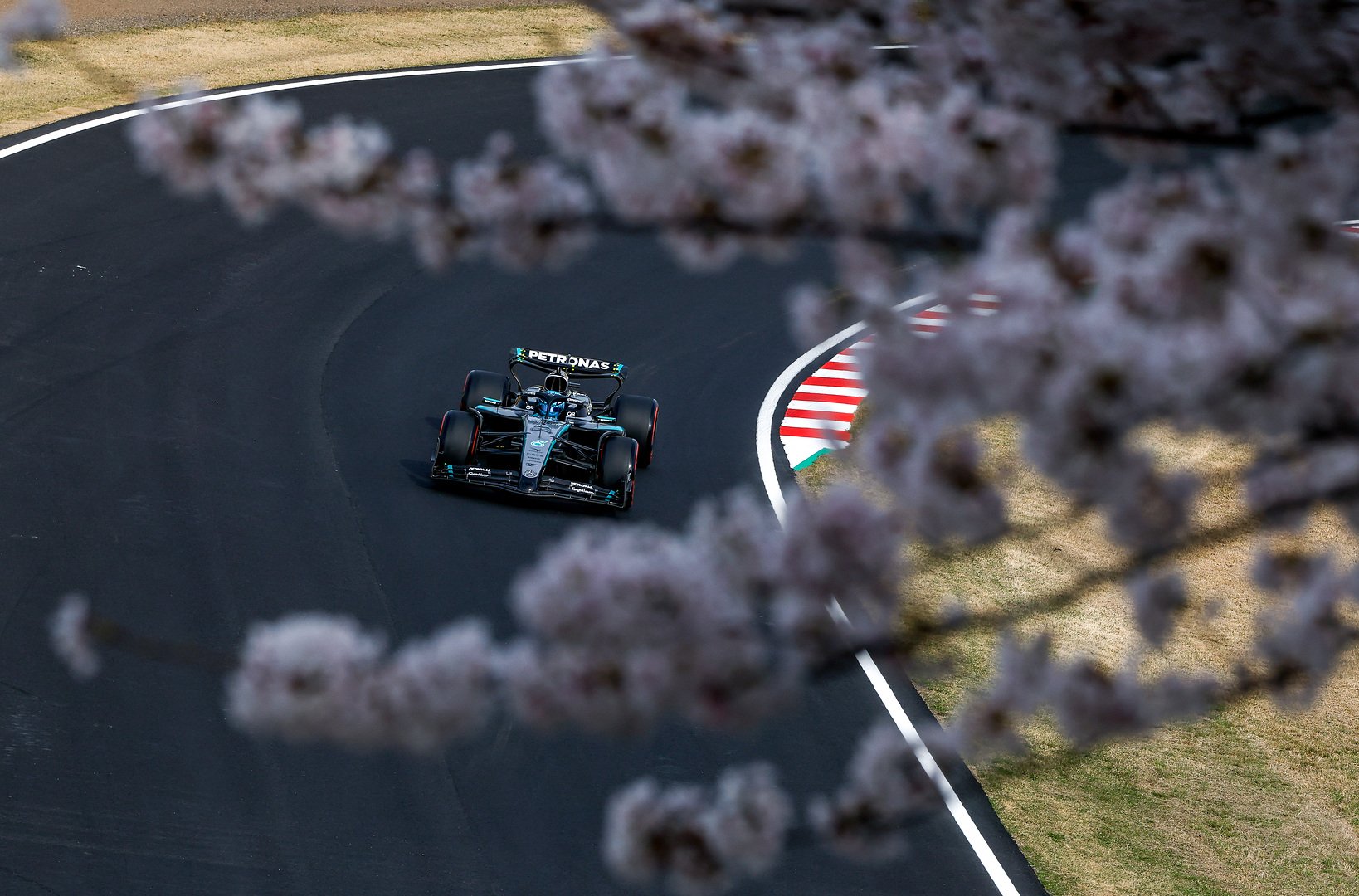
Image credit: Mercedes F1 Team’s Content Pool
The first thing you notice at Suzuka is the silence before the session. No other circuit carries that particular weight, the sense that the track itself is waiting to expose something. It has been doing this since 1962.
Honda commissioned the circuit as a development tool. A laboratory with no interest in being gentle. John Hugenholtz laid out 5.807 kilometers in a figure-eight, the only one in Formula One, and the layout has remained essentially unchanged for six decades.
The circuit is built entirely around lateral load and high-speed direction change. There are no gifts here, no slow corners that buy recovery time. The front axle is under stress from the first sector onward, and a balance problem that might go unnoticed at another venue will announce itself loudly before the car reaches Degner.
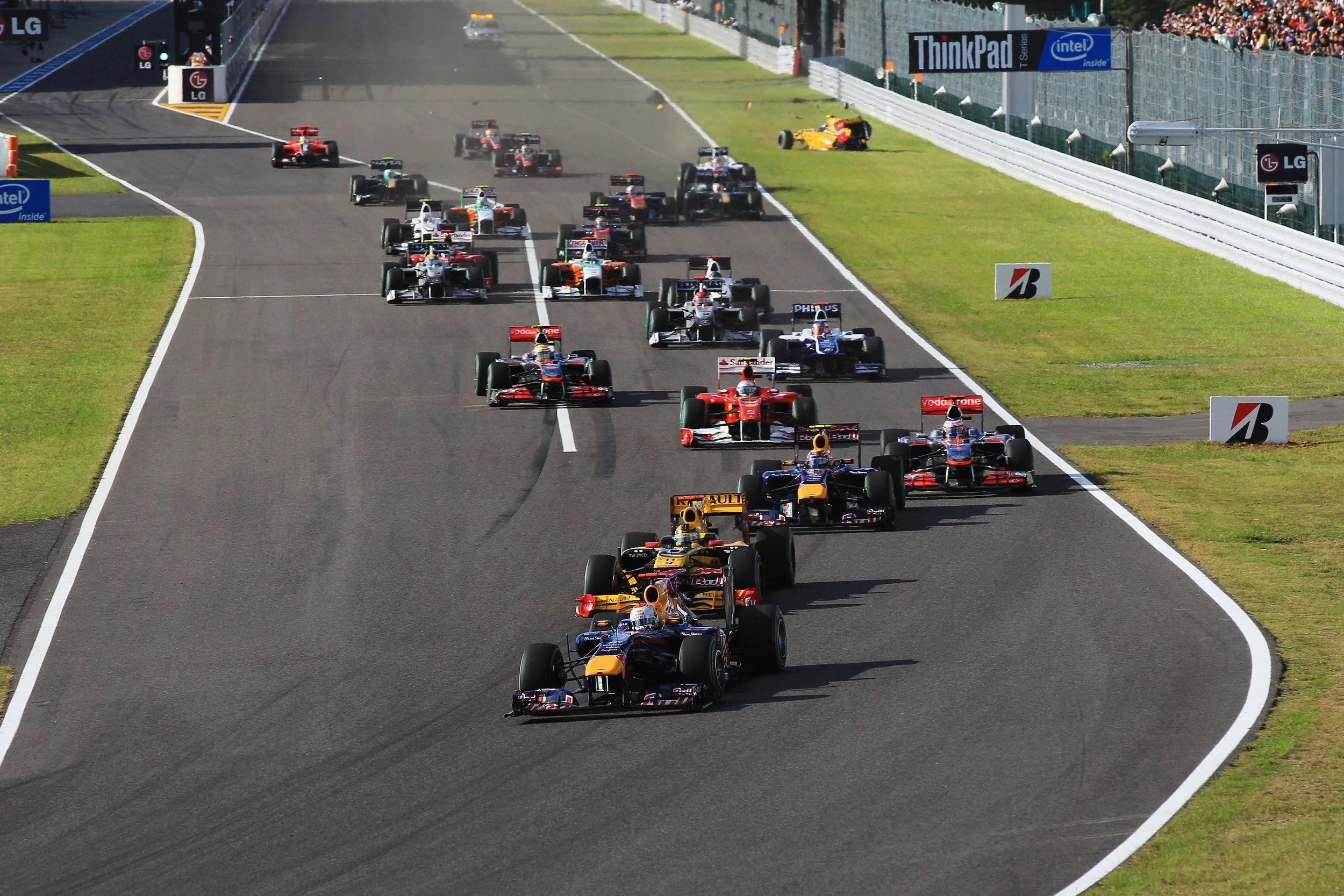
Image credit: Red Bull F1 Team’s Content Pool
130R no longer demands what it once did because the cars are different now, and the aero philosophy fundamentally changed under the 2026 regulations. But flat through 130R in a current-specification car still tells you something about the driver; any hesitation poisons the entry to the final chicane. Spoon Curve, often overlooked, is where the back straight is actually decided by the exit speed there, not the straight itself, which separates the front row from row three.
Fifty-three laps, the race rarely breaks open early, teams that find a stable mechanical platform on Friday are typically the ones running longest in clean air on Sunday, and at Suzuka, clean air is worth more than at almost anywhere else on the calendar.
Energy management defines the modern race here. The corridor from Spoon through 130R is a critical deployment window, and the decisions made in those seconds reverberate through the entire lap.
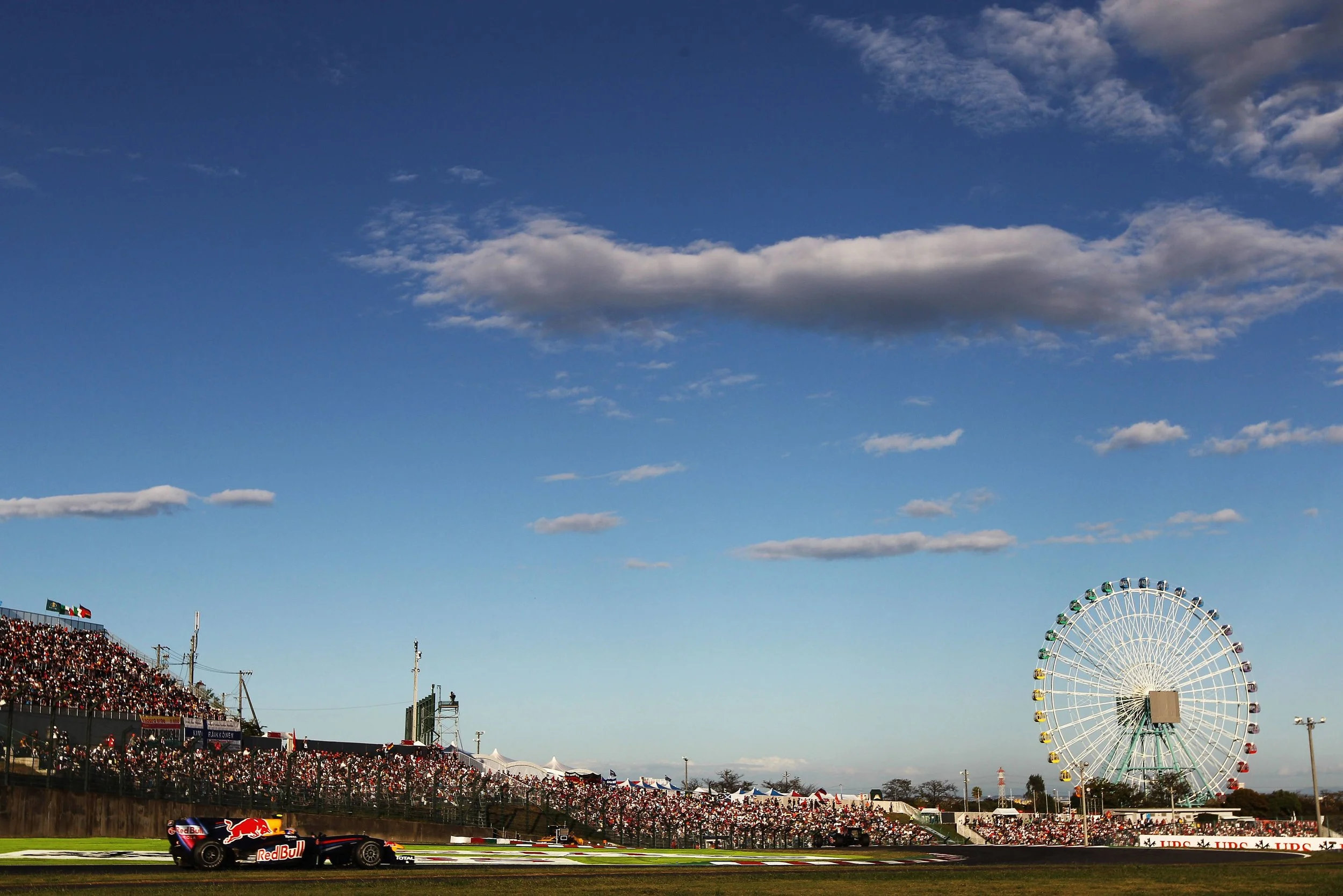
Image credit: Red Bull F1 Team’s Content Pool
A driver who over-defends through the S Curves, burning through their available energy in the wrong place, arrives at the Casio Triangle with nothing left. The Overtake Mode that replaced DRS under the 2026 regulations has created more genuine wheel-to-wheel moments, but the race is still decided by tire management. Thermal degradation through the first sector, lap after lap, is where the real attrition happens. By the final stint, that cost is visible in the data.
The Japanese climate is the one variable no engineer can model with confidence. Suzuka in the rain is not a variant of the dry race. It is a different event, operating under different rules. The history of this circuit in wet conditions requires no elaboration. This circuit collects moments. Not all of them end well. There is a particular kind of pressure that Suzuka generates, which has no equivalent elsewhere on the calendar, it has decided championships.
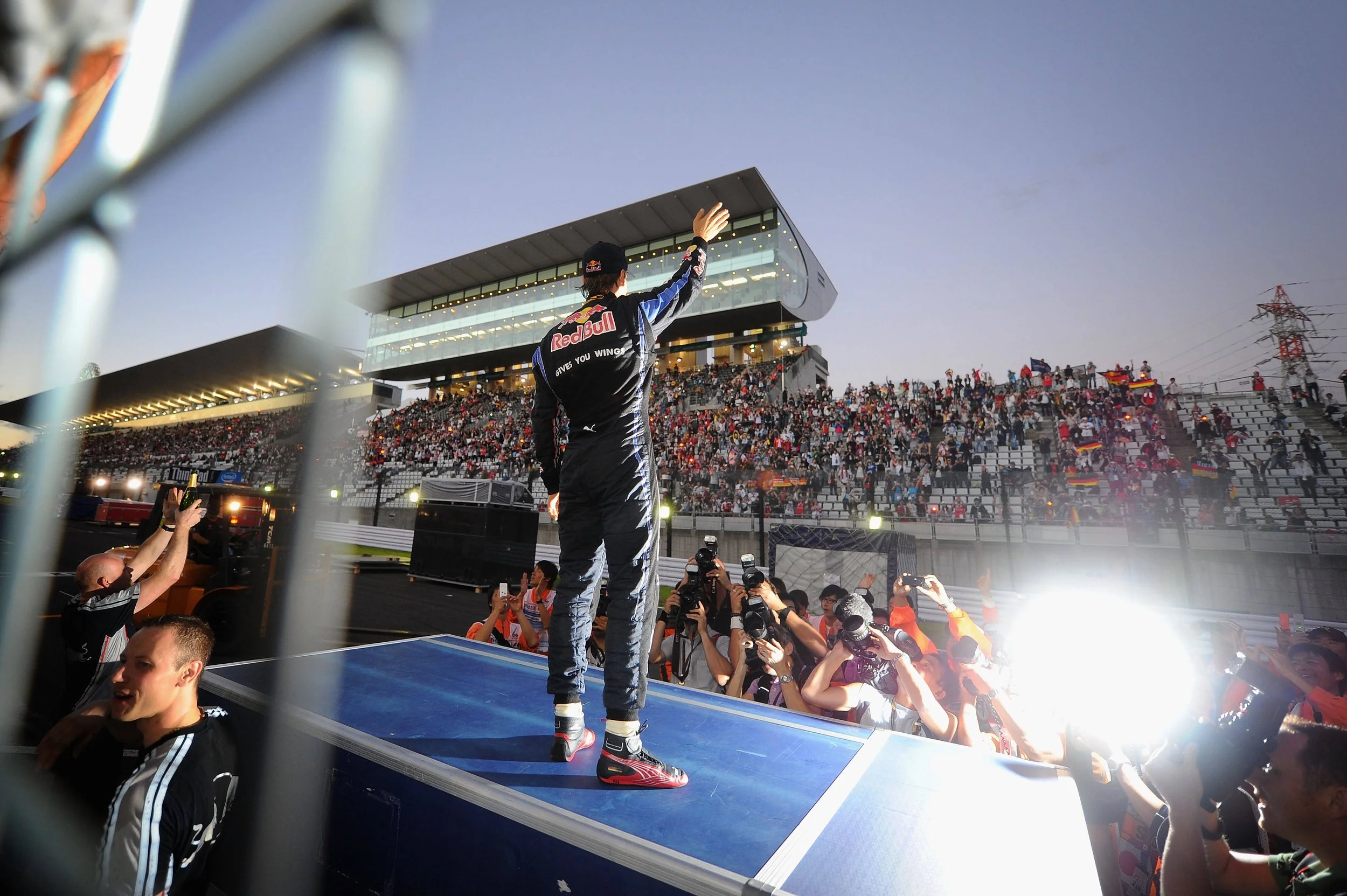
Image credit: Red Bull F1 Team’s Content Pool
In 1989, the title fight between Ayrton Senna and Alain Prost reached its terminal point at the final chicane. Contact. Senna was disqualified from the restarted race. Prost had enough in the points table to take the championship. Twelve months later, the same circuit, a different kind of reckoning, Senna into Turn 1 at the start, Prost alongside, neither yielding. Both cars are in the gravel before the first corner is complete. The title settled in seconds. It remains one of the most analyzed moments in the sport’s history, and it happened here.
Michael Schumacher won at Suzuka six times across two eras: once with Benetton, five more times in the Ferrari period that defined his career. Vettel won here. Hamilton won here. Each of them used this circuit at a moment that mattered. Max Verstappen has taken four consecutive victories from 2022 through 2025, each one built on the aerodynamic efficiency that the first sector rewards and the second sector demands.
The 2014 race sits differently in the record. Jules Bianchi, a rain-soaked Dunlop Curve, a recovery vehicle in the wrong place at the wrong moment. The accident that followed changed how the sport thinks about safety car procedure and led directly to the introduction of the Virtual Safety Car. It is part of what this circuit is. The margin here has always been small. In 2014, it was gone entirely.
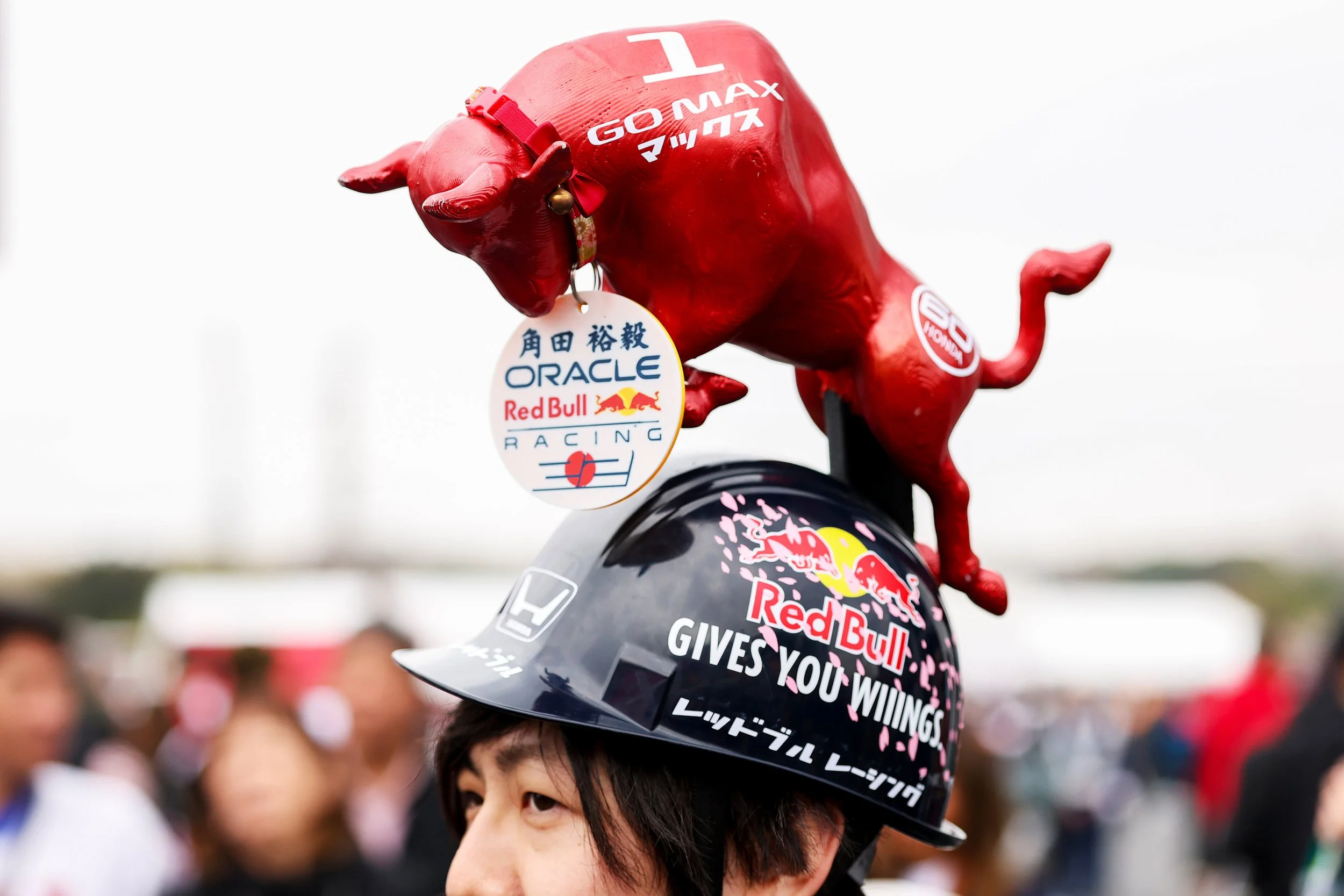
Image credit: Red Bull F1 Team’s Content Pool
There is a grandstand at Suzuka, the one overlooking the S Curves that is worth arriving early for. The fans who fill it have done their homework: handmade banners with technical detail that would embarrass some engineers, applause that is precise, that responds to a good lap rather than just a fast one. The atmosphere at the Japanese Grand Prix is loud and disciplined in equal measure, which is a combination this sport rarely manages.
Suzuka has never needed to market itself; the record does the work. From the Senna-Prost era to Verstappen’s current run of precision, the circuit has remained the same honest, unforgiving thing it always was. A fast lap here is not the product of a strategy call or a fortunate safety car. It is fifty-three laps of sustained commitment, repeated without error. Honda built this place to test machinery, but it turned out it was testing something else entirely.