

Silverstone and Spa: Why Formula 1’s Classic Circuits Still Matter

Images credit: Audi F1 Media Hub, Mercedes F1 Media Centre
One of the reasons that Formula 1 is the pinnacle of motorsport is because of its longevity.
Originating in 1950 and holding a World Championship every year since then without fail, the sport carries with it decades and decades of history with the forging of ever evolving legacies over that time that consistently add to the richness of the pinnacle of motorsport. Part of this is down to the fact that since Formula 1 began, it has visited a number of the same locations year after year, decade after decade until those circuits and Formula 1 have become synonymous with one another.
Silverstone and Spa are two of those Grand Prix venues and are also the settings for two of the most recent Grand Prix in the 2026 season. Both have been on the calendar since Formula 1 first went racing in 1950 and it’s not difficult to see why.
The British and Belgian circuits are iconic - a word that is often overused in today’s society but is wholly appropriate when describing these temples of motorsport. From the fast sweeping corners of Copse, Maggots and Becketts at Silverstone to the monumental climb up Eau Rogue Radillion that leads onto the Kemmel Straight in Spa, the infamous corners of Luffield and Pouhon and both the Wellington Straight and sweeping Blanchimont curve, Silverstone and Spa are the defining gold standard when it comes to Formula 1.
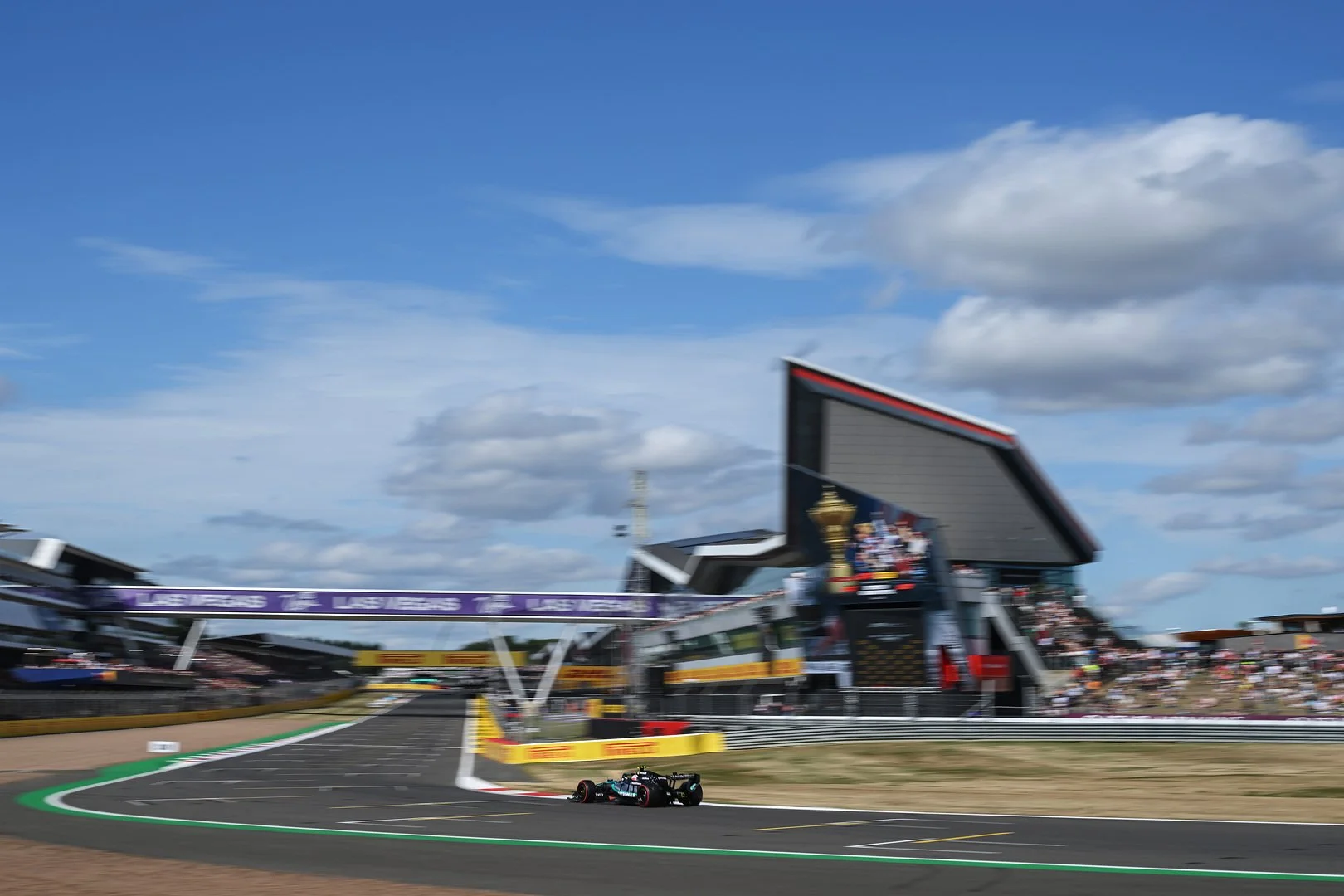
Image credit: Mercedes F1 Media Centre
Each of them is packed tight with mouthwatering characteristics that are often mimicked and replicated at newer circuits on the Formula 1 calendar - you only have to look as far as the Circuit of the Americas in Texas to see obvious examples of that with regards to both.
Nino Farina won the very first race at Silverstone in 1950 and became the first of thirty-five different drivers to have won at this venue with Charles Leclerc being the most recent. When it comes to Spa, Juan Manuel Fangio won in Spa in the same year that Farina won at Silverstone in 1950 and became one of thirty different drivers to have clinched victory there with Kimi Antonelli the latest driver to achieve this. Winning at these circuits matters to the drivers in ways that other tracks simply can’t compete with.
In a similar way to how the Monaco Grand Prix is not necessarily about putting on the most exciting race of the year because its focus is more on testing the endurance capabilities of the drivers, Silverstone and Spa don’t need to produce blockbuster racing action every time that Formula 1 visits them either.
Successfully navigating and surviving both was, and still is, its own reward - and that’s before you even get anywhere near the podium places. The prestige that is entrenched at these circuits is what makes them special.
It would be easy to throw a list of memorable moments from both Silverstone and Spa at you but it’s not necessary to do that in this instance. The history, the culture, the atmosphere - they’re all immediately apparent and intoxicating to not only the fans in attendance but to those watching the Grand Prix around the world too.

Image credit: Mercedes F1 Media Centre
Moreover, it doesn’t matter if you’ve only watched one Grand Prix set at either location or twenty - either way, you can already feel some of the weight and importance that both circuits have. They get under your skin and when you hear members of the teams and the drivers talking about them, this only intensifies those thoughts and feelings.
Despite this, classic circuits have come under threat more and more in recent years. Imola was removed from the Formula 1 calendar, much to the outcry of, naturally, the Italian fans and many others across the globe too. 2026 will also be the last time for the foreseeable future that we see Formula 1 racing around Zandvoort as it too bows out from the series.
Spa is the latest in this list as it has come under fire in recent years for not having produced great Grand Prix. But is that the fault of the circuit or that of Formula 1?

Image credit: Audi F1 Media Hub
Formula 2 and Formula 3 don’t seem to suffer from that same criticism and they race on the same weekend as Formula 1. That was true again last time out in Spa when both Feeder Series delivered great rounds for their respective campaigns. A great deal of endurance racing also takes place around the Circuit of Spa-Francorchamps, as does other European Formula 4 races - both of which please fans and drivers no end.
Silverstone this year too suffered from an uncharacteristically lacklustre race. Naturally, this can be argued as a subjective matter to be endlessly debated by both the most die hard and casual fans alike but it would be difficult for anyone to argue that in terms of pure on track performance, the racing product itself on display in the Grand Prix was underwhelming. This was not helped either by the lack of a one lap shootout at the end of the race that was dangled in front of us before being taken away by the stewards. Even with that included, it would still only have masked the real issue at play which is that an ordinarily classic Grand Prix was made to feel less so.
We’ve seen sub-par action at two of the most iconic circuits on the Formula 1 calendar across two completely different regulation sets. Is it the fault of the circuits themselves or of the sport? Given that we’ve got a long and storied history at both Silverstone and Spa in Formula 1, logic would have to dictate that it’s the fault of the latter and those in charge of it.

Images credit: Glenn Dunbar, Audi F1 Media Hub
Perhaps then, it is simply the cars and the regulation eras that Formula 1 is bringing to Spa that is the source of the underwhelming races - as is arguably the continual strive by Formula 1 and Liberty Media to further commercialise and transform the sport.
At the end of the day, Formula 1 is a sport that entertains; it is not a form of entertainment that happens to be a sport. But this distinction is beginning to feel more and more lost in the last few years.
Following the loss of Imola and Zandvoort, Spa-Francorchamps will soon also depart from the Formula 1 calendar as it begins its first year as part of a rotation deal with the Circuit de Barcelona Catalunya in Spain - a circuit itself a modern staple on the calendar that has been dropped in favour of a brand new street circuit located in Madrid. While Spa will remain on the calendar in 2027, to then not visit the circuit again until 2029 feels wrong and borderline criminal. It will be the first time that it won’t be on the calendar since 1984. However, in that year, Formula 1 at least still raced at Zolder, an alternative Grand Prix venue also in Belgium with its own racing history.

Image credit: Audi F1 Media Hub
Formula 1 is in a period of aggressive expansion and popularity across the globe and that does require changes being made. Evolution is one of the few constants in the sport after all. With the boom in global attention on Formula 1, it does make sense to explore new corners of the world and establish new markets - but that shouldn’t come at the expense of circuits that crafted Formula 1’s standing to begin with.
Alongside the exploration into new markets comes another telling reason as to why Spa is being relegated to a rotational basis - its limited capacity in terms of individuals being able to attend the race limits the amount of revenue that can be generated as a result. Brand new circuits, all of which during Liberty Media’s time in charge of Formula 1 have been street circuits offer fresh ground to break, create a unique and new atmosphere but old and new fans and provide the teams and drivers with the kind of unique challenge that only street circuits can offer thanks to their enclosed natures. The Madring in Madrid will be the sole exception to this as it will be a hybrid circuit with both permanent and temporary characteristics but it still benefits from the same advantages of a street circuit.
In 2016, the final year before Liberty Media took over Formula 1, seventeen of the twenty-one circuits on the calendar were permanent tracks with the remaining four being street circuits. Fast forward to this year and that initial figure has dropped to fifteen out of twenty-two with the remaining seven being street circuits.
But, of those fifteen, two will be removed next year in Barcelona and Zandvoort with only one of those, currently, replaced by another permanent (and already established) circuit - Türkiye. It may not seem like a big change across a decade but it indicates the shift that Formula 1 and Liberty want to make and are making. This is reiterated further by the rotation deal that Spa is on with Barcelona. As mentioned, drivers will get to race there again next year but then have to wait until 2029 for the following Grand Prix. Meanwhile, temporary circuits such as Miami, Madrid and Las Vegas have lavishly lengthy contracts that see all three of them secured onto the calendar well into the next decade and beyond.
But why should the cost of developing new avenues for Formula 1 to venture into come at the expense of removing classic venues from the calendar that enabled not only enabled individuals the world over to fall in love with Formula 1 in the first place but that also contributed and still contribute to a rich and expansive lore within the sport.
Which other circuits would (or should) also be considered as classic venues for Formula 1? Australia (Melbourne), Japan (Suzuka), Monaco, Canada (Montreal), Italy (Monza) and Brazil (Interlagos) are the six other circuits that should be on that list and should never be removed from the Formula 1 calendar either. Instead, they could be branded as legacy circuits and sold to fans both old and new in a way that reflects their importance and encourages more people to attend. For those that can’t, it will drive up the viewing figures and bring even more attention onto Formula 1.

Image credit: Mercedes F1 Media Centre
Circuits such as Silverstone, Spa and the others are part of Formula 1’s DNA. They’re a fundamental part of its foundations. Without them, Formula 1 risks losing a vital part of what makes it the pinnacle of motorsport. To lose any of these is not just a case of losing a circuit - it’s taking away so much more.
Like Spa, will these circuits be the next to come under threat or will Formula 1 and Liberty respect the history that came before it as it plans what the future of the sport looks like?