

Camilla SofiaPerego
On the safety frontlines of Formula 1 and world motorsport
In Formula 1 and the wider motorsport world, most of the time the focus is primarily on the drivers themselves. Beyond them, you'll also often see the Team Principals and other key supporting figures within each team. Occasionally too, you'll see a certain role within a team highlighted on a television broadcast or social media. One week it might be a racing engineer, the next it could be a personal trainer. You're more likely to see one of the celebrities wandering around on the grid than any number of the people who work tirelessly behind the scenes week in week out to ensure that the teams and drivers have everything they need when the time comes to leave everything else behind and go out on track to perform.
The same is true of Camilla Sofia Perego. As a Medical Doctor, Anesthesiology and Intensive Care Resident, an Federazione Medico Sportiva Italiana (FMSI) Aggregate Member and a Motorsport Medical Extrication Team Doctor, her role is one of the most vital not just in Formula 1 but in all of motorsport. We so rarely see or hear about people like her but without individuals like Camilla, the global motorsport circus would have to stop as the drivers, team personnel and the fans would be left exposed in the most vulnerable and dangerous way there is.
The difference of having someone such as Camilla trackside really can be that of life or death.
For Camilla, her love for motorsport came to her when she was a child.
My passion for motorsport dates back to my childhood; as I live in a small village not far from the Autodromo Nazionale Monza, I could hear the roar of the engines right from my bedroom (back when Formula 1 still had those beloved, historic V12 engines!). As I grew up, I developed a passion for sports cars because of their aggression and their ability to give you an adrenaline rush.
At the same time, her second passion and the one with which she would begin to shape what the rest of her life would look like was also developing as it was a natural extension of one of her fundamental cornerstones.
My passion for medicine also began when I was little; I can't say exactly what made me realize I was cut out to be a doctor, partly because no one in my family is a doctor and no one works in a field related to science! The fact is that I've always had a desire to help others, which I put into practice when I was 15, when I decided to join the Italian Red Cross, where I trained as a paramedic - a role I continued to fulfil during my university years, until I graduated and became a Medical Doctor.
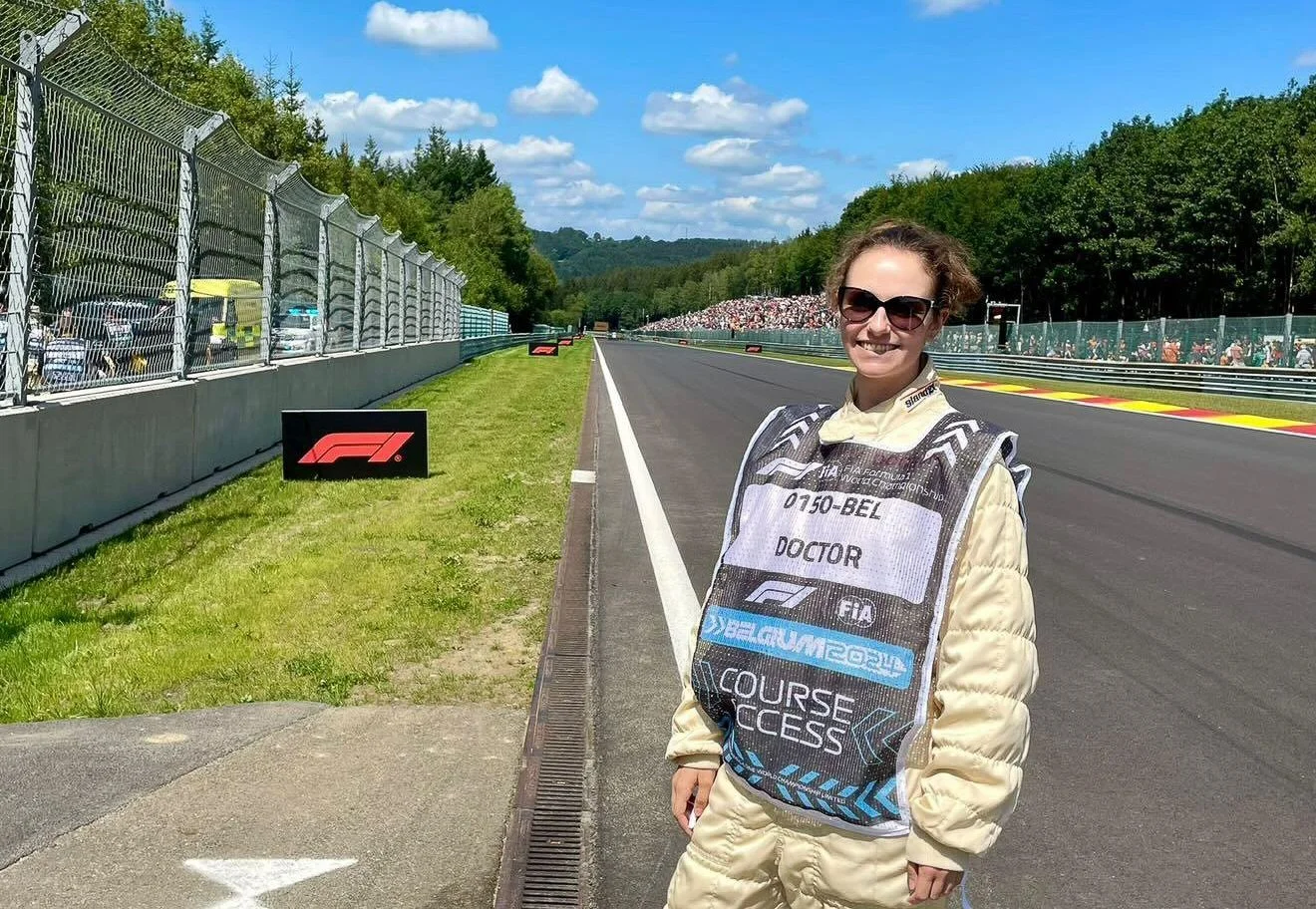
But it wasn't until 2020 that these two worlds collided for Camilla for the first time. Once they did come together though, there was no going back.
I started thinking about combining these two passions when I had the opportunity to work as a paramedic at car races at the Autodromo Nazionale Monza for the first time in 2020, during a Ferrari Racing Weekend - a race featuring only Ferrari. At the time, I was a young third-year medical student and was lucky enough to meet doctors who explained to me how things work on the track, how the medical center operates, and what equipment and medicines are available in the emergency room. From then on, I became enthusiastic and curious about the subject of Anesthesia and Resuscitation. From that moment on, I began to see the work of the doctors on the track and the organization of the medical team during a racing weekend, and I thought that sooner or later that would be where I belonged. A few years later, here I am. And I have no intentions to stop.
What Camilla is describing there is not only her own lived experience that set her on the path that she continues to tread today but also the legacy of titans of motorsport such as the late Professor Sid Watkins and Sir Jackie Stewart. Both are just two examples of key figures that were involved in establishing and continually evolving the safety of Formula 1 and motorsport for both fans and participants. The opportunity to go and spend a weekend at the track observing and learning from other professionals in a brand new environment is one that exists thanks to the foundations that were put in place by those that came before. Regardless of if Camilla had continued further into the world of motorsport or not, the fact that she had that choice is testament to the value of the groundwork in the years and decades prior.
Now a resident doctor in Anesthesia, Resuscitation, Intensive Care and Pain Management at one of the largest hospitals in Lombardy, Camilla has been on an incredible journey since then. In 2022, she qualified as a member of the extrication team through ACI Sport - an opportunity that she got through a course run by ACI Sport.
It is a course that includes a theoretical section that explains the basics of extrication maneuvers, the correct types of extrication you should use in different situations and covers the fundamentals of the various types of cars featured in the different championships. An extrication specialist is required to have a thorough understanding of how the various cars are constructed and how they operate, because when intervention is required, it is not just the driver that the medical team has to contend with - it's the car too and the combination of these two elements together.
This knowledge has become increasingly essential in recent years, with the advent of hybrid cars, which pose a danger to rescue workers, who must know exactly how to ensure their own safety first and foremost.
Camilla talked me through the role of a rescue worker during a race weekend and it was a fascinating insight given that the only time we ever see people like her is when there has been a serious incident out on track.
The role of the rescue worker during a race weekend is to extract drivers from their cars when they are unable to get out on their own. This means always being on the alert and keeping one ear tuned to the radio, which communicates with race control and medical direction, as you can never know when it's time to intervene; only those with access to all the circuit's cameras can know - the medical direction at the medical center and the race control.
Once called into action, you have just a few seconds to reach the scene of the accident on track. Upon arrival, the doctor from the extrication team (my role at Spa) must assess the driver's physical condition (if the doctor from the fast car hasn't already done so): first of all, whether they are conscious or unconscious; you must determine if they are in pain anywhere and carry out a brief physical examination within a matter of seconds, so as to determine which severity code to report to the medical team.
Once the driver's and the car's conditions have been assessed, a decision is made on the type of extraction to carry out, and the driver is extracted and transported to the medical center for assessment. Once the procedure is complete, we return to our posts, ready to be called into action again.
Such knowledge, preparation and discipline doesn't just happen overnight and being taught what is necessary can only take you so far. But for Camilla, it's always been about more than just an interesting area of study. She's passionate about her work and cares deeply about every aspect of it. When she decided to specialize in Anesthesiology and Intensive Care, it wasn't with the ambition of earning more money or following the crowd, it was much more and much simpler than that.
I can safely say that choosing this specialization came completely naturally to me, because I have always been interested in critical care medicine and in treating patients at their most critical and vulnerable moments, and the role of an anesthesiologist-ICU physician represents the pinnacle of expertise and knowledge in this field.
My decision to pursue this career was confirmed when I first entered an Intensive Care Unit during my third year of medical school; I fell completely in love with the work of an ICU physician and realized I wanted to follow this path. From then on, there have been nothing but further confirmations.
"You have just a few seconds to reach the scene of the accident on track."
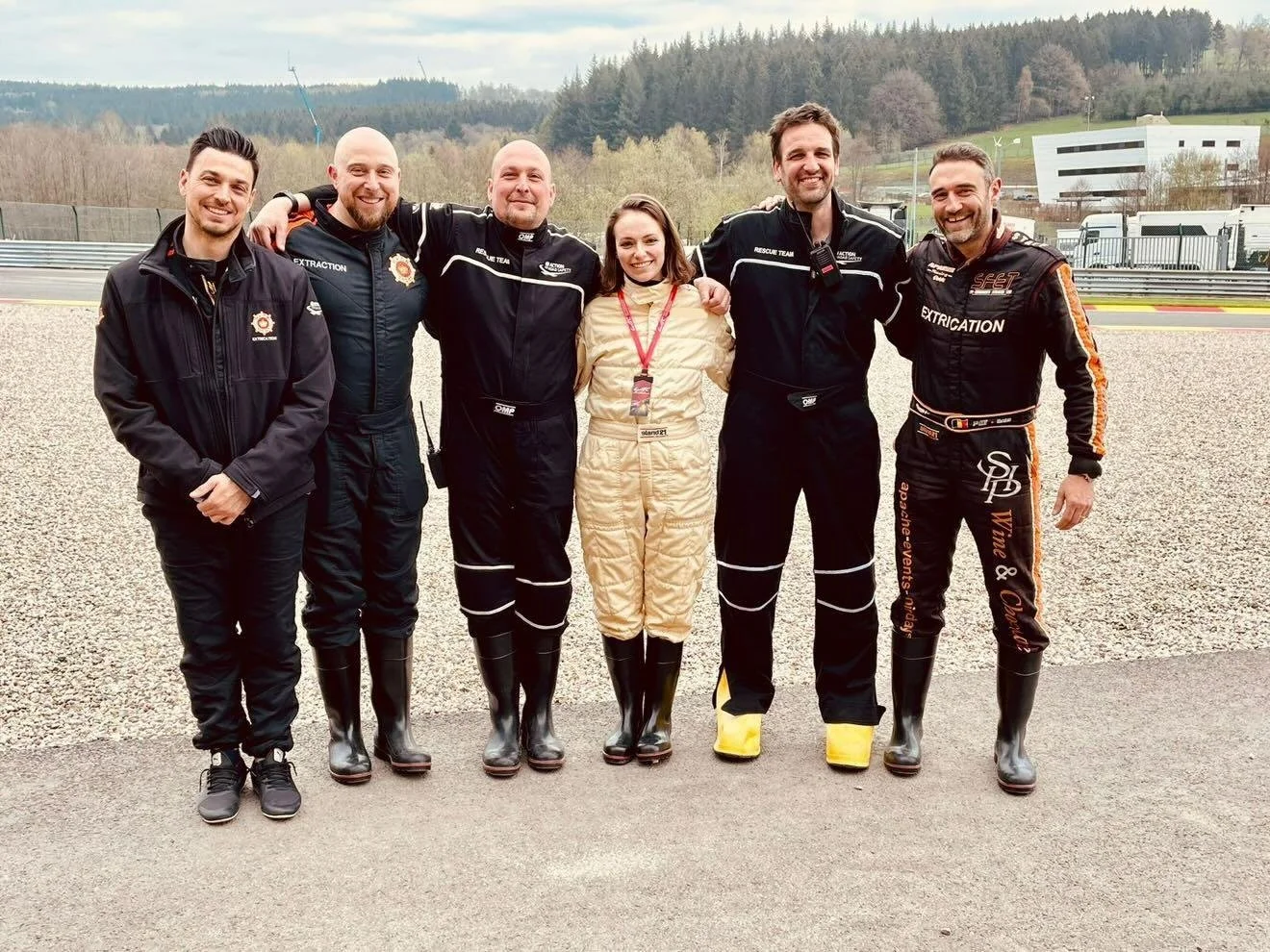
In 2023, Camilla put all her hard work into practice abroad for the first time as she went to the Circuit of Spa-Francorchamps in Belgium. It was a daunting undertaking for Camilla but one that was ultimately incredibly rewarding for the Italian.
It's hard to describe how I felt at that moment, but I think it was a mix of immense gratitude, honor, joy, happiness and disbelief. When I set off for the WEC at Spa in 2023, I think it was the first time I'd travelled completely on my own, to a country I didn't know, with people I didn't know. Looking back on it now, I must admit I was incredibly brave! All the experiences were wonderful.
Over her time there, Camilla experienced three of the biggest motorsport events in Europe - the third round of the World Endurance Championship, the 24 Hours of Spa and the Formula 1 Grand Prix, all over the course of just a few months.
The WEC was the most impactful because it was my first time; the 24 Hours was the craziest and most spectacular, because it is perhaps the best race to experience at Spa, starting with the drivers' parade on Wednesday, right through to watching the race at night, when I should have been sleeping - as it was my recovery shift! - but I was in the pitlane enjoying the spectacle of watching the cars whizz past at 300 km/h with their colorful neon lights just a few meters away from me before the historical Eau Rouge corner.
When talking about Formula 1 though, Camilla's passion for the sport that she first experienced as a child really comes through.
Formula 1 is iconic; Spa-Francorchamps (along with Monza and Monaco) is one of the most historic and iconic circuits of the calendar and of Formula 1's history, which true fans want to experience at least once in their lives, because there is no corner quite like the Raidillon, which the drivers take at full throttle.
I don't think I'll ever forget the day Dilano van 't Hoff died at Spa-Francorchamps, the day before my first 24 Hours of Spa. It was an extremely rainy Saturday morning; there was a very heavy downpour (as is often the case at Spa), and the Regional Formula 4 race was taking place, which, despite the rain, went ahead as planned. Poor Dilano spun out due to a lack of grip shortly after the Raidillon and came to a halt perpendicular to the direction of travel right in the middle of the track, in a blind spot after a bend. Another driver didn't have time to brake or change course and could do nothing but hit him head-on. It was immediately clear that the situation was very serious; from the medical direction cameras, we could see a helmet that wasn't moving. The extrication team was called in straight away. We were faced with a scene that will be hard to forget. Suffice to say we struggled to pull him out of the cockpit because he was wedged in the metal. Once he was out, the fast car doctor proceeded to intubate him and we immediately began resuscitation maneuvers, which continued during transport to the medical center, but there was nothing we could do. The hypovolemic shock that caused the cardiac arrest was so severe that it left us all helpless. We confirmed his death at the medical center, and, after a while, we continued with the race weekend, with one thought constantly on our minds: motorsport remains an extremely dangerous sport, despite the advances made in safety.
It was a poignant moment, especially as the incident had occurred at the same spot where Anthoine Hubert had died while racing in Formula 2 in 2019. Tragic instances like this are not the only hardships that those in Camilla's line of work face though. Camilla expanded on that in her own words, highlighting how tough university can be in her field.
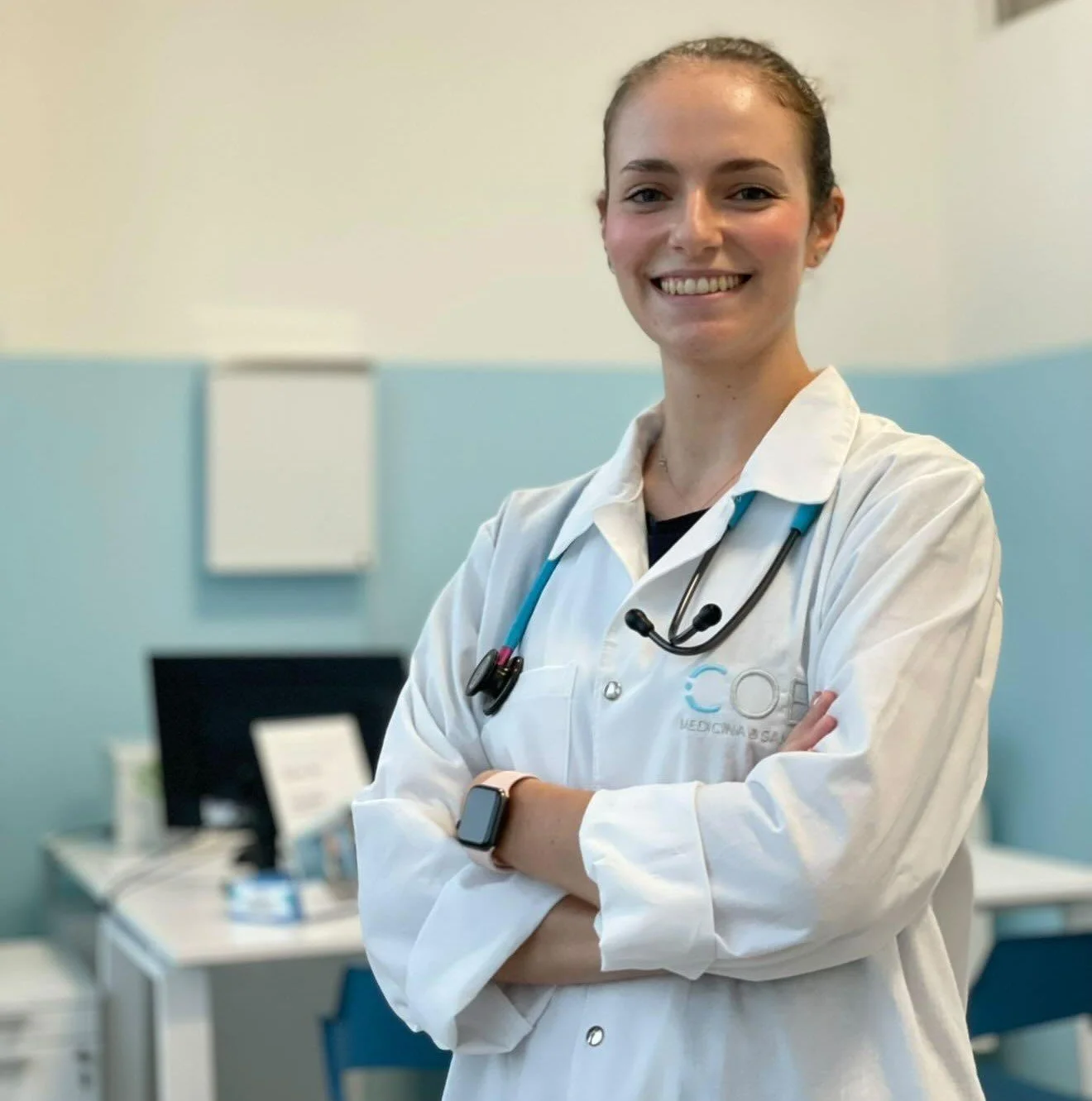
I think that, generally speaking, the toughest challenges came during my time at university, because the degree course in Medicine and Surgery is by no means easy - it's six really grueling years filled with constant challenges, during which your physical and mental health are put to the test.
Residency is no less demanding, but here it depends a great deal on the people you find yourself spending most of your time with in the hospital; if you're surrounded by unsavory, envious and competitive types, burnout is just around the corner; if, on the other hand, you have friendly, kind, helpful and compassionate colleagues, the workload feels much lighter and you can live in peace and serenity, as far as possible, given that you have to deal every day in the ICU with patients whose lives are at risk.
I won't deny that the envy of those around me for what I do outside the hospital - such as my work in the motorsport field - is not entirely unfamiliar to me, but I believe it's somewhat inevitable when you reach such high levels and do such elite things.
The envy of others has always been a part of my life; it has been the cause of the breakdown of many friendships and the reason behind difficult choices, which have, however, brought me to where I am now: a job that makes me happy and content, with a family that has never stopped standing by me, even in the toughest times, and a boyfriend who makes me feel loved every day and supports me in all the crazy things I do.
There are weekends in motorsport though that flip the script back in the other direction and provide Camilla with real pinch me moments where she struggles to believe what she's doing, where she is and how she got there - for all the best reasons. The most recent example of this was when Camilla got to work as part of the medical team when Formula 1 went racing at the Monaco Grand Prix.
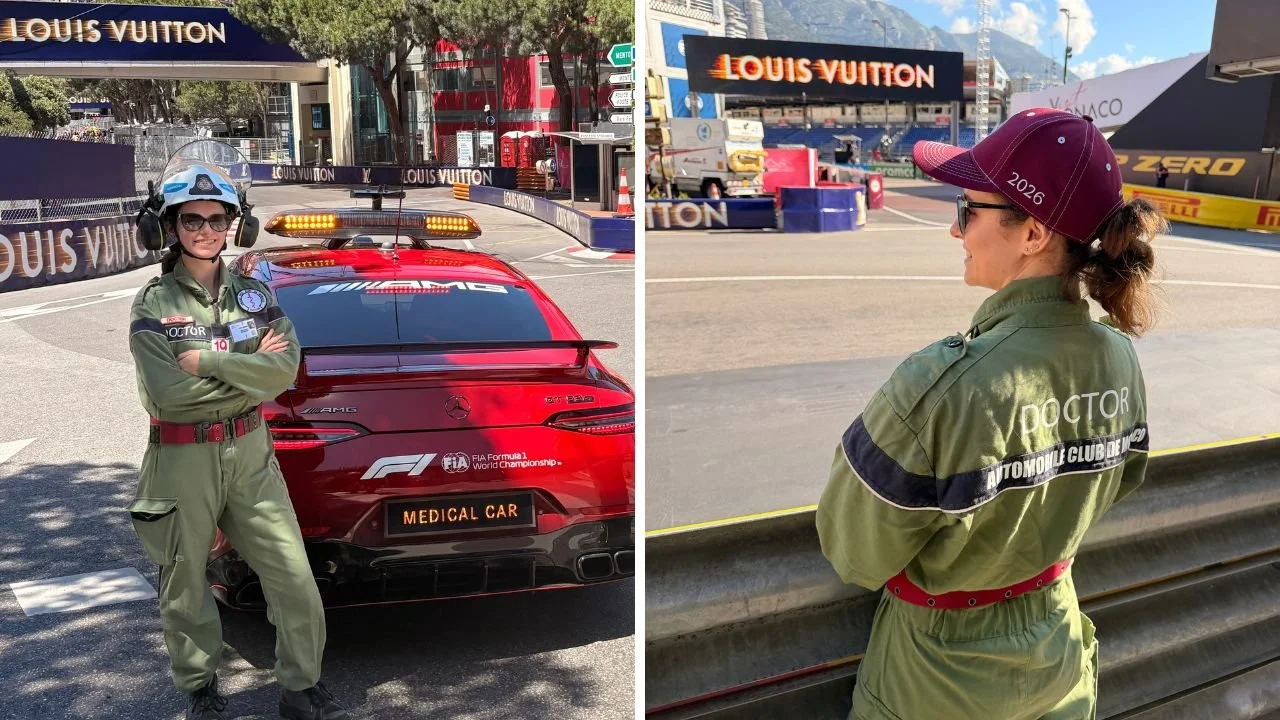
I'm still reeling from the whirlwind of emotions I've felt ever since I received the email confirming that I'd been selected to be one of the doctors at the Monaco Formula 1 Grand Prix, right up until the moment I actually donned the green uniform trackside, behind the guardrail at the Anthony Noghes corner. I've been dreaming of this moment for many years, ever since I was just a spectator in the stands, watching those doctors in their green uniforms so close to the cars that they could almost touch them and high-five the drivers as they passed by. And here I am, having made that dream come true. I am extremely grateful to everyone who made this possible and honored to have been part of the most iconic race on the calendar.
"In the uniform I was wearing, I felt invincible."
Monaco too is no stranger to incidents and has seen numerous occurrences of misfortune over the years in Formula 1 alone, nevermind the other series that race there each year. This year Aston Martin's Lance Stroll and Ferrari's Charles Leclerc provided us with such moments as they both crashed out into the same corner of the track - Anthony Noghes - where Camilla was stationed. But handling situations like that is now second nature to Camilla and when reflecting on her time spent at the jewel in the crown of the Formula 1 calendar (as well as being one third of the legendary triple crown) she was able to zoom out from that and appreciate her experience from another perspective, while also acknowledging some of the other unexpected perks of the job.
Monaco during the Formula 1 Grand Prix is a world of its own, where you could feel truly small compared to the enormous yachts owned by equally enormous fortunes, but in the uniform I was wearing, I felt invincible; nothing could make me feel inferior, not even knowing that as I walked down the pitlane I was just a few centimeters away from billionaires or millionaires, because being there as a doctor was priceless - and so was taking a selfie with Patrick Dempsey, or Dr McDreamy, my crush forever and ever, a dream come true for every female doctor who's a fan of Grey's Anatomy!
Even though I had to get up at the crack of dawn every day and drive at least half an hour to get to the circuit (I'll be forever grateful to my boyfriend for driving me there, supporting me and cheering me on), although during the races or track activities we had to stand in the sun wearing a heavy helmet and with my Apple Watch constantly giving me notifications because the environment was too noisy, I'd do it all over again tomorrow, without changing a single thing!
It was truly one of the highlights of my career so far and one of the best moments of my life so far.
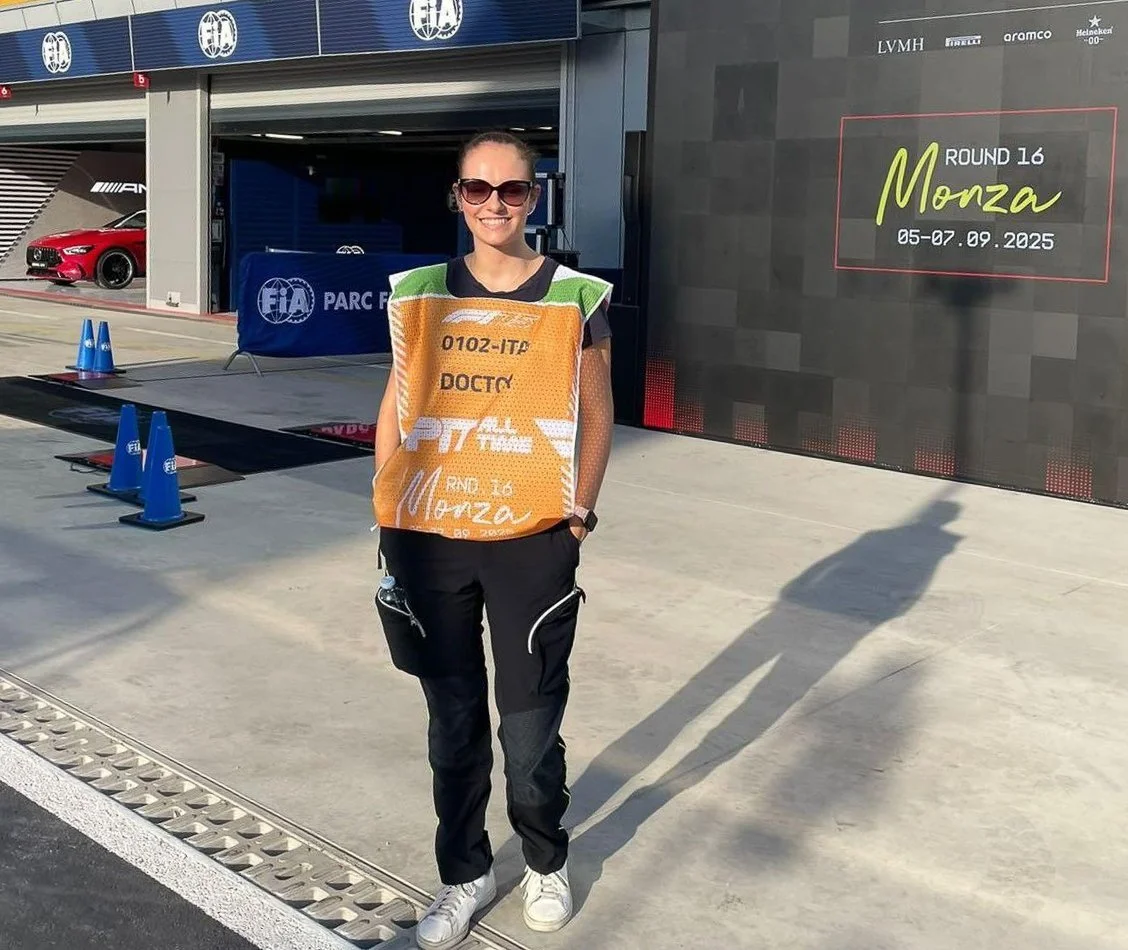
The good days in a role such as Camilla's stay with her as much as the bad - and that's important. The good are needed to show what's possible and what it's all for. The bad are to remind everyone that the work never ends and that their calling is a noble one. Looking ahead to the future, Camilla knows exactly what she wants to achieve.
My primary ambition is to specialize and become an Anesthesiologist and ICU specialist, and to do the job I've studied and worked hard for over the last 11 years. I certainly intend to continue working in motorsport, because my dream is to become a FIA Medical Delegate for Formula 1.
But Camilla makes it clear that that as vital as all of that is, it's not what her entire life is going to revolve around. Everything is about balance after all.
And I certainly don't intend to think only about work; among my ambitions is that of having a family and a happy, peaceful life in my beloved Brianza.
The role of the medical teams is one that can often feel thankless. Only when things go wrong and their presence is noticed and subsequently thanked are they mentioned. In the races and events where nothing untoward happens, they're not spared a first thought, nevermind a second. It's something that Camilla has noticed during her career so far and it's something that she wishes would change in the future.
I'd like people to take the role of the medical extrication team more seriously, because nobody ever seems to realize that, as well as the marshals (who, mind you, do a brilliant job and without whom the races wouldn't take place), there are also doctors, nurses and paramedics, who are just as important during a race weekend. When commentators and journalists thank the marshals at the end of a race weekend, they never thank the medical extrication team.
Perhaps interviews like this are useful and help to raise awareness of these roles, which are different from the usual ones. In fact, when people think of a job in motorsport, they tend to think of the work of journalists, engineers, communications and social media officers, fitness coaches, photographers and videographers, but never - and I mean never - does anyone think of the doctors or the medical team.
Hey, we're here too!
Camilla's job can often feel like a thankless one, an existence that is acknowledged at the worst of times but otherwise left to blend into the background. In a year that has already seen Juha Miettinen die after a seven-car crash during the Nurburgring Langstrecken-Serie (NLS) qualifiers as well as serious crashes for both Alexander Rossi and Josef Newgarden in IndyCar, to name just two examples, the importance of Camilla's role, and those of her team and beyond, is constantly highlighted. It's something worth remembering next time, and every time after, you watch a race. Behind the driver you are watching is a network of people whose work makes the sport possible.